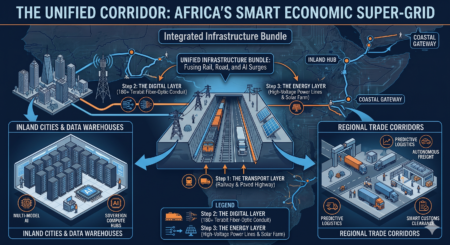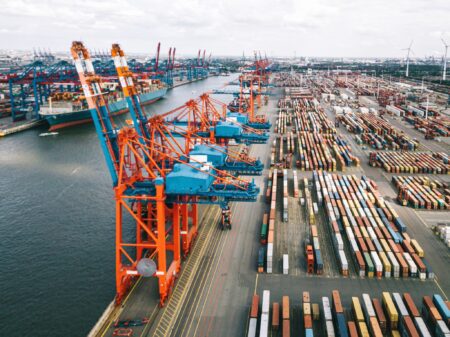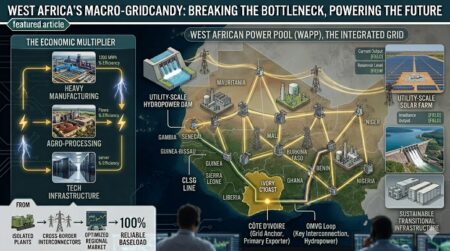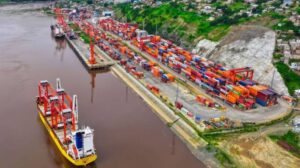
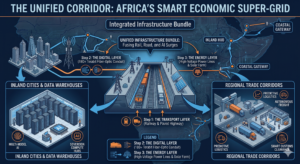

Africa’s infrastructure is rapidly transforming to meet the global demand for critical minerals. At the heart of this change lies the Lobito Corridor Africa critical minerals route — one of the most ambitious trade and transport projects on the continent.
The Lobito Corridor is a 1,300-kilometer railway linking Angola, Zambia, and the DRC. It provides critical export access for the continent’s mineral belt. With over $10 billion in pledged investments from the United States, European Union, and African Development Bank (AfDB), the Lobito Corridor represents both an engineering breakthrough and a geopolitical milestone.
What Is the Lobito Corridor?
The Lobito Corridor is built around the Benguela Railway, a historic route that has been completely rehabilitated and extended toward Zambia. It now provides a seamless export pathway for landlocked producers of copper and cobalt — two of Africa’s most valuable resources.
By offering direct access to the Atlantic Ocean, the Lobito Corridor Africa critical minerals network shortens export times to Europe and North America. It serves as a faster, more transparent, and more secure alternative to older transport routes dominated by Asia-linked infrastructure.
For Angola, Zambia, and the DRC, this is more than just a railway. It is an economic artery capable of driving industrialization, trade, and investment across central Africa. Meanwhile, for global markets, it provides a reliable supply route for minerals essential to electric vehicles, renewable energy systems, and digital technologies.
Strategic Infrastructure and Global Competition
Infrastructure investment is no longer neutral — it is strategic by design. The United States and European Union view the Lobito Corridor as a counterbalance to China’s Belt and Road Initiative (BRI), which has dominated African transport infrastructure for years.
By supporting this project, Western partners aim to create transparent and sustainable supply chains for Africa’s critical minerals. The AfDB’s involvement ensures that the corridor supports local development goals, from job creation to regional integration.
For African governments, this global competition creates opportunity. They can leverage interest from multiple partners to secure better financing terms, technology transfer, and inclusive infrastructure growth.
Related reading: Africa Can Finance Its Own Development
and The African Diaspora: Driving Africa’s Global Transformation (2025 Edition)
Investment Implications of the Lobito Corridor for Africa’s Critical Minerals
The Lobito Corridor Africa critical minerals project offers a wide range of investment opportunities.
-
Logistics and transport: Increased freight volumes along the Copperbelt will fuel demand for trucking, warehousing, and digital logistics platforms.
-
Infrastructure and finance: Private equity firms and infrastructure funds can invest in port upgrades, rail extensions, and industrial parks along the corridor.
-
Mining and energy: Lower transportation costs will improve export margins for copper, cobalt, and lithium, strengthening project viability.
-
Ancillary industries: Construction materials, real estate, and digital infrastructure in emerging corridor towns will benefit from rapid growth.
Public-private partnerships (PPPs) and blended finance models are expected to play a key role in de-risking capital flows. As development finance institutions align with private investors, the corridor could become a model for sustainable investment across Africa.
Risks and Challenges
However, the Lobito Corridor also faces challenges. Political instability in the DRC, regulatory differences across three nations, and maintenance funding gaps could slow progress.
In addition, there are concerns about whether local communities will share equitably in the project’s benefits.
Investors must therefore prioritize due diligence, risk-sharing mechanisms, and local partnerships to ensure that the corridor drives inclusive and sustainable development.
The Bigger Picture
The Lobito Corridor Africa critical minerals network is more than steel rails and port facilities. It is a strategic pillar in the geopolitics of the energy transition.
By linking Africa’s mineral heartland directly to global markets, it will reshape trade patterns, attract billions in investment, and reinforce Africa’s position as a vital partner in global supply chains.
For investors, it represents a once-in-a-generation opportunity to participate in a project where logistics, mining, and geopolitics converge. For policymakers, it demonstrates that Africa can be both a source of critical minerals and a driver of sustainable infrastructure innovation.