


[ad_1]
A New U.S.–Africa Policy Takes Shape at UNGA 2025
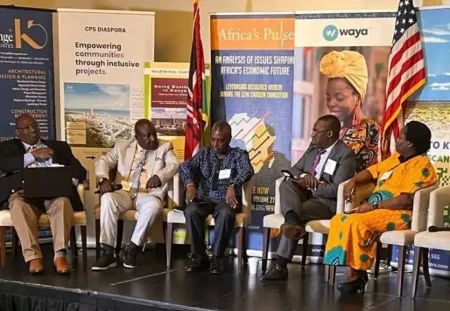
At the 80th United Nations General Assembly (UNGA 2025), the Trump administration hosted a high-profile briefing titled “Advancing Trump Administration Priorities in Sub-Saharan Africa.”
The timing was striking. Only months earlier, the United States Agency for International Development (USAID)—the main engine of U.S. aid—had been dismantled.
This raised a crucial question: can America still deliver on its new Africa strategy, or is this just rhetoric meant to project power?
What the Administration Announced
U.S. officials outlined an ambitious agenda for Trump’s Africa policy 2025.
The plan promised:
-
Stronger trade and investment ties, including possible extensions to the African Growth and Opportunity Act (AGOA).
-
New cooperation in infrastructure, digital technology, and energy.
-
Continued security and counterterrorism partnerships.
-
Limited focus on governance and anti-corruption reforms.
-
Narrow exemptions for humanitarian aid programs.
The announcements sounded confident. However, many observers wondered how these goals could succeed without USAID’s systems, staff, and technical capacity.
From Aid to Trade: The Strategic Shift
The Trump Africa policy 2025 represents a clear break from past approaches.
Instead of aid-driven development, it emphasizes trade, investment, and resource diplomacy.
Officials framed this pivot as a modernization effort. Yet, it also serves another purpose: countering China’s expanding influence in Africa.
References to infrastructure and digital partnerships are tied to Washington’s desire to compete with Beijing.
While the focus on trade may appeal to investors, the shift leaves major development gaps. Humanitarian support has been reduced, and social programs once supported by USAID are struggling to survive.
The Post-USAID Capacity Crisis
The loss of USAID has created a vacuum in U.S. foreign policy.
The agency once had thousands of experts, regional officers, and local partnerships built over decades.
In early 2025, over 83% of its programs were canceled. Most of its staff were dismissed.
Now, the State Department must absorb development roles it was never designed to handle.
Even the best diplomatic intentions cannot replace operational systems that managed billions in projects across Africa.
As one former official put it, “You can’t do development from a podium.”
Credibility on the Line
The United States now faces a major credibility challenge.
Watchdog reports show more than $8 billion in unspent humanitarian funds.
Health and education programs in countries like Kenya, Malawi, and Nigeria are slowing or shutting down.
Local NGOs that relied on USAID support have been forced to close offices.
At the same time, competitors such as China, the EU, and Gulf states are filling the gap with financing and infrastructure deals.
Unless Washington rebuilds its delivery capacity, these actors will continue to define Africa’s development path instead.
See related coverage:
Can the U.S. Rebuild Its Africa Credibility?
Restoring trust will take more than speeches.
It will require funding, technical expertise, and accountability.
AGOA’s renewal could offer a path forward, but only if it is paired with long-term investments in education, energy, and infrastructure.
African partners are watching closely. Many now prefer results over rhetoric.
They will judge the Trump Africa policy 2025 on what is delivered, not what is promised.
Rhetoric or Real Strategy?
The administration describes its Africa policy as a “pivot to partnership.”
But with USAID gone, that partnership lacks the machinery to function.
Diplomatic engagement can help, but the loss of on-the-ground implementation capacity weakens everything else.
For now, Trump’s Africa policy 2025 looks more symbolic than strategic.
If Congress restores some development funding and empowers regional missions, U.S. credibility could rebound.
Until then, the gap between rhetoric and reality will remain wide.
The Road Ahead
Africa’s potential remains vast.
The continent’s young population, digital growth, and renewable energy opportunities make it essential to global progress.
Yet, engagement must be consistent and practical.
The United States cannot lead in Africa with press releases alone. It must demonstrate commitment through real partnerships, co-investment, and delivery on promises.
Until that happens, Trump’s Africa policy 2025 will stand as a case study in how dismantling development infrastructure can turn ambition into uncertainty.
🔗 External Reference
For more information, visit the U.S. State Department – Bureau of African Affairs.
[ad_2]