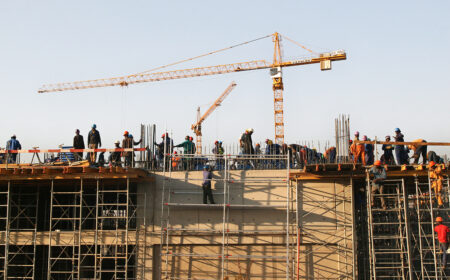




Uganda has unveiled an ambitious plan to borrow $2.34 billion from a mix of international lenders — including the World Bank, Citi, and Standard Chartered Bank — to finance a new wave of infrastructure projects across the country.
The borrowing proposal, outlined in a parliamentary document released on October 20 and seen by Reuters, underscores Uganda’s determination to close its infrastructure gap, particularly in energy transmission, roads, and oil-linked development in the Albertine region.
According to the document, $1.34 billion will be sourced from the World Bank, while Citi and Standard Chartered will jointly provide the remaining $1 billion. Finance Minister Matia Kasaija is expected to present the loan request to lawmakers for approval this week.
👉 Related Reading: Bridging Africa’s Infrastructure Gap: Unlocking a $6 Billion Opportunity
⚙️ Target Projects: Energy, Roads, and Regional Connectivity
The funds will primarily support energy infrastructure and road construction in Uganda’s Albertine Graben, a region that has emerged as the hub of the country’s oil and gas sector.
Key initiatives include:
-
Expansion of electricity transmission lines to link oil-producing regions with national and regional grids.
-
Development of strategic road corridors to facilitate logistics, trade, and investment in the extractives value chain.
-
Upgrading of rural infrastructure to improve service delivery and support agricultural commercialization.
These projects form part of Uganda’s broader Vision 2040 agenda, which prioritizes energy access, transport networks, and industrial zones as foundations for long-term economic transformation.
👉 Explore: Africa’s Digital Infrastructure Boom
📊 Rising Debt and Fiscal Pressures
Uganda’s public debt has expanded sharply over the past decade as the country invests heavily in infrastructure to support industrialization. According to the Ministry of Finance, total public debt rose 26.2% to $32.3 billion in FY 2024/25, driven by both external borrowing and domestic bond issuance.
While the government argues that debt remains within sustainable levels relative to GDP, critics — including opposition legislators, analysts, and the Bank of Uganda — warn that debt-servicing costs are crowding out social spending on health, education, and welfare.
Central bank data show that nearly 40% of government revenue now goes toward servicing debt, leaving limited fiscal space for essential programs.
👉 Read also: Understanding the Real Economy: The Foundation for True Prosperity
💬 Political Context: Loans Under Scrutiny
Uganda’s parliament is expected to debate the loan package amid rising public debate over debt sustainability. Critics argue that while infrastructure borrowing is necessary, the pace of accumulation risks undermining macroeconomic stability.
Finance Minister Matia Kasaija has maintained that the loans are “productive and transformative”, focused on assets that will generate long-term economic returns. “We cannot grow without infrastructure,” he told lawmakers earlier this year.
The return of the World Bank as a major financier is also politically significant. In 2023, the lender suspended new funding to Uganda in response to its controversial anti-LGBT law. In June 2025, the World Bank confirmed that it would resume support following months of negotiations and reforms on project safeguards.
👉 Related pillar: The African Diaspora: Driving Africa’s Global Transformation (2025 Edition)
🌍 The Balancing Act: Growth vs. Debt
Uganda’s case reflects a wider African trend: nations pursuing rapid infrastructure growth while navigating tightening fiscal conditions and higher global interest rates.
According to Africa Growth Forum analysis, the continent’s infrastructure financing gap exceeds $100 billion annually, and traditional public budgets alone cannot bridge it. Many governments — from Kenya to Ghana and Angola — are exploring blended finance, PPPs, and diaspora bonds to diversify funding.
Uganda’s strategy is to maintain investor confidence while building revenue-generating infrastructure that can eventually self-finance its debt obligations through energy exports, toll systems, and industrial growth.
👉 See also: Diaspora Bonds and Africa’s Development Financing Future
💰 The Role of Private and Diaspora Capital
As global lenders recalibrate risk exposure in emerging markets, diaspora investors are increasingly being viewed as a stabilizing source of long-term capital.
Uganda’s extensive diaspora — particularly in the United Kingdom, United States, and Canada — remits over $1.3 billion annually, a figure comparable to its annual infrastructure financing requirements. Structured correctly, diaspora-backed funds could complement sovereign borrowing, allowing Ugandans abroad to co-invest in energy and transport projects with measurable impact at home.
This approach aligns with regional precedents like Ethiopia’s Renaissance Bond and Nigeria’s Diaspora Bond, both designed to engage citizens abroad in nation-building.
👉 Explore further: Top 10 Sectors to Invest in Africa 2025 – 2030
⚡ Lessons for Africa’s Financing Future
Uganda’s $2.34 billion borrowing plan illustrates the need for strategic, transparent, and growth-oriented debt management. Key takeaways for the continent include:
-
Prioritize high-return projects: Borrowing should focus on infrastructure that directly boosts productivity and trade competitiveness.
-
Diversify funding partners: Blended finance — combining DFIs, commercial banks, and diaspora investors — can balance risk and cost.
-
Institutionalize fiscal transparency: Clear debt reporting and project monitoring build public trust and investor confidence.
If managed wisely, Uganda’s infrastructure drive could not only modernize its economy but also serve as a template for sustainable borrowing across Sub-Saharan Africa.
🌅 The Road Ahead
The coming months will test Uganda’s ability to translate borrowed capital into tangible economic outcomes. The success of this plan depends on governance discipline, project delivery, and political stability — factors that often determine whether debt becomes a catalyst or a constraint.
For Africa’s diaspora and global investors alike, Uganda’s infrastructure agenda offers both a cautionary tale and an opportunity: a reminder that the continent’s next leap forward will depend not only on how much it borrows, but how effectively it builds.
👉 Related insight: Africa’s Infrastructure Gap: The $100 Billion Question