



For the first time in history, Africa’s pension funds are preparing to pool their collective $700 billion in assets to finance the continent’s own development priorities.
The initiative, to be formalized at the “$700bn in 1 Room” All Africa Pensions Summit, represents a turning point in how Africa funds its growth — shifting from external dependence to homegrown investment capacity.
The summit, hosted by NSSF Uganda, will take place from November 5 to 7, 2025, at the Munyonyo Convention Centre in Kampala under the theme “Pension Funds – Powering Africa’s Growth.”
Its agenda focuses on deepening Africa’s patient capital, strengthening partnerships, and positioning pension funds as long-term investors in infrastructure, industry, and innovation.
From Savings to Sovereign Strength
According to the African Development Bank (AfDB), Africa faces an annual development financing gap exceeding $1.3 trillion. Historically, most of that gap has been filled through foreign loans and donor assistance.
But with rising global interest rates, constrained fiscal space, and geopolitical uncertainty, African nations are looking inward.
The Africa pension fund development 2025 initiative could redefine the continent’s investment landscape by transforming domestic savings into productive capital.
“Pension funds across Africa hold about $700 billion in assets under management. This is a major opportunity for Africans to catalyze our own economies by providing the long-term financing that development requires,” said one industry executive ahead of the Kampala summit.
If just 10% of these assets were strategically deployed, experts estimate they could fund over $70 billion worth of regional projects — from renewable energy and transport to healthcare and affordable housing.
The Vision: A “Development Fund for Africa”
At the heart of the Kampala meeting is a proposal to establish a “Development Fund for Africa” — a vehicle designed to pool pension fund resources from across the continent and channel them into transformative projects.
The fund’s concept is simple but bold: unlock patient capital for Africa’s infrastructure and industrial ambitions while delivering stable, long-term returns for contributors.
Leaders of national pension schemes and sovereign funds are expected to endorse a framework that prioritizes transparency, risk mitigation, and cross-border collaboration.
The fund could work alongside regional financial institutions such as the African Development Bank, the African Export-Import Bank (Afreximbank), and the Africa50 Infrastructure Platform — all of which have been advocating for African-led development finance.
Unlocking Domestic Capital for Infrastructure
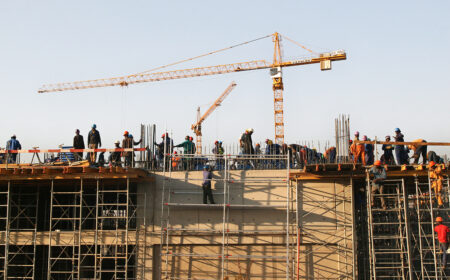
Infrastructure remains one of Africa’s most underfinanced sectors. Despite strong economic growth in several countries, decades of underinvestment have left the continent with a $100 billion annual infrastructure gap, affecting energy access, transport efficiency, and digital connectivity.
By leveraging long-term savings, pension funds can serve as anchor investors for public-private partnerships and strategic infrastructure projects.
The Africa pension fund development 2025 agenda emphasizes “patient capital” — funds willing to stay invested over decades rather than chasing short-term returns. This model aligns with the long-term nature of infrastructure assets, which require extended timeframes to generate consistent returns.
As Africa’s working-age population continues to expand, pension contributions are also projected to grow, creating a self-reinforcing cycle of domestic wealth creation.
Building Regional Cooperation and Governance
Pooling pension assets across borders comes with both promise and complexity. Differences in regulation, investment guidelines, and currency risks remain major challenges.
The Kampala summit aims to address these barriers by developing a continental framework for pension fund collaboration, supported by institutions such as the African Union (AU) and the United Nations Economic Commission for Africa (UNECA).
Efforts will also focus on improving governance, risk management, and transparency, ensuring that pension investments protect contributors while driving national development goals.
Experts suggest that harmonized regulations could allow pension funds to co-invest in large regional projects like energy corridors, logistics networks, and digital infrastructure — projects too large for single countries to finance alone.
Private Sector and ESG Alignment
The Africa pension fund development 2025 strategy also aims to align with environmental, social, and governance (ESG) principles, ensuring that investments contribute to both financial and social returns.
Private-sector players are expected to play a pivotal role by creating co-investment vehicles that attract institutional investors while meeting sustainability standards.
According to the International Finance Corporation (IFC), Africa’s sustainable-investment market could exceed $1 trillion by 2030, presenting a massive opportunity for pension funds to shape the green transition while earning stable yields.
From renewable energy to urban housing and healthcare, ESG-aligned projects provide a win-win opportunity for pension investors and African economies alike.
Uganda’s Leadership Role
Hosting the 2025 All Africa Pensions Summit cements Uganda’s position as a regional leader in pension-sector innovation. The National Social Security Fund (NSSF) has become a model for institutional transparency and investment diversification in East Africa.
Through the Kampala gathering, NSSF aims to demonstrate that pension funds are not passive holders of savings — they are strategic financiers capable of transforming African economies from within.
As one of the summit’s organizers noted, “It’s time for African capital to work for Africa. We must move from being borrowers to becoming builders.”
A Continental Shift Toward Financial Sovereignty
The emergence of the Development Fund for Africa signals a broader evolution in Africa’s economic thinking — from dependency to financial sovereignty.
By mobilizing domestic pension capital, African countries can reduce vulnerability to external debt cycles and currency shocks.
More importantly, the Africa pension fund development 2025 framework represents a generational shift: for the first time, African workers’ savings could directly build the infrastructure, industries, and innovations that secure their collective future.
As the continent prepares for the Kampala summit, the message is clear — Africa’s growth will be financed not just by foreign partners, but by Africans themselves.