



[ad_1]
The Luanda Infrastructure Financing Summit 2025, taking place October 28–31, 2025 in Luanda, Angola, marks a major step in reshaping Africa’s development future.
Governments, investors, and development partners will come together to mobilize over $1 trillion in funding to close Africa’s massive infrastructure gap.
This event could define the next decade of Africa’s economic transformation.
A Trillion-Dollar Vision: The Continental Power Systems Master Plan
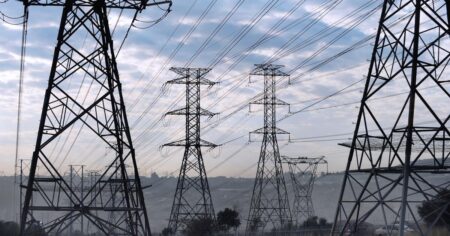
At the center of the summit is the Continental Power Systems Master Plan (CMP) — the framework designed to realize the African Single Electricity Market (AfSEM) by 2040.
The CMP aims to integrate regional power grids, boost cross-border electricity trade, and bring reliable energy to millions across the continent.
Its total financing requirement is estimated at US $1.3 trillion.
The plan supports Agenda 2063 and connects energy access with industrialization, job creation, and sustainable development.
If implemented successfully, it could reshape Africa’s position in the global energy economy.
Related reading: Afreximbank and South Africa: Building the Foundations of Infrastructure Renewal
See also: The Strategic Importance of the Lobito Corridor
Who’s Leading the Charge
The event is jointly organized by the African Union Development Agency (AUDA-NEPAD), the African Union Commission (AUC), and the Government of Angola.
Their shared goal is to attract large-scale investment for transformative projects while promoting African ownership of development.
This partnership signals a growing confidence among African institutions.
Rather than depending solely on foreign aid, they are building frameworks that enable local, regional, and global investors to participate in Africa’s rise.
Explore next: Africa Finance Its Own Development
The Urgency of Investment
Africa’s infrastructure gap remains enormous.
The continent faces an annual financing shortfall of more than US $100 billion, affecting energy, transport, water, and digital sectors alike.
These deficits limit trade, productivity, and quality of life for millions of people.
Flagship initiatives like the Programme for Infrastructure Development in Africa (PIDA) have mapped out hundreds of priority projects.
Yet, most remain underfunded.
The Luanda Summit aims to bridge this gap by connecting governments and private investors under a unified financing framework.
From Pledges to Action
What makes the Luanda Summit unique is its focus on bankable, well-prepared projects.
Rather than new promises, the event will emphasize project pipelines that are technically sound and financially viable.
This approach complements existing facilities such as the Joint Project Preparation Facility (JPPF) and strengthens regional integration through the African Continental Free Trade Area (AfCFTA).
See more: Investors Eye Africa’s Hidden $1.17 Trillion Infrastructure Capital
Through blended finance, partnerships, and governance reforms, the summit seeks to reduce risk and unlock unprecedented investment across sectors.
Why It Matters
If the Luanda Infrastructure Financing Summit 2025 achieves its goals, it could:
-
Mobilize hundreds of billions in new funding within the next decade
-
Accelerate AfSEM and PIDA implementation
-
Expand cross-border energy and transport links
-
Position Angola as a regional investment hub
This moment goes beyond finance.
It represents Africa taking the lead in designing and funding its own development agenda.
Conclusion
The Luanda Infrastructure Financing Summit 2025 is more than a conference — it’s a turning point for the continent.
With coordination, transparency, and visionary leadership, Africa can mobilize the capital needed to power the African Single Electricity Market, drive trade, and connect millions of people.
Africa’s infrastructure decade begins now — and Luanda will be where its foundation is built.