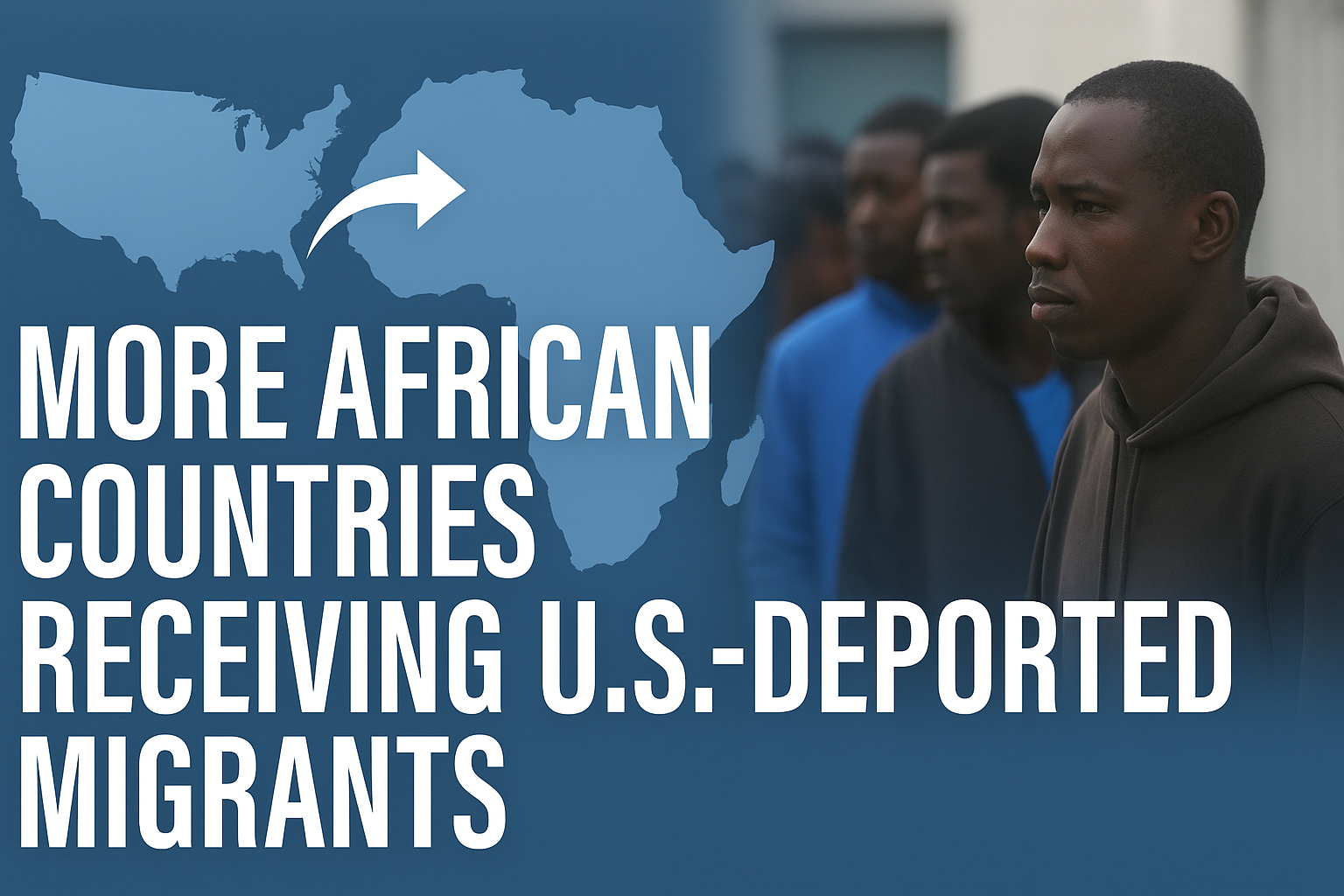
The United States has expanded its deportation agreements, and a growing number of African nations are now receiving third-country immigrants deported from U.S. territory.
This emerging trend highlights the complex intersection of U.S. immigration policy, African diplomacy, and global migration flows.
It is reshaping how governments manage migration across two continents.
What’s Changing
Traditionally, deportations from the United States focused mainly on Latin America and the Caribbean.
Now, as migration routes diversify, the U.S. is deporting larger numbers of migrants who originally came from Africa.
In some cases, individuals are being sent to countries they only passed through — not their home nations.
For example, migrants traveling through North Africa, or departing from countries such as Senegal, Mauritania, or Ethiopia, may be returned to those same states under new accords.
Even if they came from elsewhere originally, they are being rerouted through bilateral or multilateral agreements.
This reflects Washington’s broader strategy of expanding third-country partnerships to reduce undocumented arrivals and create deterrence along migration pathways.
Why It Matters for Africa
For African governments, these deportations create both diplomatic and domestic challenges.
-
Capacity strain: Many countries already face limited resources to house, process, and reintegrate deportees.
-
Identity verification issues: Some deportees lack clear documentation, making nationality difficult to confirm.
-
Political sensitivity: Accepting non-citizens deported from the U.S. can spark public backlash, especially when communities view it as an external burden.
-
Security risks: Poor coordination increases the risk of human trafficking or repeat irregular migration.
Together, these factors test the ability of governments to uphold humanitarian standards while maintaining political stability.
The U.S. Perspective
From Washington’s standpoint, expanding deportations to Africa serves several strategic goals.
-
Deterrence: Sending a clear signal that irregular entry into the U.S. will lead to removal.
-
Bilateral leverage: Strengthening cooperation with African governments on security and trade issues.
-
Regional responsibility-sharing: Encouraging countries along migration routes to take greater responsibility for migrants passing through their borders.
In essence, the U.S. aims to externalize migration control while deepening political ties with key African partners.
The Broader Migration Context
This trend mirrors broader global migration patterns.
Europe has long implemented externalization policies, paying African states to host or halt migrants before they reach European shores.
The United States is now following a similar path—extending its deportation and return networks deeper into Africa.
As climate change, conflict, and economic instability drive more Africans to migrate, the number of deportations will likely rise.
These shifts could redefine regional migration systems for years to come.
Related reading: Africa–Caribbean UN Reform Coalition: Building Global Representation
Explore next: Return Migration: The Growing Trend of Africans Moving Back Home
What to Watch Next
Several developments will shape how this issue evolves:
-
New agreements: Will more African countries sign formal deportation accords with Washington?
-
Public opinion: How will local populations respond to hosting deported migrants, especially third-country nationals?
-
Human rights oversight: Organizations such as UNHCR are monitoring whether deportations respect asylum protections and avoid refoulement (returning people to danger).
-
Regional coordination: Could the African Union or blocs like ECOWAS push back or create shared guidelines for managing deportee inflows?
Each of these questions will determine whether cooperation strengthens or tensions rise.
Conclusion
The growing number of African nations receiving third-country migrants deported from the U.S. shows how interconnected global migration has become.
What begins as a U.S. domestic policy quickly reverberates across Africa, shaping diplomacy, humanitarian policy, and migration governance.
For African leaders, the challenge lies in balancing sovereignty with cooperation, ensuring that deportees—many of whom are vulnerable—are treated with dignity and integrated safely.
[ad_2]