
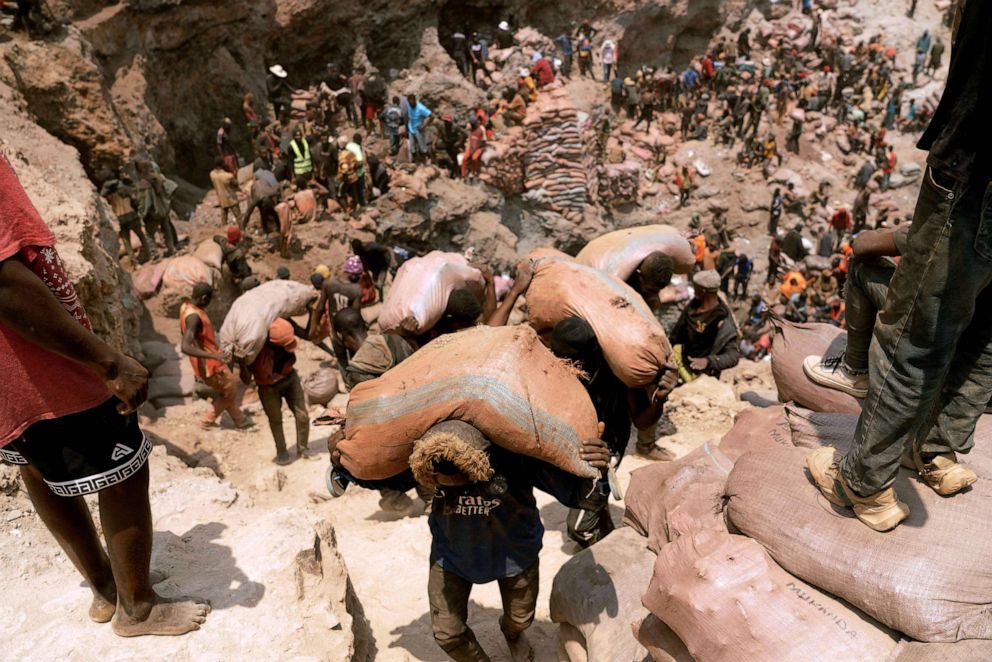
A new state audit has revealed that mining companies operating in the Democratic Republic of Congo (DRC) underreported nearly $16.8 billion in revenue between 2018 and 2023, potentially depriving the country and local communities of critical development funds.
The audit, conducted by the DRC Court of Auditors and released in June before being made public in early October, found that mining firms declared $81.4 billion in revenue to community development funds while reporting $98.2 billion to tax authorities.
This discrepancy, spanning five years, raises major questions about transparency, regulatory enforcement, and benefit-sharing in one of the world’s most mineral-rich countries.
👉 Related Reading: Luanda Infrastructure Financing Summit 2025: Africa’s $1 Trillion Development Push
💰 Billions Lost to Underreporting
Under the 2018 Mining Code, DRC mining operators are legally required to contribute 0.3% of their annual revenues to local community development funds. These funds are meant to support essential services — schools, healthcare facilities, roads, and water systems — in the mining regions most affected by industrial activity.
The audit found that these contributions were calculated from lower, self-reported figures, reducing the resources available for local communities and development projects.
If calculated correctly, the missing $16.8 billion in declared revenues would translate into over $50 million in additional community contributions over the five-year period — enough to fund hundreds of social infrastructure projects in mining provinces such as Katanga, Lualaba, and Haut-Uélé.
“The audit highlights systemic weaknesses in revenue declaration and enforcement mechanisms,” said one senior financial official. “These discrepancies affect not only state revenue but also social development in mining zones.”
👉 See also: The Real Economy vs. the Elite Economy: Who Really Benefits?
🌍 DRC: A Key Player in the Global Energy Transition
The Democratic Republic of Congo sits at the heart of the world’s energy transition. The country is a leading global producer of cobalt and copper, essential materials for electric vehicle batteries, renewable energy systems, and electronics manufacturing.
-
DRC produces over 70% of the world’s cobalt and is among the top five global copper exporters.
-
Demand for these minerals is expected to quadruple by 2040, according to the International Energy Agency (IEA).
-
Global tech companies, battery manufacturers, and automakers depend on Congolese minerals for supply-chain security.
This makes governance in DRC’s mining sector a global issue — not only for African development but also for the integrity of clean-energy supply chains.
👉 Explore: Bridging Africa’s Infrastructure Gap: Unlocking a $6 Billion Opportunity
⚖️ Calls for Sanctions and Reform
Following the findings, the Court of Auditors has proposed sanctions and legal proceedings against companies found non-compliant with the 2018 Mining Code. Recommendations include:
-
Suspension of operating licenses for repeat offenders.
-
Criminal prosecution for deliberate underreporting.
-
Independent financial verification for future audits.
The report also urged the Ministry of Mines and the Tax Authority (DGI) to harmonize data-sharing systems to prevent similar discrepancies in future declarations.
Civil society groups have echoed the call for accountability. “Communities living near mining operations are being shortchanged twice — once by environmental degradation and again by revenue manipulation,” said a representative from the Extractive Industries Transparency Initiative (EITI-DRC).
🧩 The Transparency Challenge
While DRC has made progress in mining governance since the early 2000s, enforcement remains inconsistent. Analysts say underreporting often stems from weak institutional capacity, limited digital oversight, and complex ownership structures involving subsidiaries and offshore entities.
Efforts are underway to strengthen transparency, including:
-
The creation of a National Mining Registry for real-time reporting of production and revenue data.
-
Integration with the EITI digital reporting platform.
-
A planned public database of company contributions to community funds.
“The DRC’s challenge is not just attracting investment, but ensuring that the benefits reach its citizens,” said a policy researcher at Kinshasa’s Center for Economic Governance.
👉 Read also: Transforming the Zambia–Lobito Rail Corridor Into a Trade Lifeline
🔋 Resource Wealth vs. Revenue Reality
Despite booming global demand for its minerals, the DRC remains one of the poorest nations in the world, with over 60% of its population living below the poverty line.
Economists argue that the disconnect between mineral wealth and human development stems from inefficient governance, revenue leakages, and weak redistribution mechanisms.
Properly managed, mining revenues could transform DRC’s economy:
-
Powering infrastructure such as roads, railways, and hydropower plants.
-
Funding education and healthcare systems.
-
Building value-added industries for mineral processing and battery manufacturing.
Some African Development Bank (AfDB) economists estimate that a 10% improvement in mining-sector governance could generate over $1 billion annually in additional revenue for public investment.
👉 Explore further: Africa’s Infrastructure Gap: Challenges and Opportunities for Growth
🌍 Global Implications: Supply Chains Under Scrutiny
The audit’s findings come as Western nations push for ethical and traceable supply chains in the global clean-energy economy. With Europe, the U.S., and Asia relying heavily on Congolese cobalt, underreporting risks undermining investor confidence and sustainability certifications.
Companies sourcing minerals from DRC may now face stricter due diligence requirements under the EU’s new Critical Raw Materials Act and the U.S. Clean Energy Supply Chain Transparency Initiative.
For the DRC, compliance and transparency could become competitive advantages — positioning the country as a credible and responsible supplier in the global clean-energy transition.
💬 The Diaspora Perspective
The Congolese diaspora, estimated at over 2 million people worldwide, plays a vital role in both remittances and advocacy. Diaspora investors have increasingly backed ethical mining, renewable energy, and local processing initiatives aimed at shifting DRC’s position from resource exporter to value creator.
Financial transparency in mining directly impacts diaspora confidence and investment. Improved governance can attract diaspora green bonds and impact funds targeting sustainable mining and community development.
👉 Related pillar: The African Diaspora: Driving Africa’s Global Transformation (2025 Edition)
🌅 Outlook: Toward Accountable Mining
The DRC audit underscores a defining challenge for Africa’s resource economies: ensuring that natural wealth benefits local people as much as it fuels global industries.
If the government enforces reforms and strengthens oversight, the DRC could transform its mining sector from a symbol of exploitation into a model of accountability and shared prosperity.
Transparent reporting and strong local partnerships will be crucial — not only for national development but also for restoring trust between mining firms, communities, and the state.