


[ad_1]
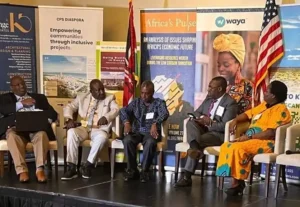
Africa’s climate future will be won or lost not just in boardrooms but in the trenches of early-stage project development. At Africa50’s general shareholders meeting in Maputo, Mozambique, the Alliance for Green Infrastructure in Africa – Project Development Fund (AGIA-PD) announced a $118 million first close, a milestone that proves blended finance for climate-resilient infrastructure is no longer theory but practice.
Backed by heavyweights such as the African Development Bank (AfDB), Germany’s KfW, the UK Foreign, Commonwealth & Development Office (FCDO), the West African Development Bank (BOAD), the Soros Economic Development Fund, and the African Climate Foundation, AGIA-PD is designed to raise $400 million and unlock a pipeline of projects across energy, transport, and digital infrastructure.
The angle here is clear: Africa is shifting from ambition to execution, de-risking infrastructure projects before they reach the financing stage.
1. Why AGIA-PD Matters
-
Closing the project preparation gap: Africa has long suffered from an abundance of ideas but a scarcity of “bankable” projects. AGIA-PD directly funds feasibility studies, structuring, and risk mitigation.
-
Catalytic role: AfDB’s $40M anchor commitment (split across grants, junior equity, and commercial equity) shows how public capital can absorb early risk to attract private investors.
-
Climate urgency: Target sectors—renewables, resilient transport systems, and low-carbon technologies—align with Africa’s twin needs: growth and adaptation.
Quote angle: Africa50 CEO Alain Ebobissé: “The first close means we are moving from ambition to execution.”
2. Comparable Funds and Programs in Africa
a) Green Climate Fund (GCF)
-
Scale: $13.5B active portfolio; $51.9B including co-financing.
-
Focus: Global climate adaptation/mitigation; African projects include solar farms in Egypt and water resilience in Sahel.
-
Significance: Sets global precedent but lacks the Africa-specific, project-prep focus of AGIA-PD.
b) Global Environment Facility (GEF)
-
Scale: $22B in grants since 1991; leveraged $120B in co-financing.
-
Focus: Broad environmental priorities—climate, biodiversity, land degradation.
-
Relevance: Africa receives a large share, but projects often spread thin across many themes.
c) Adaptation Fund
-
Scale: $1.2B committed since creation under Kyoto Protocol.
-
Focus: Community-level resilience—water, agriculture, coastal protection.
-
Unique feature: Direct access mechanism, enabling African national institutions to apply without intermediaries.
d) China–Africa Development Fund (CAD Fund)
-
Scale: Initial $1B, now scaling toward $10B.
-
Focus: Infrastructure, industrial parks, SEZs across Africa.
-
Relevance: Not explicitly climate-focused, but shows how sovereign funds catalyze infrastructure growth.
e) Abu Dhabi Fund for Development (ADFD)
-
Scale: Smaller but strategic; concessional loans to renewables.
-
Focus: Solar projects in Sierra Leone, hybrid systems in islands.
-
Relevance: Emerging Gulf capital entering Africa’s green transition.
3. Comparative Snapshot
| Fund / Initiative | Scale & Focus | Approach | Distinctive Feature |
|---|---|---|---|
| AGIA-PD (Africa50) | $118M first close, $400M target; climate-resilient infrastructure | Blended finance for early-stage project development | Focuses on making projects bankable |
| Green Climate Fund | $13.5B portfolio; global | Grants, loans, equity, guarantees | Largest UN-backed climate fund |
| Global Environment Facility | $22B grants; $120B co-financing | Thematic (climate, biodiversity) | Broad, multi-issue coverage |
| Adaptation Fund | $1.2B committed | Community adaptation; direct access | Empowers local institutions directly |
| CAD Fund | $1B initial; target $10B | Sovereign investment in infrastructure & industry | China–Africa strategic lever |
| ADFD | <$1B in Africa | Concessional loans for renewables | Gulf states entering Africa’s green finance |
4. The Bigger Picture
AGIA-PD isn’t just another climate fund—it represents a new category of financing: the project development fund. By targeting the riskiest stage of infrastructure, it solves the continent’s bottleneck: too many concepts, not enough shovel-ready deals.
Placed alongside global comparables, AGIA-PD’s Africa-specific, blended structure makes it a test case for how climate capital can flow faster, smarter, and earlier.
5. Conclusion
Africa’s infrastructure future hinges on turning climate ambition into projects investors can touch. With its first close, AGIA-PD shows that blended early-stage capital is possible. The next wave—backed by multilateral, sovereign, and philanthropic actors—will determine if Africa can replicate this model across transport, digital, and green energy corridors.
Message to investors: Africa is not short of ideas; it is short of catalytic project-prep capital. AGIA-PD is proof that gap can be filled.
[ad_2]