


[ad_1]
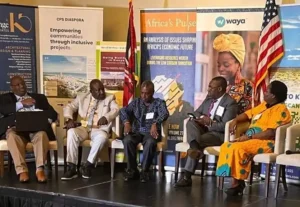
Accra, Ghana — At the Future of Energy Conference, Ghana’s Energy Minister John Abdulai Jinapor urged international investors to accelerate funding for Africa’s electricity sector, warning that the continent cannot achieve its industrial ambitions without reliable and affordable power.
More than 600 million Africans remain without access to electricity, while over one billion still rely on biomass for cooking fuel, according to the minister. These deficits not only limit productivity but also deepen inequality, restricting millions from opportunities in education, healthcare, and employment.
Energy Security as the Foundation for Industrial Growth
Jinapor emphasized that energy security is no longer just a development goal — it is the foundation of Africa’s industrialization strategy. Without dependable power grids and generation capacity, Africa risks being left behind in global trade.
“Investors will not build factories in countries where power outages are the norm,” the minister cautioned. “Energy is the lifeblood of industry, and without it, Africa cannot compete.”
Unlocking Capital Through Innovative Financing
The minister acknowledged that investment hesitancy remains a major barrier. He called for new financing models to reduce risk and attract long-term capital:
-
Sovereign guarantees to reassure investors.
-
Stable regulatory frameworks to reduce policy uncertainty.
-
Transparent policies to ensure accountability.
These mechanisms, he argued, can make projects bankable and help unlock billions in private and institutional capital.
A Continental Challenge With Global Implications
The situation in Ghana mirrors broader continental trends. The African Development Bank (AfDB) estimates that Africa requires $90–100 billion annually in power investments to achieve universal access by 2030. Yet, current financing falls far short.
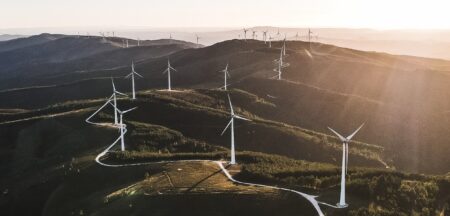
The potential, however, is immense. Africa holds 60% of the world’s best solar resources, vast wind corridors, and untapped hydro reserves. Harnessing these resources could position the continent as a global clean energy leader — if funding and infrastructure catch up.
Opportunities for Diaspora and Private Investors
For Africa’s diaspora and international partners, the push for energy investment presents a unique entry point:
-
Diaspora Bonds earmarked for renewable projects.
-
Impact investing in community-based solar and mini-grid systems.
-
Joint ventures in manufacturing solar panels, batteries, and smart grid technology.
These opportunities align with Agenda 2063 and the African Continental Free Trade Area (AfCFTA), which require robust power systems to unlock continental trade.
Balancing Optimism With Realism
While optimism runs high, Jinapor’s remarks also underscore Africa’s challenge: bridging the gap between ambitious blueprints and practical delivery. Past initiatives have often struggled with follow-through due to governance bottlenecks, debt burdens, and weak regulatory enforcement.
Yet the urgency of the moment is clear. As the minister concluded, Africa’s future industrial powerhouses will not emerge from rhetoric but from wires, turbines, and solar panels actually built on the ground.
Conclusion
Ghana’s call reflects a broader reality: without accelerated investment in power, Africa’s growth story will remain incomplete. But with the right financing tools and global partnerships, the continent could leapfrog into a renewable-powered future that fuels factories, digital economies, and inclusive development.