



Africa’s workforce and education systems are at a critical turning point. With over 60% of the continent’s population under the age of 25, Africa is poised to become the world’s largest labor force by 2050. But this demographic advantage can only turn into economic power if economic growth can keep pace with the rising number of educated, working-age people.
Without sufficient job creation and industrial expansion, education alone won’t transform the continent. To truly unlock Africa’s potential, investments in education must be matched by investments in job-producing sectors, digital infrastructure, and policy reform that stimulates entrepreneurship and industry.
The Urgent Link Between Africa’s Workforce and Education
Today, many young Africans are graduating without the skills required to compete in the modern economy. Outdated curricula, underfunded schools, and limited access to digital tools are common across the continent.
To prepare for the future of work, African education systems must pivot toward practical, industry-aligned, and tech-forward learning. The future workforce will require not only literacy and numeracy, but also digital skills, critical thinking, and adaptability — especially in a world of automation and artificial intelligence.
Read more about how How Africa’s Digital Revolution is Transforming the Economy
A Skills Gap That Could Derail Growth
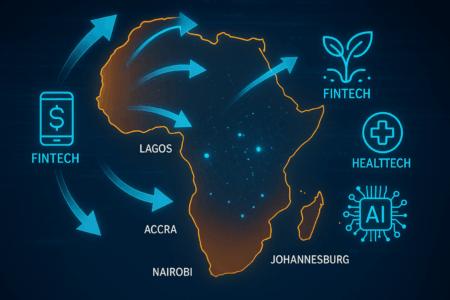
Employers across Africa consistently report a mismatch between graduate qualifications and job market needs. While Africa’s economies are diversifying, especially in sectors like fintech, renewable energy, agriculture, and logistics, most schools still focus on memorization rather than job-ready skills.
As a result, even university graduates are struggling to find work. Youth unemployment rates remain high in many countries, with millions locked out of formal employment despite having formal education.
What’s Needed:
- Digital literacy across all education levels
- Expansion of vocational training programs (TVET)
- A stronger focus on STEM education
- Entrepreneurship, teamwork, and problem-solving in curricula
- Public-private partnerships to align education with labor market needs
See UNESCO’s report on Technical and Vocational Education and Training in Africa.
Africa Workforce and Education: Building a Smarter Pipeline
To capitalize on the coming labor boom, Africa must build a talent pipeline that connects education to employment. Governments, businesses, and civil society must work together to modernize public education and expand private learning initiatives.
This includes revising national education policies, investing in teacher training, and designing new pathways from classroom to career — including apprenticeships, internships, and entrepreneurship programs.
Countries like Rwanda, Kenya, and Ghana are already experimenting with blended learning, coding academies, and startup incubators targeting youth. These models could be scaled across the continent with the right support.
Learn more about how renewable energy is powering Africa’s economic future.
Education Access and Infrastructure Must Grow Together
Even when the policies are right, many young people — especially in rural or underserved areas — lack the infrastructure to take advantage of educational programs. Reliable access to electricity, internet, transportation, and even basic learning materials remains a barrier for millions.
Without power, there’s no online learning. Without roads, students can’t reach school. Without investment, schools can’t offer digital tools or labs.
The infrastructure challenge must be addressed hand-in-hand with education reform. Initiatives like solar-powered schools, mobile training centers, and offline learning apps can help bridge the gap in remote areas.
Learn how the World Bank is supporting African education systems.
Women and Girls: An Untapped Force
No conversation about Africa’s workforce is complete without addressing gender equity. In many countries, girls still face cultural and structural barriers to completing their education. Early marriage, domestic responsibilities, and gender-based violence all contribute to school dropout rates.
Yet studies consistently show that educating girls leads to higher incomes, healthier families, and stronger communities. Closing the gender gap in education could unlock trillions in potential GDP over the coming decades.
Governments and organizations must continue to invest in girls’ education, provide scholarships, ensure safe school environments, and promote women in STEM and leadership fields.
Africa’s Economic Readiness Must Match Its Demographics
While education reform is essential, it won’t matter if there aren’t enough quality jobs for people to step into. African governments must also focus on economic transformation — growing industries, scaling investment, improving the business environment, and building demand for skilled workers.
This means diversifying beyond natural resource extraction into manufacturing, technology, creative industries, green energy, and logistics. Education must be tied to these growth sectors to ensure that learning translates into livelihood.
As new sectors emerge — such as tech hubs in Nairobi or solar industries in West Africa — the demand for skilled workers will only grow. The Africa workforce and education agenda must keep pace with these evolving opportunities.
The Opportunity Is Now
Africa’s workforce will more than double by 2050. Whether that becomes a demographic dividend or a missed opportunity depends entirely on what we do now.
Investing in education is not just a moral duty — it’s an economic strategy. But education alone won’t deliver results unless there’s meaningful job creation to match.
Africa’s true challenge is ensuring that its economies can absorb the millions of young people entering the workforce each year. That means smart planning, public-private coordination, and targeted investment in job-producing sectors.
Because at the heart of Africa’s future is this simple truth:
Africa’s workforce and education systems must grow alongside its economy — or the opportunity may slip away.