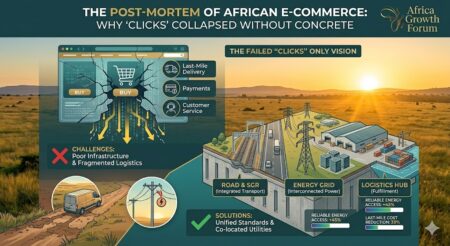




"This operational profile serves as foundational field intelligence within our broader macroeconomic tracking network. To evaluate how these localized market variables, infrastructure pipelines, and regional trade dynamics integrate into a continent-wide roadmap for capital deployment, access our master thesis directly through our core document: The Architecture of Momentum Framework."
At the 2025 AU Summit in Addis Ababa, leaders adopted the AU Continental AI Strategy. This move sets the rules for how AI will be built, governed, and used across Africa. It also links AI policy to trade, data, and infrastructure. For startups and investors, the strategy is a market signal as much as a policy statement.
Why data sovereignty matters
For years, African data has been hosted and monetized abroad. The AU Continental AI Strategy aims to change that. It pushes for local hosting, clearer consent, and stronger security. It also reinforces the Malabo Convention to protect privacy and build trust.
See background: Agenda 2063 and Africa’s Development Path
One rulebook for a single digital market
Fragmented laws raise costs. A fintech that is compliant in Kenya may face new rules in Nigeria. The strategy aligns AI rules with the AfCFTA Digital Trade Protocol. As a result, cross-border scale becomes easier, and risk falls for investors.
Read more: AfCFTA: Africa’s Path to Trade-Led Growth
Infrastructure first: cloud, GPUs, and reliable power
AI needs compute, connectivity, and energy. The AU and development banks are backing sovereign cloud capacity, GPU clusters, and grid upgrades. This lowers latency and keeps data local. It also creates investable projects in data centers and green power.
Related: Africa’s Digital Infrastructure Boom
Related: Afreximbank & South Africa: Infrastructure Renewal
What this means for business, youth, and governments
- Businesses: Clear rules for responsible AI; demand for regtech, cloud, and data hosting.
- Investors: Lower policy risk; growing pipelines in compute, energy, and digital trade.
- Governments: A continental template to draft national AI laws.
- Youth: More fellowships and skills programs tied to AUDA-NEPAD and regional hubs.
Context: Digital Economy & Education
Risks to watch
Progress will vary by country. Some regulators lack capacity. Africa still faces a large infrastructure funding gap. In addition, global platforms may lobby to water down rules. Even so, alignment with AfCFTA and new capital for infrastructure improves the odds.
Bottom line
The AU Continental AI Strategy is more than a communique. It is Africa’s digital rulebook. If implemented well, it can keep value on the continent, cut compliance friction, and open a continental market for AI. That is why this strategy matters—for policy, for growth, and for people.
Stay Ahead of the Market Subscribe to our newsletter for the latest insights on African infrastructure and industrial policy.