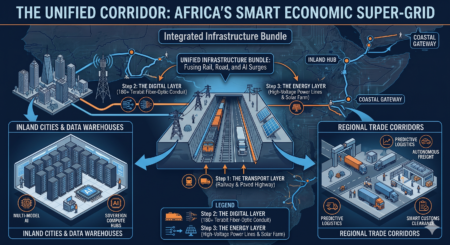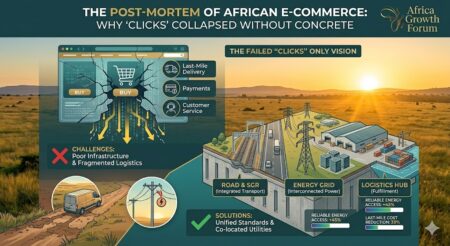


"This operational profile serves as foundational field intelligence within our broader macroeconomic tracking network. To evaluate how these localized market variables, infrastructure pipelines, and regional trade dynamics integrate into a continent-wide roadmap for capital deployment, access our master thesis directly through our core document: The Architecture of Momentum Framework."
For decades, the story of African economic growth was told through the lens of primary commodities—minerals, oil, and agriculture. While these sectors generated top-line GDP numbers, they rarely created sustainable, high-velocity economic momentum. They were extractive, vulnerable to global price shocks, and failed to build localized talent ecosystems.
Today, a structural shift is underway. Tech startups are no longer just a niche sector for venture capitalists; they have become the primary engines of modern African economic growth.
By building digital infrastructure where legacy systems failed to deliver, these high-growth enterprises are acting as economic force multipliers. They aren’t just creating businesses—they are unlocking trapped capital, building resilient talent pipelines, and driving systemic productivity across the continent.
1. The Multiplier Effect: GDP Beyond Commodities
The true power of a tech startup isn’t its standalone valuation; it is its ability to accelerate efficiency across other traditional sectors. When a startup innovates, it creates a rising tide that lifts multiple industries simultaneously.
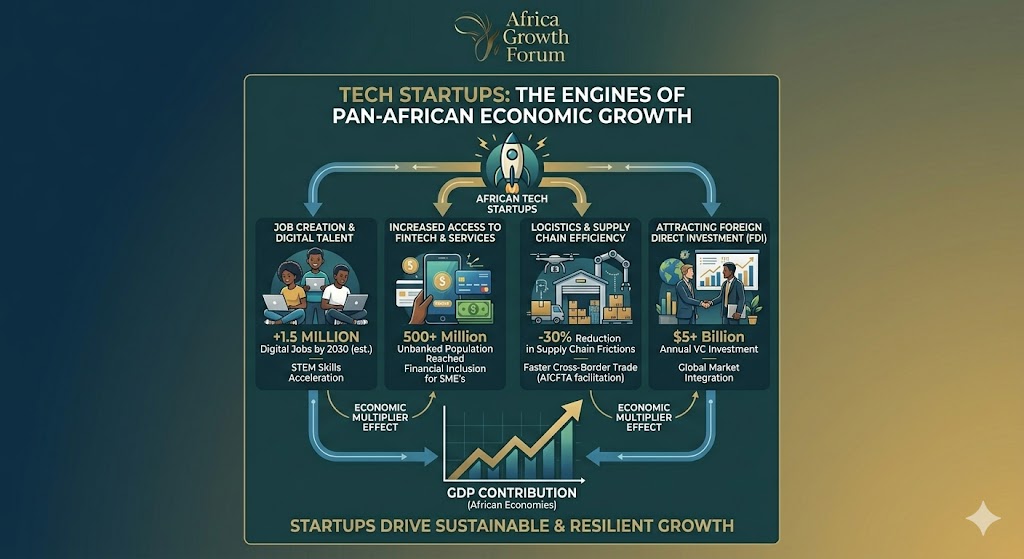
- Fintech as an Economic Catalyst: Financial inclusion isn’t just a social good; it is a macroeconomic necessity. By bringing over 500 million unbanked individuals and informal small businesses into the formal financial ecosystem, fintech platforms allow capital to circulate with unprecedented velocity.
- Agritech and Food Security: Agriculture employs the majority of the continent, but structural inefficiencies destroy value. Agritech startups are bypassing broken supply chains, linking smallholder farmers directly to markets, and utilizing data to optimize yields—turning a subsistence sector into a commercial driver.
- Logistics and Trade Velocity: Startups rebuilding the logistical spine of the continent are reducing cross-border friction, optimizing fleet management, and driving down the cost of moving goods by up to 30%. This directly accelerates the real-world impact of the African Continental Free Trade Area (AfCFTA).
2. Upgrading the Capital Stack: Attracting High-Velocity FDI
Historically, Foreign Direct Investment (FDI) into Africa was heavily concentrated in infrastructure megaprojects or resource extraction. Tech startups have fundamentally changed the risk profile and attractiveness of African markets for global capital.
By consistently drawing billions of dollars in international venture capital annually, the tech ecosystem has proven that African consumer and B2B markets offer world-class returns. This capital influx does more than fund individual corporate runways; it deepens local liquidity, builds corporate governance standards, and integrates African economies directly into global financial networks.
3. Human Capital Acceleration: Building the Digital Workforce
The most profound macroeconomic contribution of the startup ecosystem is the radical upskilling of African youth.
Unlike traditional industries that rely on low-skill manual labor, the tech sector requires and accelerates high-value STEM and digital capabilities. Startups serve as decentralized universities, training the next generation of software engineers, data analysts, product managers, and operational executives.
The Momentum Principle: Software and digital talent are infinitely scalable assets. When a country builds a deep pool of technical talent, that knowledge doesn’t stay confined to one company. It leaks into the broader economy, sparking localized innovation, lowering the barrier to entry for new enterprises, and creating a self-sustaining cycle of high-wage employment.
4. The Structural Transformation Matrix
| Growth Vector | The Legacy Model | The Startup-Driven Blueprint |
| Job Creation | Reliant on volatile public sector hiring or low-wage commodity extraction. | High-Value Talent Influx: Generation of over 1.5 million digital-first, resilient jobs by 2030, transforming the youth demographic into an active economic asset. |
| Market Integration | Fragmented national markets working in isolation with immense transaction friction. | Frictionless Scaling: Digital platforms creating borderless networks that allow domestic businesses to access regional and global customers instantly. |
| Economic Resilience | High vulnerability to global supply chain shocks and fluctuating commodity prices. | Diversified Digital Economy: A modular, tech-enabled landscape that maintains operational continuity through localized digital solutions. |
The Bottom Line
African tech startups are doing something far more critical than building apps; they are constructing the foundational architecture of a modern, resilient economy. They are proof that when you give talent access to digital tools, they don’t just wait for growth—they manufacture it. In the race for long-term macroeconomic stability, the digital startup ecosystem isn’t a luxury; it is the definitive roadmap waiting for borders to open — they’re building businesses that transcend them.
Read More in This Series:
- Fintech and Mobile Money in Africa
- E-Commerce and Digital Marketplaces
- EdTech Innovations Across Africa
- Digital Infrastructure – Fiber, 5G & Satellite
- Africa’s Digital Leap: Unlocking the Power of Innovation and Learning
Key Takeaways
- African startups are reshaping economic growth by acting as engines that enhance efficiency across traditional sectors.
- Tech companies in Africa attract significant foreign direct investment, proving market viability and creating local economic integration.
- The startup ecosystem accelerates job creation by training youth in high-skill STEM and digital roles, building a resilient workforce.
- These startups optimize industries like fintech and agritech, improving financial inclusivity and food security across the continent.
- Overall, African startups are constructing a modern economy, leveraging digital tools to drive innovation and growth beyond borders.
Stay Ahead of the Market Subscribe to our newsletter for the latest insights on African infrastructure and industrial policy.