



[ad_1]
This week marked a turning point in the race to secure critical minerals.
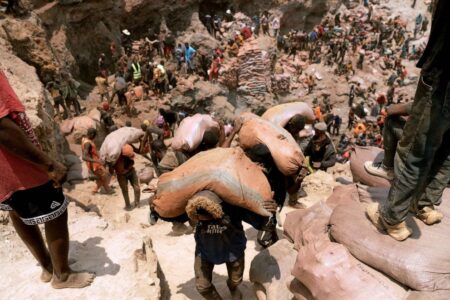
The Democratic Republic of Congo (DRC) has announced it will replace its seven-month cobalt export ban with a quota system, setting strict tonnage limits for exporters.
At the same time, Glencore is exploring the sale of a major copper–cobalt asset in the DRC, while the U.S. government considers taking a direct stake in domestic lithium production.
Meanwhile, Europe has opened its first large-scale rare-earth magnets facility, and China continues expanding through new antimony investments in Tajikistan.
Together, these developments reveal a rapidly shifting geopolitical landscape where resources, trade, and security are increasingly interlinked.
DRC Replaces Cobalt Ban with Export Quotas
Beginning October 16, 2025, Kinshasa will end its cobalt export ban and enforce a quota system allowing shipments of up to 18,125 tonnes for the rest of the year.
Over the next two years, total cobalt exports will be capped at 96,600 tonnes annually.
This shift signals the government’s desire to balance control with stability.
By managing rather than prohibiting exports, the DRC aims to stabilize revenue, reduce oversupply, and maintain higher global prices.
For foreign buyers and EV battery manufacturers, the new quota system offers regulatory clarity—but also introduces new risks tied to licensing and allocation.
This shift in cobalt policy follows other frontier dynamics in the DRC — including real estate and infrastructure booms in contested zones. See our analysis on the Construction Boom in Eastern DRC and its investor risks.
For background on how resource policy shapes Africa’s investment future, see Reclaiming Africa’s Wealth: The Path to Economic Independence.
Why Cobalt Policy Matters for Global Supply Chains
The DRC supplies more than 70% of the world’s cobalt, a critical component in electric-vehicle (EV) batteries and energy-storage systems.
Every change in Kinshasa’s mining policy reverberates through supply chains from California to Shenzhen.
The quota system may prevent severe shortages but will tighten availability just as global demand accelerates.
For buyers in the U.S., Europe, and Asia, this could mean:
-
Higher competition for limited cobalt allocations
-
Greater price volatility
-
Increased pressure to diversify sourcing or invest in recycling technologies
Glencore’s Potential Asset Sale in the DRC
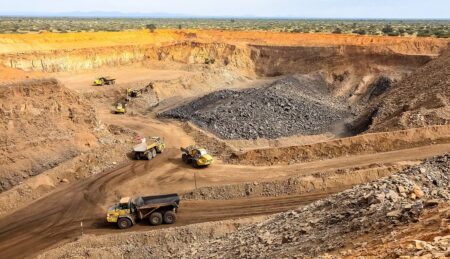
Mining giant Glencore has hinted at selling one of its major copper–cobalt assets in the DRC.
The move reflects both corporate recalibration and growing state influence over mineral resources.
If completed, the sale could reshape ownership of one of the world’s most important cobalt hubs.
Chinese companies—already dominant in refining—are expected to show interest.
The question is whether Western investors will respond or cede more ground to Beijing.
For deeper insight into China’s growing footprint in Africa, see Africa’s Digital Infrastructure Boom, which explores how investment competition is redefining regional strategy.
U.S. and Europe Move to Secure Supply
In Washington, the Biden administration is considering a direct government stake in domestic lithium production—a sharp departure from decades of private-sector reliance.
This move signals a recognition that critical mineral security is now a matter of national strategy.
In Europe, leaders celebrated the opening of the region’s first major rare-earth magnets plant—a cornerstone for reducing dependence on China in sectors like EV motors, wind turbines, and defense manufacturing.
Both developments underscore how the West is pivoting toward supply chain localization and strategic autonomy.
China Deepens Its Global Reach
While the U.S. and Europe fortify domestic capacity, China continues expanding abroad.
Its latest move: investing in Tajikistan’s antimony sector, a mineral essential for semiconductors, flame retardants, and military applications.
These investments show Beijing’s methodical approach—securing upstream resources, refining them domestically, and exporting finished products.
This strategy keeps China ahead in the global critical minerals race.
For comparison, read Africa Finance Its Own Development, which discusses how African nations are seeking to fund and control their resource economies.
The Global Contest for Critical Minerals
From Kinshasa to Washington to Beijing, the struggle to control supply chains is accelerating.
The DRC’s cobalt quotas will shape market dynamics for years to come.
Glencore’s potential divestment could realign corporate and national interests in Central Africa.
The U.S. and Europe are trying to rebuild lost capacity, while China remains several steps ahead in securing global resource networks.
The contest for critical minerals is no longer theoretical—it is the frontline of 21st-century economic power.
🔗 External Reference
For further updates, visit the U.S. Geological Survey – Critical Minerals Review.
[ad_2]