


"This operational profile serves as foundational field intelligence within our broader macroeconomic tracking network. To evaluate how these localized market variables, infrastructure pipelines, and regional trade dynamics integrate into a continent-wide roadmap for capital deployment, access our master thesis directly through our core document: The Architecture of Momentum Framework."
The ongoing instability of traditional Transatlantic trade architectures—culminating in the volatile, stopgap management of the African Growth and Opportunity Act (AGOA)—has exposed a structural truth: dependency on external market preferences is an economic dead end. For sovereign states and global investors alike, wealth is not generated by managing dependency; it is captured by dictating the terms of integration.
True economic leverage is built by retaining control over assets, forcing capital competition, and climbing value chains. For policymakers navigating the current multipolar landscape, and for investors seeking structural alpha, the roadmap to continental self-reliance clusters into four operational pillars.
1. Terminating Dependency Lock-In (The Value-Add Mandate)
The historic vulnerability of African economies lies in the extraction-to-export paradigm. Shipping unrefined raw materials out of the continent externalizes the most profitable segments of the industrial lifecycle, leaving local economies exposed to commodity price volatility and foreign exchange traps.
The Policy Blueprint
Governments must legally terminate the export of unrefined wealth. This requires strict, state-enforced mandates:
- Export Restrictions on Raw Ore: Imposing punitive tariffs or outright bans on the export of raw strategic minerals (e.g., lithium, cobalt, manganese).
- Minimum Processing Thresholds: Mandating that agricultural products and industrial inputs undergo secondary and tertiary refining on-site before securing export clearance.
The Investment Thesis
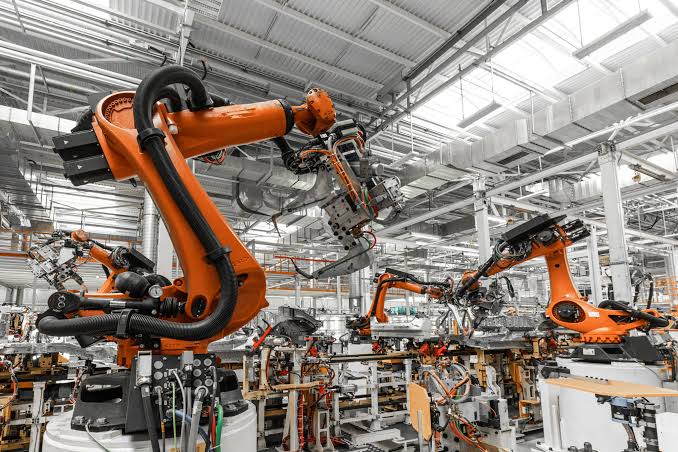
This regulatory shift transforms resource extraction fields into industrial manufacturing zones. Wealth is created in the gap between raw material extraction and component manufacturing. Capital allocators must position themselves directly inside these policy-driven transition zones—specifically investing in local smelting, chemical processing, and packaging infrastructure that turns raw assets into market-ready components.
2. Compounding Scale via Regional Corridors
Treating the African continent as a fragmented map of over fifty individual markets dilutes bargaining power and caps industrial growth. Fixed industrial capital requires a massive, predictable internal demand base to justify the high cost of infrastructure amortization.
We analyze this fragmentation risk and map out where the initial trade flows are concentrating in our data audit, Who Actually Benefits From AGOA? A Cold Audit of Export Concentration.
The Policy Blueprint
The execution of the African Continental Free Trade Area (AfCFTA) must move past abstract tariff discussions and focus on the hard construction of regional monopolies:
- Unified Rules of Origin: Implementing strict legal definitions that ensure goods count as “African-made” across internal borders only if local inputs meet high percentage thresholds.
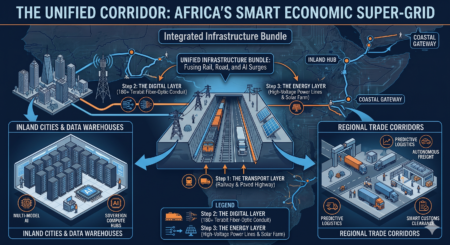
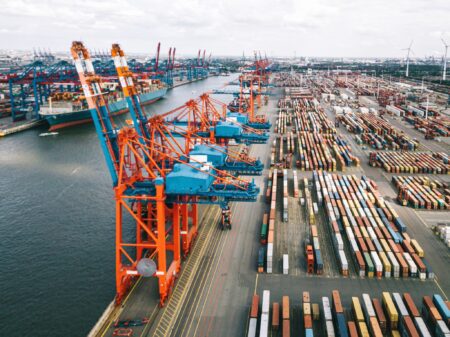
- Cross-Border Logistics Pools: Consolidating state capital into unified infrastructure corridors—linking regional rail networks, deepwater ports, and interconnected energy pools to lower the cost of internal transit.
The Investment Thesis
The primary friction point in continental trade is logistics control and coordination failures. High-value investment returns will flow to the logistics platforms, dry ports, and private energy grids that successfully connect these regional industrial clusters, allowing companies to scale across multiple African markets ahead of the curve.
3. Capturing the Value Chain Ladder
Most conventional trade policy fails because it measures economic health by the raw volume of exports. But the biggest profits are rarely found in the initial extraction or the final low-margin assembly—they are concentrated in processing, logistics control, and brand ownership.
We break down how preference frameworks trap economies at the lowest rung of this ladder in our primary analysis, AGOA and Africa’s Trade Dependency: A Structural Analysis of Uneven Benefits.
The Policy Blueprint
Sovereign strategy must actively disincentivize low-value assembly lines that rely on imported foreign components. Industrial policy must explicitly benchmark progress by how far up the value chain production happens inside continental borders, utilizing state procurement contracts to favor local component manufacturers and domestic distributors.
The Investment Thesis
Look for supply-chain positioning opportunities where glaring value gaps exist. For instance, an investment that backs a regional chemical plant transforming local inputs into industrial-grade components will capture significantly higher margins and face less global competition than a standard raw extraction play. Real wealth compounds where the processing meets the logistics control.
4. Engineering Competition Between Global Capital
Sovereignty does not come from ideological loyalty to the West, East, or any singular geopolitical bloc. Power is derived from having options. The rise of a multipolar global order means African nations are no longer trapped within a mono-capital system.
The immediate external pressures driving this dynamic are laid bare in our look at The Hostage Economy: Why the AGOA Crisis Leaves Africa with No Choice But to Pivot.
The Policy Blueprint
African trade and finance ministries must stop choosing between competing external powers and instead force external actors to compete on African terms:
- Multi-Bidding Infrastructure Mandates: Structuring major infrastructure tenders to require split financing sources, ensuring no single foreign power achieves a monopoly over critical national assets.
- Conditional Technology Transfers: Tying market concessions and resource extraction licenses directly to mandatory local hiring quotas, tech transfers, and domestic supply-chain sourcing.
The Investment Thesis
This institutional posture creates a highly lucrative environment for infrastructure arbitrage. By splitting financing and forcing global players to compete inside local terms, African states de-risk large-scale projects. Investors who can act as the independent structuring partners—arranging blended finance models that combine alternative capital pools with local sovereign guarantees—will hold the keys to high-yield bottleneck assets.
The Sovereign Takeaway
There is no singular policy or external trade deal that “fixes” an economy. There are only structural shifts that gradually alter bargaining power. For the modern policymaker, the objective is to leverage raw assets to force industrial compliance. For the modern investor, money flows directly to the bottlenecks, the transitions, and the coordination failures. The future belongs to those who build the infrastructure to capture the value right where it is generated.
The Hostage Economy: Why the AGOA Crisis Leaves Africa with No Choice But to Pivot
Who Actually Benefits From AGOA? A Cold Audit of Export Concentration
The Real Economy vs. the Elite Economy: Who Really Benefits?
What Really Grows the Economy?
Why Cutting Government Spending Can Collapse the Economy
Key Takeaways
- The instability of Transatlantic trade highlights the need for African economies to end dependency on external markets.
- Governments must implement strict export restrictions and processing mandates to retain control over local resources.
- Infrastructure investment in logistics and industrial zones boosts continental trade and captures higher value in the supply chain.
- To foster competition, African states should structure infrastructure projects to avoid monopolies and ensure local benefits.
- Investors who align with local strategies and integrate global capital can create lucrative opportunities in Africa’s evolving market landscape.
Stay Ahead of the Market Subscribe to our newsletter for the latest insights on African infrastructure and industrial policy.