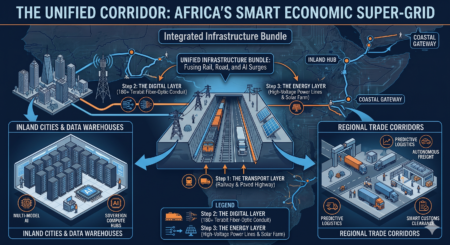




"This operational profile serves as foundational field intelligence within our broader macroeconomic tracking network. To evaluate how these localized market variables, infrastructure pipelines, and regional trade dynamics integrate into a continent-wide roadmap for capital deployment, access our master thesis directly through our core document: The Architecture of Momentum Framework."
The evolution of Transatlantic trade architectures has entered a phase of acute volatility. Following its formal expiration, the African Growth and Opportunity Act (AGOA) was granted a retroactive, short-term reauthorization through December 31, 2026, via the Consolidated Appropriations Act. While this stopgap measure temporarily restored duty-free market access to the United States for 32 eligible sub-Saharan nations, its implementation has been fundamentally complicated by an overlapping U.S. tariff regime—including universal Section 122 import surcharges.
To casual observers, the frantic lobbying by African trade ministries to preserve this framework suggests that AGOA has been an unmitigated engine of continental development. However, an evaluation through a lens of structural skepticism—measuring not administrative intent or short-term trade volumes, but rather long-term power, ownership, and capital retention—reveals a more complex reality.
The empirical record indicates that AGOA illustrates how preferential trade systems can unintentionally lock developing economies into concentrated export dependence without guaranteeing long-term industrial transformation. For policymakers and forward-looking investors, the current landscape is a powerful indication that the continent must transition from subordinate integration to durable, regional economic power.
1. The Anatomy of Asymmetric Preference
At its core, AGOA is a unilateral, non-reciprocal trade preference program. While this design was intended to lower entry barriers for African goods into the U.S. consumer market, it introduces a fundamental structural vulnerability: co-dependency without contractual equality.
Because the program is a unilateral concession granted by the U.S. government rather than a bilateral treaty, eligibility is subject to a strict annual review process. Under this mechanism, participating nations face strong economic incentives to align domestic regulatory, legal, and foreign policy postures with access conditions defined by an external power.
When a country’s eligibility is abruptly revoked, the domestic economic shock can be swift, hollowing out specific manufacturing ecosystems and signaling elevated country risk to international credit agencies. Furthermore, the Office of the U.S. Trade Representative (USTR) has signaled that any modernization of the program beyond 2026 will demand strict market reciprocity from African partners. Consequently, what is historically framed as a development partnership frequently operates as an instrument of asymmetric leverage, compressing sovereign policy space and creating deep regulatory uncertainty.
2. The Concentration Reality: Who Actually Benefits?
The primary empirical argument against AGOA as a macro-development tool is the profound concentration of its trade volumes. The narrative of continent-wide market access is directly contradicted by the reality of uneven participation.
When fuel and oil exports—which primarily reflect raw commodity extraction rather than industrial advancement—are excluded from the data, a minuscule group of just five countries has consistently captured nearly 90% of all non-energy AGOA trade flows. This core group is led dominantly by South Africa’s automotive cluster and the specialized apparel sectors of Kenya, Lesotho, Madagascar, and Ghana.
For the remaining 30+ eligible nations, the program has generated minimal industrial diversification over a twenty-five-year period. This imbalance occurs because preference access alone cannot compensate for foundational structural bottlenecks:
- The Fragmentation of Scale: Sub-scale national markets cannot support the volume requirements or production timelines of large-scale global buyers.
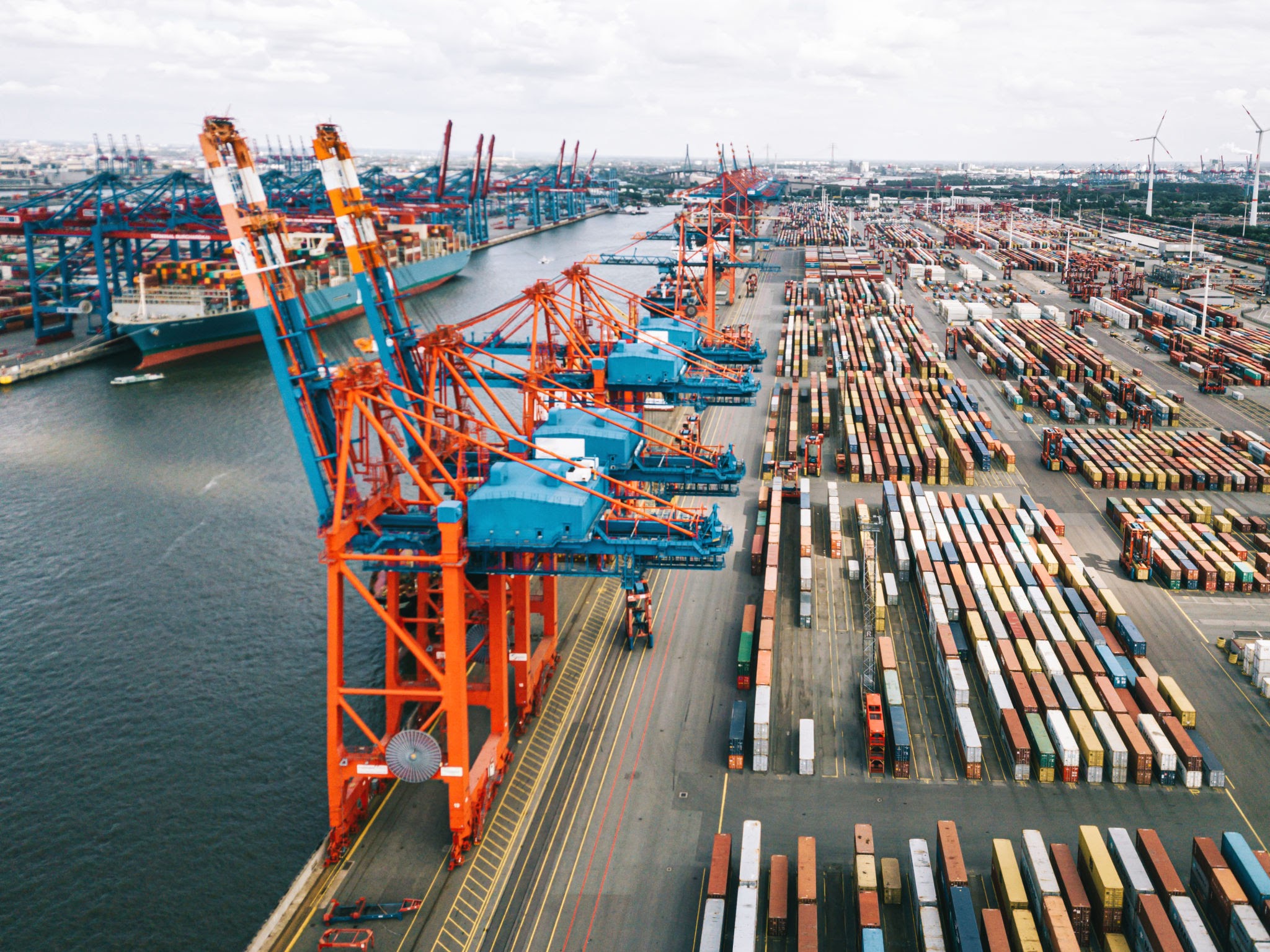
- Logistical Cost Penalties: Deficits in port infrastructure and cross-border transport corridors create domestic transit frictions that erase duty-free cost advantages.
- Undercapitalized Industrial Bases: Without pre-existing industrial capacity, a country cannot utilize duty-free lines, leaving the preference structurally unusable.
3. The Preference Trap: How Market Access Distorts Capital
The most sophisticated critique of AGOA centers on investment risk and capital distortion. Fixed industrial manufacturing—the true driver of economic transformation—requires long-term regulatory predictability over 10-to-25-year horizons to justify major capital expenditure.
AGOA’s reliance on short-term, rolling renewal windows fundamentally alters the risk calculations of global capital. Instead of anchoring deep supply chains, it pathologically Úincentivizes low-margin, footloose assembly operations, primarily in the garment sector.
Under the program’s “third-country fabric” provisions, factories have overwhelmingly imported cheap yarn and textiles from Asia for manual assembly, rather than building out domestic or regional agricultural and milling supply chains. The highest-margin segments of the manufacturing lifecycle—technical fabric design, advanced machinery ownership, logistics networks, financing, and final brand ownership—remain entirely externalized.
The result is an investment model that lacks deep root systems. Because the capital invested is mobile and restricted to low-wage manual labor, it does not build permanent, indigenous industrial capacity. The moment trade eligibility wavers or a preference window shortens, production can relocate to alternative low-wage jurisdictions globally, leaving the host country with zero structural advancement to show for decades of access.
4. The Structural Pivot: From External Dependence to AfCFTA Scale
To break the dependency loops inherent in external preference systems, African policymakers and global investors must shift their strategic focus inward. The operationalization of the African Continental Free Trade Area (AfCFTA) represents the direct structural antithesis to the AGOA paradigm.
While AGOA channels raw resources and low-margin assembly outward to a distant consumer base, the AfCFTA builds an integrated, 1.3 billion-person domestic market designed to internalize the value chain lifecycle.
| Trade Framework | Core Mechanism | Market Orientation | Industrial Outcome |
| AGOA | Unilateral, politically contingent preferences | External (United States) | Concentrated, low-margin export dependence |
| AfCFTA | Reciprocal tariff reduction & regional integration | Internal (Pan-African) | Dense, diversified regional value chains |
By harmonizing internal tariffs, institutionalizing unified rules of origin, and co-investing in cross-border logistics corridors, the continent can achieve the economies of scale required to attract permanent, fixed industrial manufacturing. For capital allocators, true alpha is no longer found in positioning inside vulnerable export enclaves tied to external political cycles. It is captured by investing in the bottlenecks, infrastructure transitions, and regional manufacturing networks that power internal African trade.
The Analytical Verdict:
Preferential trade agreements are not permanent pathways to wealth; they are temporary transition windows. True sovereign leverage rises when an economy moves up the value chain from raw extraction to processing, logistics control, and regional market distribution. The future of African economic transformation lies not in lobbying for extended preferences abroad, but in leveraging the collective scale of the continent to dictate the terms of global interdependence.
The Hostage Economy: Why the AGOA Crisis Leaves Africa with No Choice But to Pivot
Who Actually Benefits From AGOA? A Cold Audit of Export Concentration
The Real Economy vs. the Elite Economy: Who Really Benefits?
What Really Grows the Economy?
Why Cutting Government Spending Can Collapse the Economy
Key Takeaways
- AGOA trade dependency has led to acute volatility in transatlantic trade, driven by a complicated U.S. tariff regime.
- While AGOA provides duty-free access, it creates structural vulnerabilities and promotes co-dependency without equality.
- A small group of countries dominates AGOA trade, revealing a lack of industrial diversification among eligible nations.
- AGOA distorts capital investment by incentivizing low-margin assembly, rather than fostering long-term industrial capacity.
- The AfCFTA represents a shift toward internal value chains, promoting regional integration and reducing external dependency.
Stay Ahead of the Market Subscribe to our newsletter for the latest insights on African infrastructure and industrial policy.