



[ad_1]
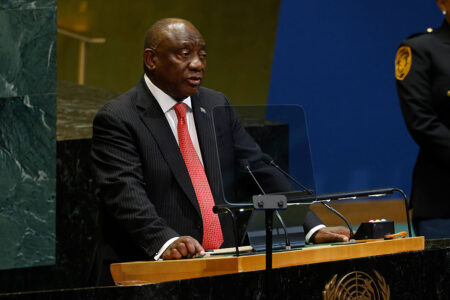
When the United Nations General Assembly (UNGA) adopted its latest resolution on UN Africa cooperation, it did more than issue diplomatic statements — it marked a turning point in how Africa’s development, peace, and prosperity are integrated into global priorities. The message was clear: Africa’s future is inseparable from global peace, prosperity, and stability.
African Union Commission Chairperson Mahmoud Ali Youssouf welcomed the decision, calling it a recognition of Africa’s leadership in shaping global solutions. But the resolution’s true importance lies in what it could mean for Agenda 2063, Africa’s homegrown transformation blueprint.
A New Chapter in UN–AU Relations
For decades, the UN and AU have cooperated on peacekeeping, mediation, and humanitarian operations. What sets this resolution apart is its explicit recognition of Africa’s long-term strategic goals.
Unlike earlier frameworks that centered on crisis management, this one highlights Africa’s structural transformation—industrialization, regional integration, and digital innovation.
It acknowledges the AU as a partner in shaping the future, not merely a recipient of international aid.
🔗 Learn more about Africa’s long-term vision in our deep dive: Agenda 2063 and Africa’s Development Path
Why Agenda 2063 Matters
Agenda 2063 is Africa’s 50-year roadmap for shared prosperity. It envisions a unified, industrialized, and innovative continent led by its own citizens.
Its priorities include:
-
Implementing the African Continental Free Trade Area (AfCFTA)
-
Expanding infrastructure and logistics networks
-
Advancing education and digital transformation
By explicitly referencing Agenda 2063, the UN resolution brings international legitimacy to a vision designed by Africans, for Africans.
It represents a rare moment of policy alignment — where global institutions reinforce a homegrown African framework.
🔗 Explore our feature: Africa’s Digital Infrastructure Boom
From Symbolism to Substance
The resolution opens three concrete avenues for cooperation between the AU and UN:
1. Peace and Security
African-led missions in Somalia, Sudan, and the Sahel often operate with limited resources. Stronger UN partnerships could deliver more sustainable support and joint funding mechanisms.
2. Sustainable Development
The resolution aligns UN programs with AU-led development priorities — especially in renewable energy, transport, and industrialization.
This supports Africa’s ongoing efforts to close its infrastructure gap and attract diaspora investment.
🔗 Related reading: Diaspora Bonds: Can They Fund Africa’s Future?
3. Global Representation
By calling Africa a “dynamic force in the international arena,” the resolution amplifies the continent’s demand for greater representation in global institutions — including long-overdue UN Security Council reform.
The Road Ahead
Resolutions alone do not drive transformation — implementation does.
Whether this partnership delivers real progress depends on joint accountability and resource mobilization.
As Youssouf emphasized, Africa must now move from political statements to “concrete action that delivers for Africa’s people.”
Why It Matters for Africa’s Partners
For the African diaspora, global investors, and development partners, this resolution is more than symbolic.
It signals a shared understanding that Africa’s growth is critical to the world’s prosperity.
New opportunities are emerging across sectors such as:
-
Infrastructure and logistics
-
Renewable energy and climate finance
-
Digital innovation and education
🔗 Dive deeper: Climate Finance and Africa’s Transition
This renewed cooperation strengthens the foundation for long-term partnerships that align investment with Africa’s self-determined goals.
Final Thought
The UN resolution on AU cooperation is more than a diplomatic gesture.
It is an acknowledgment that Africa’s destiny is central to the world’s future.
If fully implemented, it could mark the start of a new era — one where Africa stands not on the margins of global affairs, but firmly at the center.
[ad_2]