

Africa’s e-learning and EdTech revolution is transforming how millions access education, skills, and opportunity. Driven by broadband expansion, mobile penetration, and a young, tech-savvy population, the continent’s digital learning market is projected to reach $20 billion by 2030, according to the International Finance Corporation (IFC).
“The pandemic may have closed classrooms, but it opened a digital future for African education,” said Makhtar Diop, IFC Managing Director.
IFC Africa Digital Education Report
📱 Digital Infrastructure Unlocks Learning Access
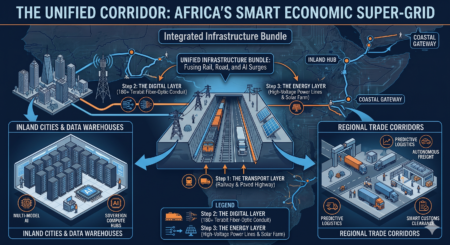
The rapid deployment of broadband networks, 5G rollouts, and data centers—as detailed in Africa’s Digital Infrastructure Boom 2025 —has enabled education providers to scale across borders.
Key trends fueling access:
- Mobile-first learning: 80 % of African students use smartphones for study.
- Cloud-based EdTech: Platforms like uLesson, Eneza Education, and Moringa School deliver lessons anytime, anywhere.
- Microlearning apps: Short video-based modules for trades, languages, and STEM skills.
“With digital tools, a rural learner can access the same resources as a student in Lagos or Nairobi,” said Eneza Education CEO Wambura Kimunyu.
🎓 The African EdTech Ecosystem 2025
| Country | Key Startups & Initiatives | Focus Area |
|---|---|---|
| Nigeria | uLesson, AltSchool Africa, Edukoya | STEM and vocational learning |
| Kenya | Eneza Education, Moringa School | Coding & teacher training |
| South Africa | GetSmarter (2U), Valenture Institute | Online university partnerships |
| Ghana | eCampus, Soronko Academy | Youth skills and digital literacy |
| Egypt | Nafham, EYouth Academy | Arabic-language curriculum |
HolonIQ Africa EdTech Landscape 2025
📈 Investment Trends in EdTech
Venture capital funding for African EdTech companies surged to $650 million in 2024, up from $90 million in 2020. Leading investors include Naspers Foundry, TLcom Capital, and Partech Africa.
Development finance institutions (DFIs) such as the AFC and AfDB are also entering the education space, supporting digital learning corridors and renewable-powered schools through projects like the AfDB Climate Adaptation Facility and the AFC Infrastructure Financing Facility.
🧭 Public–Private Partnerships Driving Access
Governments and private operators are teaming up to close the education gap for rural communities:
- Ghana Digital Schools Project: powered by MTN Foundation and Ghana Education Service.
- Kenya Smart Classrooms Initiative: linking school ICT labs to the national cloud.
- South Africa E-Teacher Training Platform: supported by EU and Africa50.
These initiatives reflect the broader trend of Africa using digital infrastructure as a tool for human capital development — a core theme of the Africa Growth Forum Digital Economy & Education Pillar.
💰 The Diaspora’s Role in Africa’s EdTech Future
African diaspora investors are launching impact funds that blend returns with social impact.
- TechBridge Diaspora Fund: co-investing in EdTech startups and teacher training.
- Google Black Founders Fund Africa: supporting EdTech entrepreneurs with capital and mentorship.
This approach mirrors the model outlined in [Diaspora Bonds & Diaspora Capital], turning remittances into investments that transform education outcomes.
🌍 Policy and Regulation Supporting Growth
The African Union’s Continental Education Strategy for Africa (CESA 2016–2025) and the Digital Transformation Strategy (2020–2030) lay the groundwork for integrating technology into education. New policies encourage local content creation, teacher digital training, and open education resources (OERs).
“Technology is not replacing teachers — it’s empowering them,” said Professor Sarah Anyang Agbor, AU Commissioner for Education.
African Union Education Strategy
🚀 Challenges and Next Frontiers
Despite progress, the sector faces challenges in connectivity costs, device access, and funding for content development.
However, new policy alignments under AfCFTA’s Digital Protocol aim to standardise curriculum recognition and cross-border e-learning certification.
The next phase will see EdTech integrate AI for personalised learning and blockchain for credential verification.
🌱 Africa’s Learning Revolution — Outlook to 2030
With a median age of 19 and rapidly expanding internet access, Africa is on track to become the world’s fastest-growing EdTech market.
Investments in skills and education will determine how the continent positions itself in the AI and digital economy of the future.
“Education is the new infrastructure of Africa’s growth,” said Dr Akinwumi Adesina. “It is the foundation of industrialisation, digital empowerment, and social mobility.”