

"This operational profile serves as foundational field intelligence within our broader macroeconomic tracking network. To evaluate how these localized market variables, infrastructure pipelines, and regional trade dynamics integrate into a continent-wide roadmap for capital deployment, access our master thesis directly through our core document: The Architecture of Momentum Framework."
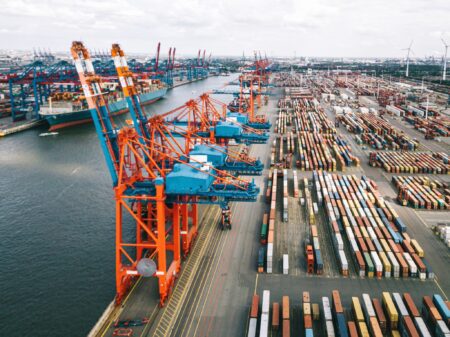
For decades, the standard blueprint for African economic growth has focused heavily on physical integration. To move goods, services, and people between cities and across borders with the ease of the European Union, the continent requires a colossal network of paved highways, modern rail links, and cross-border trade corridors. The African Development Bank estimates that closing the continent’s physical infrastructure gap will require up to $170 billion a year for the next decade—a financial mountain that traditional government budgets and standard development loans simply cannot climb alone.
At the exact same time, a completely separate multi-billion-dollar boom is taking place across the continent: the rise of Artificial Intelligence, cloud computing networks, and hyperscale data centers. Driven by an explosive youth demographic and global tech titans like Google and Meta, capital is rushing to build the digital foundation of Africa’s future.
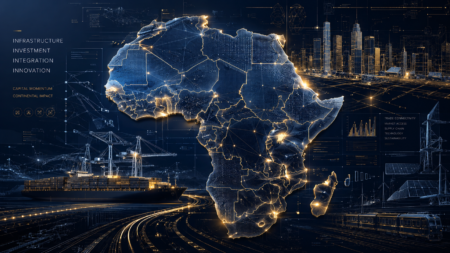
The ultimate strategy for investors, policymakers, and regional developers lies at the intersection of these two realities. We must stop treating transport infrastructure and digital infrastructure as separate silos. By fusing physical roads and rail projects directly into the high-speed winds of the AI investment surge, the massive capital required to build the continent’s physical roads can be carried, funded, and accelerated by the digital future.
The Architecture of the “Smart Corridor” Bundle
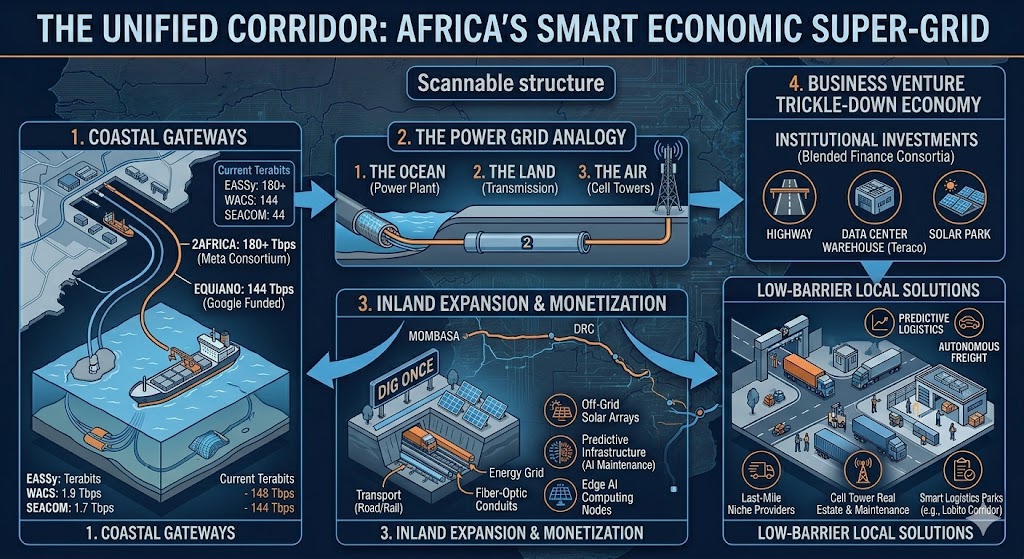
This unified approach is built on a simple, ironclad principle of civil engineering: The ditch is the most expensive part. The single highest cost in laying down thousands of miles of intercontinental fiber-optic cable is not the glass wire itself—it is the cost of acquiring land rights, mobilizing heavy machinery, clearing terrain, and digging the earth. Similarly, the highest cost of building a highway or a railway is the initial earth-moving and grading.
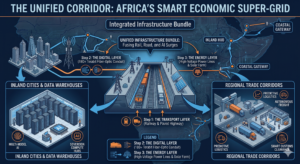
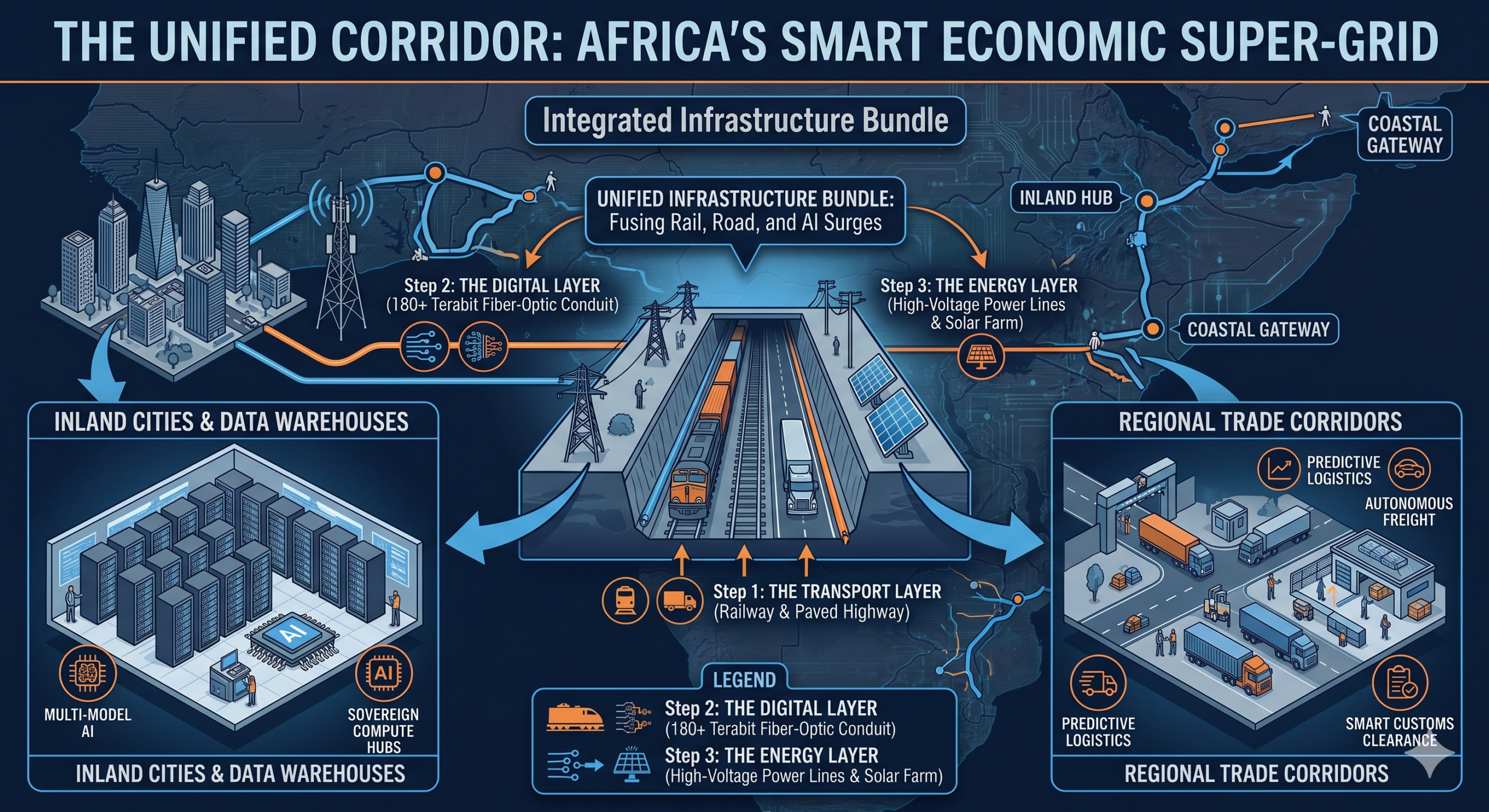
By utilizing a “Dig Once” framework, a master developer can bundle three distinct asset classes into a single physical trench:
- The Transport Layer: The concrete highway, trucking lane, or steel rail track.
- The Digital Layer: High-count, multi-terabit fiber-optic conduits dropped directly alongside the transport bed.
- The Energy Layer: High-voltage transmission lines or localized off-grid solar arrays running parallel to the corridor to power both electric transport systems and digital infrastructure hubs.
When you bundle these together, the economic profile of a project changes instantly. A traditional dirt road or standard rail line can take decades to return its initial capital through low-margin freight tolls. But when that exact same concrete footprint carries the high-speed data pipelines for global tech giants and AI computing networks, the digital asset class effectively subsidizes the heavy civil engineering costs of the physical road.
Driving AI Efficiency into Physical Logistics
Fusing the AI surge into physical corridors does not just fund the roads; it radically changes how efficiently those roads operate once they are built. Dropping fiber-optic pipelines and localized computing power directly alongside cross-border transport routes enables the deployment of Edge AI—bringing processing power closer to the physical assets rather than relying on distant offshore servers.
- Smart Customs and Automated Borders: One of the greatest bottlenecks to intra-African trade is border congestion, where cargo trucks can sit idle for days awaiting paperwork. A smart corridor leverages AI-driven logistics hubs to scan, track, and clear customs documentation digitally via smart sensors long before the truck physically arrives at the border crossing.
- Predictive Infrastructure Maintenance: AI algorithms fed by real-time acoustic and thermal sensors laid inside the fiber conduit can monitor train track integrity, road surface degradation, and bridge stress points. This allows operators to predict and fix infrastructure failures days before they cause costly logistics delays or accidents.
- Autonomous Freight Corridors: Building the high-capacity, low-latency digital grid directly into the highways establishes the exact physical environment needed for future automated cargo truck platoons, drone delivery networks, and smart distribution warehouses.
The Real-World Blueprint: The Lobito and Northern Corridors
This is no longer a theoretical concept; it is actively happening on the ground through massive geopolitical and private equity initiatives.
Look at the Lobito Corridor, a massive infrastructure project backed heavily by a coalition including the U.S. Government, the European Union, the Africa Finance Corporation (AFC), and private industrial consortia. Stretching from the Atlantic port of Lobito in Angola all the way through the mining hearts of the Democratic Republic of Congo and landlocked Zambia, this corridor was initially conceived to move minerals and copper.
However, the modern implementation is completely integrated. The developers are dropping high-capacity terrestrial fiber-optic networks directly next to the refurbished rail tracks, while simultaneously planning off-grid clean energy arrays along the route. It is turning a traditional mineral export line into a “Smart Economic Highway.”
Similarly, in East Africa, the Northern Corridor linking the port of Mombasa in Kenya to Uganda, Rwanda, Burundi, and the DRC is seeing private infrastructure groups like Paratus and Liquid Intelligent Technologies actively mirroring physical transport networks with cross-border fiber backbones. They are building the digital nervous system right into the concrete spine of regional trade.
The Sovereign Investor Blueprint: How to Allocate
For institutional allocators, local developers, and sovereign wealth funds looking to capitalize on this massive shift, the investment playbook must evolve away from single-asset investments. The high-yield opportunities lie in Integrated Infrastructure Platforms:
- Consolidated Engineering Concessions: Partnering with Public-Private Partnership (PPP) frameworks that secure the dual concession rights for both the transport corridor and the digital right-of-way.
- Industrial AI Logistics Parks: Investing in the “dry ports” and manufacturing hubs sitting at the major crossroads of these corridors. These spaces require physical warehousing space for cargo alongside modular, localized data center units running on renewable corridor power to process regional supply chain analytics, commercial banking transactions, and local software applications.
- Co-Located Clean Energy Assets: Financing the large-scale solar farms and battery storage arrays running adjacent to the transport lines. These arrays pull double duty, selling power directly to the electric transit networks during the day and feeding the hyper-cooling demands of localized data center warehouses 24/7.
The Bottom Line
The historical model of building isolated, “dumb” concrete roads that rely entirely on slow commodity trade to pay for themselves is officially dead. The future belongs to the Unified Infrastructure Bundle. By embedding fiber-optic pipelines and AI computing capabilities straight into the physical roads connecting country to country, Africa is not just building a system to move physical goods—it is building an intelligent, self-funding economic super-grid that carries the physical continent forward on the unstoppable momentum of the digital age.
Related Reading
- Africa’s Digital Infrastructure Boom: Subsea Cables, Data Centers, and 5G Rollouts
- Bridging Africa’s $400 Billion Structural Gap: The Case for Integrated Smart Corridors
- Africa’s Digital Revolution: Tech Startups and Venture Capital Investment
Key Takeaways
- Africa’s economic growth model must integrate physical and digital infrastructures to bridge the $170 billion a year gap in traditional funding.
- The ‘Smart Corridor’ approach combines transport, digital, and energy layers to optimize infrastructure investment and operation costs.
- AI solutions, like smart customs and predictive maintenance, enhance the efficiency of physical logistics in newly built corridors.
- Projects like the Lobito and Northern Corridors exemplify the integration of fiber-optic networks with transport routes and clean energy sources.
- The future of Africa infrastructure investment trends focuses on unified infrastructure bundles that create intelligent, self-sustaining economic systems.
Stay Ahead of the Market Subscribe to our newsletter for the latest insights on African infrastructure and industrial policy.