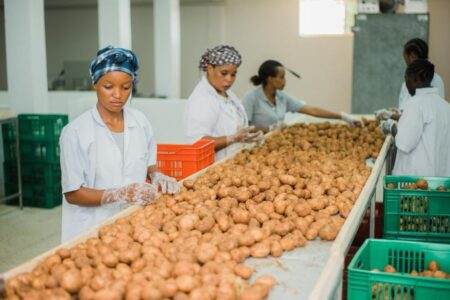
Agriculture has always been the backbone of Kenya’s economy, employing more than 70% of the rural population and contributing about one-third of national GDP. But beyond being the country’s breadbasket, it is also one of the most exciting frontiers for entrepreneurs and investors. In 2025, the sector is full of agriculture business opportunities in Kenya, from commercial farming to agritech startups, food processing, and export logistics.
This article explores the promise of Kenyan agriculture, the pain points holding it back, and the business angles where investment lies.
Why Agriculture Matters in Kenya
Kenya is globally recognized for its high-value exports: tea, coffee, flowers, fruits, and vegetables. Horticulture alone contributes billions annually, while Kenya is the world’s third-largest exporter of cut flowers.
At the same time, population growth and urbanization are driving strong local demand. With 55 million people and a growing middle class, the domestic food market is expanding rapidly. This dual demand — local and global — is what makes agriculture investment in Kenya so promising.
The Promise of Agriculture in Kenya
- Export Powerhouse: Kenya earns more than $1 billion annually from tea exports and hundreds of millions from coffee and flowers.
- Regional Hub: Nairobi is a gateway for agricultural exports to Europe, the Middle East, and Asia.
- Youth & Innovation: Agritech startups are modernizing farming through mobile apps, fintech tools, and precision farming solutions.
Agriculture has scale, resilience, and a diverse product base — a combination that few sectors can match.
Pain Points Holding Agriculture Back
- Low Irrigation: Only about 10% of farmland in Kenya is irrigated, leaving crops vulnerable to droughts and erratic rainfall.
- Post-Harvest Losses: Up to 30–40% of produce is lost between farm and market due to weak storage, transport, and cold chain systems.
- Fragmented Land Use: Smallholder farmers dominate, making mechanization and economies of scale difficult.
- Financing Gaps: Many farmers lack access to affordable credit and insurance.
These challenges create inefficiencies but also open doors for innovative business models.
Business Angles: Where the Opportunities Lie
1. Agritech Solutions
Mobile platforms that connect farmers to markets, provide weather updates, or offer digital credit are booming. Startups like Twiga Foods have already scaled this model.
2. Cold Chain & Logistics
Investors in storage, refrigeration, and modern transport systems can cut losses significantly and capture high margins. This is especially important for horticulture exports.
3. Food Processing & Value Addition
Kenya exports raw products but imports processed foods. Local food processing (juices, dairy, packaged vegetables) is a fast-growing space.
4. Commercial Farming & Contract Farming
Opportunities exist in large-scale farming (maize, wheat, horticulture) and in contract models that pool smallholders together for collective market access.
5. Export Market Expansion
As demand grows in Europe and the Middle East, exporters with strong compliance (organic certification, traceability systems) can scale quickly.
Risks and What to Watch
- Climate variability remains a constant threat.
- Market access depends on global demand and strict export standards.
- Policy shifts (land reform, subsidies) can alter the landscape.
However, Kenya’s government and private sector are increasingly aligned on modernizing agriculture, making this one of the most resilient long-term bets.
Conclusion
Agriculture in Kenya is both a national lifeline and a global export engine. The promise is undeniable: high-value crops, strong domestic demand, and innovation through agritech. The pain points — from irrigation to post-harvest losses — are significant, but they are also the very source of business opportunities.
For entrepreneurs and investors, the greatest agriculture business opportunities in Kenya lie in bridging these gaps: building cold chains, scaling agritech platforms, financing farmers, and expanding food processing. By solving these problems, businesses can unlock profits while contributing to food security and rural transformation.