



"This operational profile serves as foundational field intelligence within our broader macroeconomic tracking network. To evaluate how these localized market variables, infrastructure pipelines, and regional trade dynamics integrate into a continent-wide roadmap for capital deployment, access our master thesis directly through our core document: The Architecture of Momentum Framework."
When institutional syndicates and diaspora investors evaluate African markets, South Africa presents a unique profile. While other sub-regional hubs are aggressively building out their baseline connectivity or primary power generation grids, South Africa operates at a completely different level of financial maturity. Boasting deep, highly liquid domestic capital markets, a world-class banking ecosystem, and an advanced manufacturing footprint, the nation functions as the industrial cockpit of Southern Africa.
The macroeconomic terrain is experiencing a major renaissance. Moving past legacy structural grid bottlenecks, the opening of national utility networks to private participation has sparked an unprecedented infrastructure boom. Backed by capital-realignment incentives, robust corporate-governance frameworks, and its active stance as the only African member of the G20, South Africa stands out as a premium destination for institutional investors seeking structural scale, predictable legal recourse, and deep regional value integration.
For operators looking to deploy strategic capital, four high-growth sectors are actively redefining the South African business landscape.
1. Energy Independence: Private Power & Solar Supply Chains
The deregulation of South Africa’s generation space stands as one of the most significant policy shifts in the country’s economic history. This transformation was driven by the landmark Schedule 2 amendment under the Electricity Regulation Act, which removed the restrictive 1 MW licensing cap for embedded generation projects. By allowing large-scale private projects to build and wheel power without a lengthy licensing process, the state successfully transformed an energy bottleneck into a massive private sector market.
This policy shift has unlocked an ongoing wave of private capital deployment:
- Commercial & Industrial (C&I) Solar: Major mining operations, industrial manufacturing plants, and retail real estate funds are completely bypassing legacy grid issues by contracting private independent power producers (IPPs) to build utility-scale on-site solar farms.
- The Battery Frontier (BESS): To manage energy demands during peak hours, demand has skyrocketed for large-scale Battery Energy Storage Systems. Investors are rapidly setting up local assembly networks and storage hubs to support private industrial grids.
- The REIPPPP Blueprint: The government’s state-backed Renewable Energy Independent Power Producer Procurement Programme has driven cumulative renewable capacity well past the 10 GW threshold. This momentum is supercharged by initiatives like Bid Window 7, which successfully procured 3,940 MW across 18 solar projects alone, yielding highly predictable, long-term PPAs (Power Purchase Agreements) for global developers.
2. Infrastructure & Freight Logistics
South Africa’s transport corridors form the economic backbone for the entire Southern African Development Community (SADC). Recognizing that port congestion and rail freight delays represent a major trade bottleneck, the government’s Strategic Integrated Projects (SIPs) initiative has funneled massive resources into modernizing logistics corridors.
This infrastructure revival offers highly predictable revenue streams for specialized developers and logistics operators:
- The Durban–Gauteng Freight Corridor: Upgrades across this mega-freight artery are accelerating container velocities between the continent’s busiest shipping port and its primary industrial heartland.
- Special Economic Zones (SEZs): Manufacturing and logistics enclaves like Coega, Dube TradePort, and the Richards Bay Industrial Development Zone offer significant corporate tax incentives, direct customs clearance, and world-class road linkages to access a broader regional market.
- Smart Warehousing & Cold Chains: Driven by booming agricultural exports and regional trade, private capital is heavily targeting modern, temperature-controlled fulfillment networks close to major transit terminals.
3. The Digital Artery: FinTech & Hyper-Scale Compute
South Africa is the mature anchor for tech and financial systems across the continent. Backed by a highly tech-literate consumer base and sophisticated banking laws, the country’s digital ecosystem has shifted away from speculative consumer apps toward heavy B2B infrastructure and corporate software solutions.
Key growth spaces include:
- Hyper-Scale Data Hubs: With massive international fiber networks landing on the coast, global tech operators are deploying billions into building tier-three data storage centers in Johannesburg and Cape Town to support regional cloud computing.
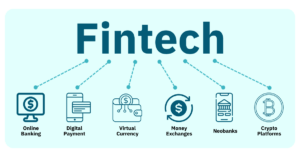
- B2B FinTech Integration: While consumer mobile money dominates other markets, South Africa’s opportunity lies in building advanced merchant payment rails, automated invoice financing systems, and cross-border B2B digital remittance architecture.
- Tech-Driven E-Commerce Logistics: The true growth in digital retail is happening in the physical layer—investors are backing advanced fleet management platforms, automated last-mile distribution networks, and smart fulfillment software.
4. Real Estate & Master-Planned Smart Cities
The physical landscape of South Africa’s major urban centers is being rewritten by semi-private urbanization projects. As older municipal spaces face spatial constraints, real estate capital has pivoted toward massive, master-planned mixed-use developments that blend corporate workspaces, commercial retail, and residential living into self-sustaining nodes.
This structural shift is driving substantial demand across three strategic asset classes:
- De-Centralized Commercial Nodes: The rapid rise of premium corporate offices and high-density business parks in suburban growth corridors to accommodate major corporate relocations.
- Affordable Housing & Student Living: Heavy institutional funding is pouring into high-density, secure student accommodations and affordable worker housing situated near major public transport lines.
- Industrial Real Estate Transformation: Retrofitting older industrial parks with smart security systems, high-speed fiber loops, and custom green energy grids to attract top-tier manufacturing tenants.
The Takeaway
South Africa represents a unique ecosystem of institutional scale and regulatory predictability. By aligning a rapidly liberalizing energy market via the Schedule 2 amendment with advanced shipping networks, a digital financial hub, and massive master-planned real estate corridors, the country offers a robust, highly capitalized environment perfect for investors looking to scale across the sub-continent.
Related Reading
Africa’s Digital Infrastructure Boom: Subsea Cables, Data Centers, and 5G Rollouts
Bridging Africa’s $400 Billion Structural Gap: The Case for Integrated Smart Corridors
SADC Digital Infrastructure: Data Centers, Power Pools and AI Investment in Southern Africa
Africa’s Digital Revolution is reshaping the economy
Key Takeaways
- South Africa stands out as a financial leader in Africa due to its deep capital markets and world-class banking ecosystem.
- The deregulation of the energy sector has transformed private power generation and unleashed capital investment in solar supply chains.
- Infrastructure upgrades, like the Durban–Gauteng Freight Corridor, offer new revenue opportunities for logistics operators.
- South Africa leads in FinTech growth, with a focus on B2B solutions, hyper-scale data hubs, and advanced logistics for e-commerce.
- Real estate investment is booming in master-planned smart cities, enhancing commercial and affordable housing opportunities.
Stay Ahead of the Market Subscribe to our newsletter for the latest insights on African infrastructure and industrial policy.