


"This operational profile serves as foundational field intelligence within our broader macroeconomic tracking network. To evaluate how these localized market variables, infrastructure pipelines, and regional trade dynamics integrate into a continent-wide roadmap for capital deployment, access our master thesis directly through our core document: The Architecture of Momentum Framework."
When institutional investors evaluate digital transformation in the Southern African Development Community (SADC), they face a distinct geographic challenge. While coastal anchors boast direct access to high-capacity subsea international fiber cables landing on their shores, the economic vitality of the sub-region depends on how effectively this capacity is routed inland to landlocked production nodes like Zimbabwe, Zambia, Botswana, and the Democratic Republic of the Congo (DRC).
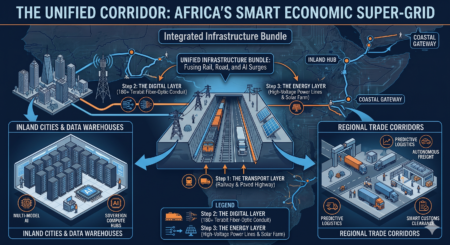
Moving past localized, country-specific installations, modern digital capital is approaching the 16-member trade bloc as a single, contiguous digital corridor. True market scale requires matching high-density hyperscale data centers directly with cross-border terrestrial fiber lines and regional energy grids. By aligning telecom investments with regional trade agreements, SADC is transforming from a collection of isolated national networks into a structurally integrated, high-velocity data market.
1. The Energy-Compute Nexus: Powering Hyperscale Data Hubs
Data centers are fundamentally real estate structures that convert massive amounts of electricity into digital computing power. For international data operators selecting sites within the SADC region, the primary bottleneck is not software engineering—it is the availability of reliable, uninterrupted baseline power.
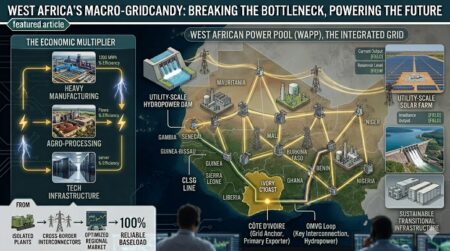
A hyperscale data facility requires constant, heavy electrical loads to run server racks and massive cooling systems. To secure this baseline without relying on expensive diesel backups, data infrastructure developers are aligning their projects with the Southern African Power Pool (SAPP).
This infrastructure integration is driving major cross-border energy-compute trends:
- Evolving Regional Energy Pools: Infrastructure operators are utilizing the SAPP’s evolving cross-border electricity trading mechanisms, including its short-term and day-ahead markets, to purchase bulk wheeling power across national borders. While transmission bottlenecks and localized liquidity limits remain operational factors, this regional mechanism increasingly allows developers to route power from hydro-rich nodes in Zambia or wind assets in South Africa straight to urban data hubs.
- On-Site Renewable Integration: To guarantee clean data metrics, new facilities are being co-located with private utility-scale solar parks and industrial Battery Energy Storage Systems (BESS), creating self-contained, green computing clusters.
2. Cross-Border Terrestrial Fiber Rails
A world-class data center is useless without high-capacity terrestrial fiber to move data across borders. Historically, landlocked SADC economies had to route their internet traffic through slow, expensive satellite links or fragmented national networks that suffered frequent cuts.
To create true digital sovereignty, private infrastructure funds are laying high-count terrestrial fiber cables directly parallel to long-distance transport and utility corridors:
- The Transit-Route Alignment: Fiber networks are being unspooled directly along regional highway corridors and cross-border rail lines, drastically reducing the cost of environmental assessments and civil engineering.
- High-Voltage Line Overhead Fiber: Telecom operators are partnering with regional power companies to run Optical Ground Wire (OPGW) fiber cables directly at the top of high-voltage electrical transmission towers, providing ultra-secure, lightning-protected cross-border data pathways.
- The Landlocked Gateway Model: By linking these inland terrestrial routes directly to the major subsea cable systems landing on the Atlantic and Indian Ocean coasts, inland business hubs in Gaborone, Lusaka, and Harare achieve identical data speeds and latency metrics to coastal cities.
3. Industrial Automation: Private 5G Loops & Localized Machine Intelligence
The true economic transformation of next-generation technology within the SADC bloc is happening deep inside the heavy industrial layer. SADC is home to some of the world’s most massive mineral deposits, heavy manufacturing zones, and agricultural export corridors. Rather than deploying speculative consumer apps, enterprise software developers and telcos are laying down high-speed standalone private 5G networks to serve as the physical layer for operational Artificial Intelligence (AI).
By combining ultra-low latency cellular loops with real-time machine intelligence, Southern African industries are moving rapidly away from raw commodity exports:
- Autonomous Mining Enclaves: In the copper and cobalt belts of Zambia and the DRC, major players are moving from pilot programs to full-scale automated execution. A primary example is Ivanhoe Mines’ Kamoa-Kakula copper complex in the DRC, where operators are actively utilizing high-capacity private networks to run autonomous drilling rigs, remote-controlled underground loaders, and haulage fleets—radically transforming safety metrics and industrial throughput.
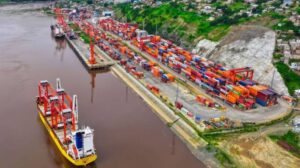
- Predictive Logistics & Supply Chain AI: Localized machine learning models are being utilized to optimize regional freight lines. By streaming real-time performance data from heavy rail corridors and port machinery over 5G links, operational AI models can pinpoint mechanical wear before a breakdown occurs, saving millions in unexpected downtime along critical trade paths.
- Smart Cross-Border Customs Rails: AI-driven computer vision systems and automated data processing are being deployed at major border choke points, like the Beitbridge border post between South Africa and Zimbabwe. By automatically scanning freight documents, analyzing truck cargo weights, and cross-referencing customs filings electronically, these systems cut manual inspection times down from days to mere minutes.
The Takeaway
The blueprint for building Southern Africa’s digital economy requires a complete alignment of physical infrastructure assets. By anchoring modern hyperscale data centers along cross-border fiber corridors, securing baseline power through the Southern African Power Pool, and layering private 5G networks under operational AI systems, the SADC region is transforming raw industrial corridors into high-margin asset classes ready for global enterprise cloud computing.