


When we talk about shifting away from centralized, fossil-fuel-dependent utility grids toward a decentralized energy model, the biggest pushback is usually operational: How do we actually make it happen on a massive scale?
If we agree that building out a 19th-century grid of transmission lines is an economic and ecological dead-end, we have to look at how we construct the physical world around us. The most practical, frictionless solution isn’t waiting for utilities or governments to build new power plants—it is changing the laws of construction.
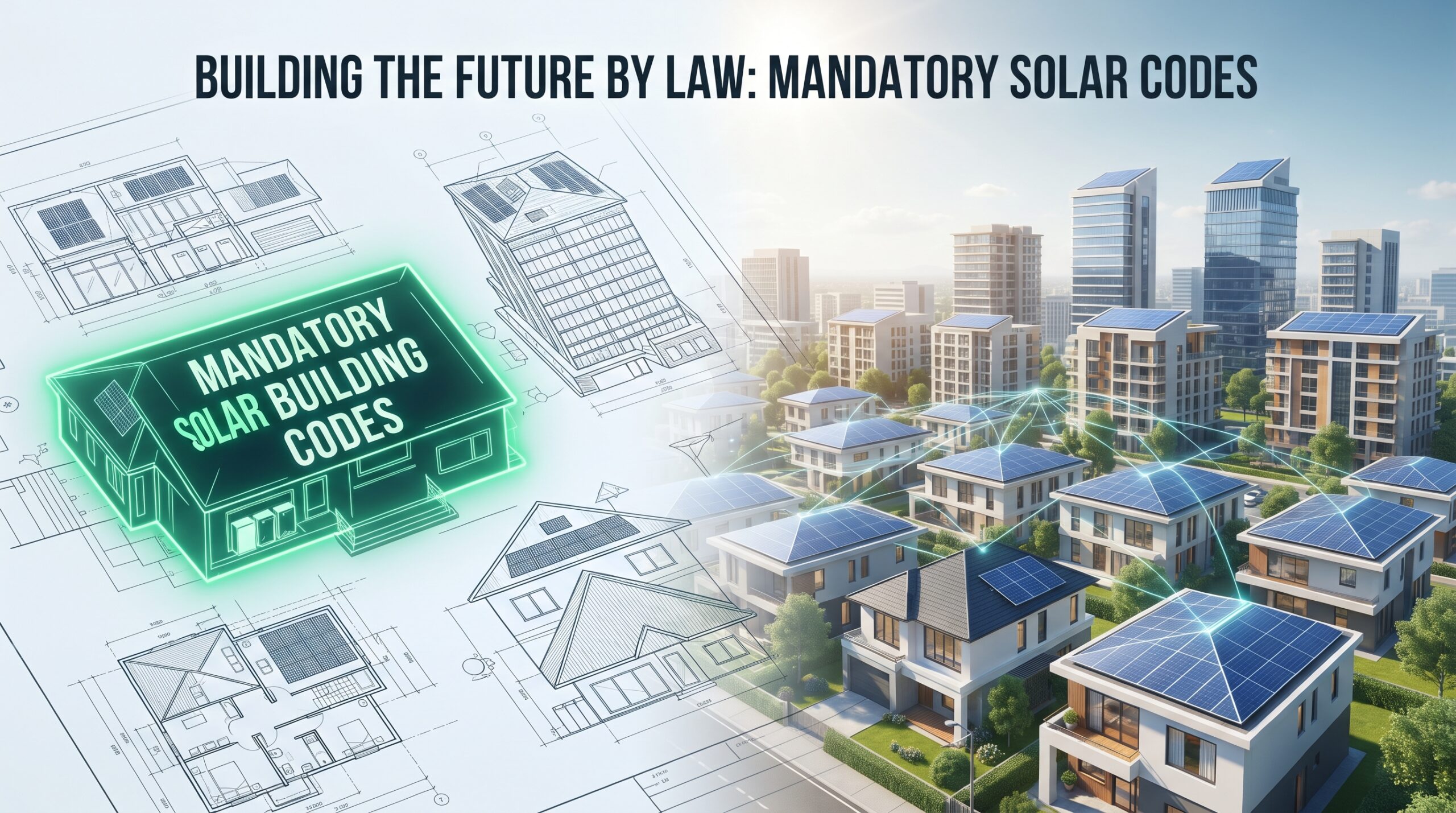
Making solar generation and battery storage a mandatory building code for all new construction is the single most effective way to modernize a nation’s energy infrastructure from the ground up. But how feasible is it? Let’s break down the mechanics, the economics, and how we overcome the hurdles.
1. What Does “Solar as Code” Actually Mean?
Right now, municipal and national building codes require a laundry list of safety and livability standards before a structure can get an occupancy certificate: structural integrity, fire exits, indoor plumbing, electrical wiring, and insulation.
Adding solar to the code simply updates that checklist for the 21st century.
- The Standard: Just as every new home or commercial building must come with a roof and electrical outlets, every new build—whether a 2-million-rand residential home n South Africa, a commercial warehouse, or a massive data center—must include a baseline solar photovoltaic (PV) array and localized energy storage.
- No Retrofitting Hassle: Trying to convince existing homeowners to rip up roofs or install retrofitted battery systems can be logistically challenging and expensive. By contrast, integrating solar during the initial construction phase is vastly cheaper, cleaner, and structurally seamless.
2. Solving the Financing Puzzle: Baking It Into the Mortgage
The immediate counterargument from real estate developers is always cost: “Adding solar and batteries upfront will drive up construction prices and price buyers out of the market.”
This is where green financing changes the game.
- Capital Cost vs. Operating Savings: When solar and storage are baked into the architectural design, their cost isn’t an out-of-pocket add-on; it is rolled directly into the long-term property mortgage or construction loan.
- Immediate Cash-Flow Positivity: Spreading the cost of a solar-and-storage system over a 20-to-30-year bond means the monthly financing addition is often less than what the owner would have paid monthly to a legacy utility company or generator fuel costs. From day one, the building is cash-flow positive.
3. Overcoming Real Estate and Utility Pushback
Just like the centralized utility monopolies fight to protect their business models, traditional real estate and property developers can be resistant to new regulatory mandates. To make “solar as code” feasible, governments must cut through the inertia with smart policy:
- Streamlined Permitting: Bureaucratic red tape kills development speed. A mandatory code must come hand-in-hand with fast-tracked, automated municipal approvals for green builds.
- Tax and Development Incentives: For early-adopting developers, governments can offer density bonuses, reduced development-fee structures, or expedited zoning clearances to reward those who build net-positive energy facilities.
- Stopping the Monopoly Trap: Utilities must be legally barred from penalizing mandatory solar homes with discriminatory “grid-connection fees” designed to punish independence. The law must protect the right of buildings to generate their own power.
4. Commercial, Industrial, and Data Center Scalability
While residential homes are crucial, the massive game-changer is applying mandatory codes to commercial spaces, industrial parks, and data centers.
A new manufacturing plant or a hyperscale AI data center cannot afford to rely on a fragile, rolling-blackout-prone national grid. By requiring these massive energy consumers to build out on-site micro-generation and storage as a legal condition of breaking ground, we achieve two things:
- Grid Protection: We prevent corporate tech expansions from crashing local power grids and plunging everyday citizens into darkness.
- True Industrial Independence: Businesses run smoother, cheaper, and with zero vulnerability to international fuel spikes or geopolitical conflict.
The Bottom Line
Making solar a mandatory part of building codes isn’t an radical fantasy—it is basic economic common sense. It shifts the financial burden away from broke state utilities and public debt, placing it naturally into private and commercial development where it belongs.
If we are going to build a 21st-century economy, we have to stop writing building codes for the 1890s. Building the energy system directly into the walls and roofs of our structures isn’t just feasible; it is the only way forward.