




"This operational profile serves as foundational field intelligence within our broader macroeconomic tracking network. To evaluate how these localized market variables, infrastructure pipelines, and regional trade dynamics integrate into a continent-wide roadmap for capital deployment, access our master thesis directly through our core document: The Architecture of Momentum Framework."
For a long time, the advice handed down across the continent was simple and outdated: go to school, get a degree, and wait for a traditional employer to hand you a secure job. But dealing with the Africa youth unemployment crisis requires a complete mindset shift. Collaborating daily with academic minds and policymakers, I’ve watched how international blueprints play out on the ground. The fundamental truth we have to face is this: Africa needs builders, not employees.
Collaborating daily with academic minds and policymakers, I’ve watched how international blueprints play out on the ground. The fundamental truth we have to face is this: Africa needs builders, not employees. Cultivating and unleashing them is not just an economic strategy—it is the only path to long-term stability and growth.
We cannot rely on an economy built merely to churn out job-seekers. Businesses cannot simply scale fast enough to absorb the sheer volume of talent entering the market. Instead, we must cultivate problem-solvers who look at community, regional, and digital challenges and build their own solutions, services, and enterprises.
Confronting the Africa Youth Unemployment Crisis
The core flaw in our current approach is a harsh reality: you can churn out educated people faster than businesses can be built. A single institution can graduate thousands of students in a year, but only a tiny fraction of businesses successfully scale to high-volume hiring. Educational output multiplies instantly; corporate absorption crawls.
When educational output outpaces economic growth, it creates a severe dual unemployment crisis. You don’t just face low-wage, low-skill underemployment; you simultaneously strand thousands of ambitious, highly educated graduates in a rigid market that cannot absorb them.
Waiting for traditional companies to scale up slowly is a timetable nobody can afford. When a growing wave of educated youth finds itself locked out, frustration builds fast, putting immense pressure on government stability.
The Fallacy of the “Formal” Market
When we say markets fail to absorb talent, we fall into a trap shaped by a Western lens. Traditional development economics tells us that an economy is legitimate only when it is “formal.”
That is a false dichotomy. In the African context, the informal sector isn’t a temporary waiting room or a failure—it is the economy. Millions of people operate, trade, and survive entirely outside formal corporate structures because those legacy systems were never built for them in the first place.
The goal shouldn’t be to force everything to look like a Western corporate registry or treat the informal sector as a bad thing that needs to be erased. The real challenge is figuring out how to scale the informal sector—giving informal traders, micro-builders, and local networks the digital tools, capital access, and legal protections they need to grow without losing their flexibility.
Playing a Rigged Game by New Rules
We keep trying to import solutions from the developed world. But the West industrialized under a completely different historical context.
Historically, Africa was integrated into the global economy as an exporter of raw materials, while foreign nations and multinational corporations captured the high-value transformation of those resources. Breaking into that entrenched multinational space today is extraordinarily difficult because global powers with massive financial backing already control it.
This structural trap is what directly fuels the youth unemployment crisis through local enterprise. When an economy only exports raw materials, it exports its high-value jobs right along with them—leaving a massive void where domestic industries should be. Because the formal market cannot generate those high-level roles, waiting to conquer an external global market is a losing strategy.
Instead, the path forward requires turning inward—building robust internal trade networks, strengthening continental supply chains, and unleashing local builders to create the employment engines the legacy system never provided.
The Drive Is There; The Barriers Are the Wall
The entrepreneurial mindset is already there. Across the continent, out of sheer necessity and the reality of the informal economy, people are naturally driven to figure out how to build things, trade, and hustle on their own. The energy, the resilience, and the desire to create are not missing.
What is missing is a frictionless environment. Right now, too many artificial barriers make it unnecessarily difficult for those natural builders to survive, scale, and cross over into formal economic power.
The Exposure Gap: Why the Traditional Classroom Fails
This brings us back to the root of the failure: the traditional education system itself.
For the most part, traditional schooling stops at basic literacy and arithmetic. It does not teach economics, how global markets work, or the vast map of modern industrial sectors and digital opportunities. Because of this narrow focus, even educated adults often have a severely restricted view of what is possible, trapped in traditional career tracks while a massive universe of specialized supply chains and digital micro-niches goes entirely unnoticed.
Step onto the street in major commercial centers, and the consequence of this structural failure is visible immediately. You see thousands of people—some educated and profoundly frustrated, others lacking foundational access entirely—just sitting or walking without a path forward, caught in a cycle of waiting and blaming the government because the system never gave them the tools to construct anything else.
The harsh reality is that not everyone is wired to be an entrepreneur. Some individuals are naturally suited to be employees, but when the formal economy cannot absorb them, and when the education system fails to teach economic literacy or self-determination, the result is a massive societal bottleneck.
Designing a System That Unleashes Builders
Ultimately, society cannot wait for outside entities or slow legacy structures to fix the labor crisis. The system itself must be deliberately redesigned to encourage, unlock, and unleash these builders.
Because traditional corporations scale too slowly, and because the formal market cannot absorb the rising tide of job-seekers on its own, builders are the only engine capable of creating the mass opportunities needed to absorb the labor force.
Clearing the Path: Fostering a Nation of Builders
This is where leadership has to radically change its posture to tackle the Africa youth unemployment crisis. The government doesn’t need to create the drive to build or manufacture the entrepreneurial spark—the people on the ground already possess that in abundance.
Instead, leadership must view that relentless drive as a foundational national asset, strategically channeling it toward the critical sectors where the economy actually needs to grow.
To make that happen, governments must systematically remove the barriers that choke economic agency:
- Fixing Access to Capital: Opening realistic financial pathways for innovative ideas instead of locking capital behind rigid, legacy banking requirements or closed social networks.
- Tearing Down Red Tape: Eliminating the bureaucratic bottlenecks, licensing fees, and compliance traps that penalize people trying to start something new.
- Building Inclusive Runways: Creating spaces where homegrown businesses can test, scale, and compete without archaic hurdles.
- Delivering Reliable Infrastructure: Ensuring consistent power, affordable transport networks, and reliable digital connectivity so businesses aren’t constantly fighting basic operational friction.
- Securing Property and Contracts: Providing a transparent, predictable legal framework where entrepreneurs can protect their assets and enforce agreements without corruption or arbitrary interference.
Governments must stop trying to micromanage legacy employment and start focusing entirely on policies that unleash and direct builders.
The Shift to Self-Engineered Agency
The future belongs to those who build without waiting for permission.
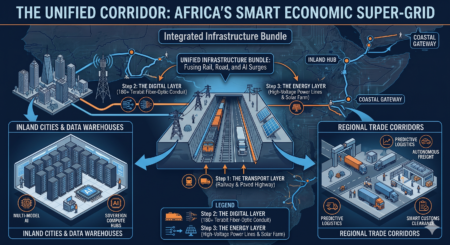
Agency isn’t confined to a single sector; it spans both the physical and digital landscapes. Thanks to expanding continental trade frameworks—which we dive into in our comprehensive look at the African Continental Free Trade Area—combined with massive investments in high-speed digital infrastructure, which we explore in our breakdown on Africa’s Digital Infrastructure Boom, the old physical and digital bottlenecks are starting to shift.
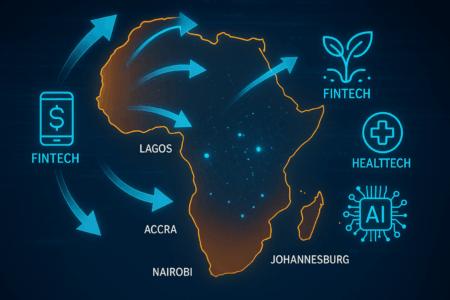
Whether an entrepreneur is building a cross-border logistics network, establishing a regional trade route, or leveraging high-speed internet, AI tools, and remote platforms, the path forward is about breaking past old limitations. By combining traditional mentorship, modernized apprenticeship models, and these broader physical and digital tools, individuals can bypass local gatekeepers, plug directly into regional and global economies, and engineer their own economic agency.
The Bottom Line
The next phase of economic growth relies on leaders who clear the obstacles, and individuals who stop waiting for permission, stop looking for jobs, and start building solutions.
Key Takeaways
- Builders, Not Employees: The ecosystem must shift from producing passive job-seekers to cultivating active problem-solvers and creators.
- The Dual Youth Unemployment Crisis: Africa faces a dangerous double-edged sword: a massive uneducated/low-wage workforce on one side, and a growing sea of frustrated, educated young graduates locked out of a rigid formal market on the other.
- The Raw Material Trap: Being locked into exporting raw materials means exporting high-value jobs overseas; the continent must turn inward, building robust internal trade networks and supply chains instead of fighting for space in a rigged global market.
- Clearing the Path: Governments must actively remove red tape, improve access to capital, and clear obstacles for innovators.
- Agency Over Waiting: By combining digital tools, AI, and apprenticeships, individuals can bypass local limitations and build their own economic future.
Read More in This Series
- AfCFTA and Regional Trade Integration: How Africa’s Free Trade Zone Works
- Africa’s Artificial Intelligence Strategy: Investment, Infrastructure and Policy
- African Startups Expanding Across Borders: How Regional Scale Works: How Tech Startups Are Rewriting African Macroeconomics
- Africa’s Digital Infrastructure Boom: Data Centers, Fiber and Cloud Investment
- Building Africa’s Digital Backbone: Infrastructure for the 21st Century