

FinTech Investment: The Engine of Africa’s Next Growth Cycle
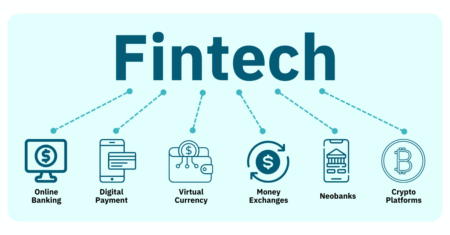
Few sectors illustrate Africa’s economic transformation more powerfully than fintech. FinTech investment in South Africa, including digital payments, online lending, and mobile banking, are revolutionizing how Africans save, invest, and spend. And nowhere is this transformation more advanced—or more investable—than in South Africa.
The nation’s financial system already sets the continental benchmark for regulation, stability, and innovation. Now, as new technologies converge with consumer demand, the country stands on the edge of a decade-defining investment wave. For global and diaspora investors looking for scalable, compliant, high-impact ventures, fintech business opportunities in South Africa represent one of the clearest paths to long-term growth and regional leadership.
Why South Africa Leads the Continent
According to the South African Reserve Bank, more than 220 licensed fintech firms operate within South Africa—nearly half of all regulated fintechs in Sub-Saharan Africa. The country ranks #1 in Africa for financial-inclusion readiness according to the World Bank’s Global Findex 2024, and fintech funding surpassed US $820 million in 2024, doubling from just two years prior.
Unlike many emerging markets, South Africa blends first-world infrastructure with emerging-market growth potential. It offers world-class banking networks, deep mobile penetration, and a population that is both financially sophisticated and digitally connected. Combine those advantages with clear regulation from the Financial Sector Conduct Authority (FSCA) and supportive monetary policy from the SARB, and the result is an ecosystem primed for sustainable returns.
Five Areas Ripe for FinTech Investment In South Africa
1. Digital Payments and Merchant Solutions
Cashless commerce is accelerating fast. Transaction volumes are projected to exceed US $30 billion by 2026. Platforms like Yoco and Ozow are driving adoption among small businesses and informal traders, expanding the addressable market far beyond traditional banking clients. For investors, digital payments offer recurring revenue, predictable margins, and early exposure to Africa’s consumer-spending boom.
2. SME Lending and Alternative Credit
Access to finance remains one of Africa’s biggest development gaps—and its biggest opportunity. The World Bank’s Digital Economy Diagnostic reports that digital-lending volumes in South Africa grew over 40 percent in 2023. Startups using alternative-data models are closing that gap, enabling credit to flow to millions of small businesses. Investors in lending infrastructure, credit-risk analytics, or SME loan portfolios stand to benefit from steady yield and social impact.
3. Remittances and Cross-Border Transfers
With roughly US $2.4 billion in annual remittances, South Africa is one of the largest transfer corridors in Africa (African Development Bank – ADFIF). Blockchain-based clearing and regional payment gateways are reducing costs by up to 40 percent—an irresistible proposition for both senders and service providers. Diaspora-backed platforms that simplify cross-border transfers have a chance to dominate a market that directly touches livelihoods across SADC.
4. InsurTech and RegTech
As regulation tightens, demand for automation surges. InsurTech startups like Pineapple and Ctrl are already using AI to personalize coverage, while RegTech platforms help banks comply with know-your-customer (KYC) and anti-money-laundering (AML) standards. These solutions deliver predictable B2B revenue and strong acquisition potential—ideal plays for venture or strategic investors seeking resilient income streams.
5. Blockchain Infrastructure and Digital Assets
Speculation has cooled, but enterprise blockchain adoption is growing. The SARB’s Project Khokha pilot for a wholesale central-bank digital currency proves government openness to distributed-ledger innovation. The next phase will favor infrastructure—identity, compliance, and data integrity—over retail crypto. That’s where institutional capital can play safely and profitably.
Government Support and Stability
South Africa’s policy environment is a competitive advantage in itself. The Digital Economy Master Plan 2025, led by the Department of Communications and Digital Technologies, prioritizes fintech as a national growth pillar. The FSCA’s regulatory sandbox and SARB-FSCA joint accelerator provide a structured path for testing and scaling financial innovations.
Macroeconomic confidence also supports the case. The International Monetary Fund forecasts steady GDP growth and a declining inflation trend through 2026, citing South Africa’s robust monetary framework. Stability breeds investment—and fintech investors thrive in predictable jurisdictions.
The Diaspora Advantage: Smart Capital Meets Real Impact
For the global African diaspora, fintech investment represents more than just financial return—it’s a strategic lever for transformation. Investing in local payment networks, credit platforms, or compliance technologies allows diaspora investors to accelerate financial inclusion while earning competitive yields.
Diaspora-led syndicates and venture groups are already partnering with South African founders to build cross-border solutions for trade, education, and remittances. By channeling expertise and capital into compliant startups, global Africans can own a meaningful stake in the infrastructure that will define Africa’s digital century.
Fintech is not charity; it’s participation. Every dollar invested helps digitize the financial backbone of a continent moving toward self-reliance and prosperity.
The Investment Case: Why 2025 Is the Moment
- Maturity + Momentum: South Africa combines decades of banking maturity with startup energy and mobile reach.
- Policy Support: Fintech enjoys explicit backing from the SARB, FSCA, and national ministries.
- Regional Scaling: Integration through the AfCFTA Digital Trade Protocol will multiply market size beyond South Africa’s 60 million consumers.
- Exit Potential: Global banks, insurers, and telcos are actively acquiring fintechs for digital expansion.
According to the African Development Bank, fintech investments in South Africa already account for over 30 percent of total venture capital. Yet the sector still represents only a fraction of its long-term potential. Early investors entering now can capture value before institutional capital drives valuations higher.
Fintech offers a low-infrastructure, high-impact entry point for diaspora entrepreneurs — one that combines scalable returns with measurable social inclusion. Through venture syndicates, crowdfunding, and direct angel participation, diaspora investors can help democratize finance while capturing Africa’s next decade of digital growth.
Challenges and Risk Factors
Despite growth, investors must navigate:
- Regulatory complexity, especially around cross-border data flows and digital-asset compliance.
- Cybersecurity vulnerabilities, with the FSCA reporting a 27% increase in fintech-related breaches in 2024 (FSCA Risk Bulletin).
- Market concentration, as large banks acquire promising startups.
However, risk-mitigation mechanisms — such as insurance-backed escrow, local co-investment, and participation in regulated VC funds — are improving transparency and investor protection.
Government and Institutional Support
The Department of Communications and Digital Technologies (DCDT) is implementing the Digital Economy Master Plan (2025), targeting fintech as a national priority.
Complementary initiatives include:
- Startup Act Framework (2025) — providing tax incentives for early-stage investors (DTIC Startup Act Proposal).
- Financial Inclusion Strategy (2024–2030) — developed with support from the World Bank.
- Public-Private FinTech Accelerator — a joint SARB-FSCA initiative matching innovators with institutional partners.
2025 Outlook and Long-Term Potential
By 2025, South Africa’s fintech industry is expected to surpass US$1.5 billion in annual revenue (AfDB Digital Finance Outlook), driven by regional integration under the AfCFTA Digital Trade Protocol.
The convergence of policy support, private innovation, and diaspora capital is redefining how Africans bank, invest, and transact.
Those who enter now — with the right partners and risk strategy — will help shape an inclusive financial ecosystem for a billion-person market.