
Known as Africa’s richest square mile, Sandton’s skyline once symbolized relentless growth. Tower cranes dotted the horizon, reflecting South Africa’s emergence as an investment hub.
Today, however, those cranes are fewer. The Johannesburg Stock Exchange still hums, and Nelson Mandela Square remains lively — yet the construction momentum that once defined Sandton has slowed.
It’s a metaphor for much of Africa. Despite massive potential, the continent faces a deep infrastructure funding gap, estimated by the African Development Bank (AfDB) at more than $100 billion per year. Without urgent reform, that shortfall could double by 2030.
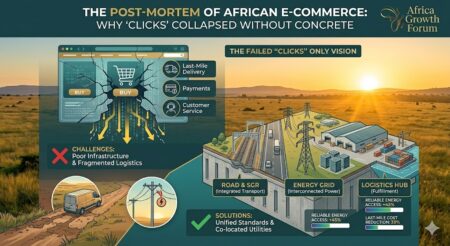
Across the continent, stalled projects, underfunded transport networks, and aging power systems underscore a painful truth: growth is impossible without infrastructure, and infrastructure is impossible without finance.
The Scale of Africa’s Infrastructure Gap
Africa needs over $1.3 trillion annually to meet its development and sustainability goals. Energy access, logistics, water systems, and digital networks form the backbone of this demand. Yet less than half of that total is currently financed.
Major initiatives such as South Africa’s REIPPP have proven what’s possible — drawing R200 billion (about $10 billion) in renewable-energy investment and adding 7.7 GW of capacity. But the rest of the continent still struggles to replicate that model.
The problem isn’t a lack of ideas or ambition. It’s a mismatch between available capital and perceived investment risk.
To bridge this divide, Africa must meet two non-negotiable conditions:
1️⃣ Mobilize local and regional capital at scale.
2️⃣ Create environments that genuinely de-risk private investment.
Condition 1: Mobilize Domestic Capital
Africa sits on a mountain of untapped liquidity. Pension funds, insurance pools, and sovereign wealth funds collectively manage over $700 billion in assets — most of which remain invested offshore or in low-yield securities.
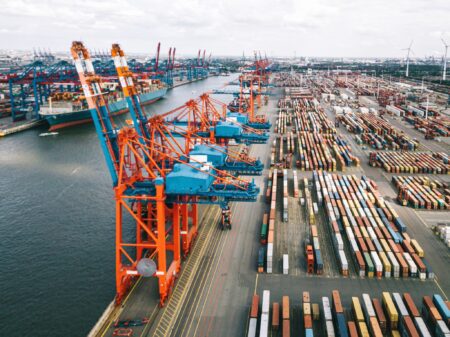
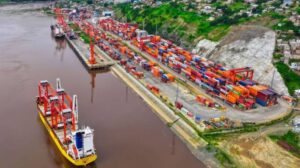
Redirecting even 10 percent of this capital toward domestic infrastructure could inject $70 billion annually — enough to transform power grids, roads, and ports.
Recent initiatives, such as the upcoming All Africa Pensions Summit in Kampala, aim to formalize this approach by pooling institutional assets into a Development Fund for Africa.
To succeed, governments must strengthen regulatory frameworks that allow pension funds to co-invest with development finance institutions like the AfDB and the Africa50 Infrastructure Platform.
Local currency financing will also be key. By reducing dependence on dollar-denominated debt, countries can stabilize project returns and mitigate exchange-rate volatility.
Mobilizing African capital isn’t just financial strategy — it’s economic self-determination.
Condition 2: De-Risk Private Investment
Private investors remain cautious because many projects fail to meet bankability standards. Delays in procurement, inconsistent regulation, and political uncertainty drive up costs.
To attract private capital, Africa must de-risk infrastructure investment through:
- Policy stability and transparent regulation. Investors need predictable rules and long-term guarantees.
- Credit enhancement mechanisms such as partial-risk guarantees and blended-finance instruments backed by institutions like AUDA-NEPAD and IFC.
- Regional project pipelines that aggregate demand, reduce duplication, and scale investments — as seen under the Programme for Infrastructure Development in Africa (PIDA).
In practical terms, this means transforming infrastructure projects from speculative ventures into bankable assets. When governments shoulder early-stage risks — feasibility studies, land acquisition, legal clarity — private capital follows.
Without this foundation, no amount of promotion or summits will fill the Africa infrastructure funding gap 2025.
Lessons From Sandton: Finance Follows Confidence
Sandton’s changing skyline illustrates a broader lesson: capital follows confidence. When investors see credible policy and predictable returns, construction cranes reappear.
During the 2010 FIFA World Cup era, confidence was high — backed by stable policy and major public-private partnerships. South Africa’s challenge today is not unique; it reflects the same structural bottlenecks seen across Nigeria, Kenya, Egypt, and Ghana.
Reviving large-scale development requires rebuilding institutional trust between governments, financiers, and communities. Projects must be transparent, technically sound, and socially inclusive.
The Role of Continental Institutions
Africa’s development financiers are already laying the groundwork. The AfDB, Africa Finance Corporation (AFC), and Afreximbank are expanding co-investment platforms that blend public, private, and philanthropic capital.
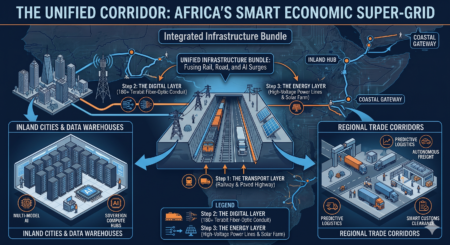
The African Union’s Agenda 2063 identifies infrastructure connectivity as the cornerstone of economic transformation. Under PIDA, over 400 priority projects worth $360 billion are being prepared for investment — from the Lobito Corridor to the North-South Transport Network.
But these projects need long-term local backers. By combining domestic institutional funds with international expertise, Africa can build its own pipeline of bankable, scalable projects.
Toward a Self-Financed Future
Closing the Africa infrastructure funding gap 2025 is not just about money; it’s about mindset. The continent’s prosperity will depend on whether Africans themselves invest confidently in Africa.
The two non-negotiable conditions — mobilizing local capital and de-risking private investment — must now become policy imperatives, not discussion points.
If implemented with urgency, the result will be visible not only in Sandton’s skyline but across the continent’s ports, power lines, and digital corridors.
Africa has the savings, the expertise, and the ambition. What remains is the courage to build — and finance — its own future.
👉 Related Reading:
- African Continental Free Trade Area: The Infrastructure Connection
- AU Continental AI Strategy: What It Means for Africa
- BRICS, AU, and the Future of Multilateralism in Africa and Africa’s Path to Financial Sovereignty