

Agriculture is Nigeria’s oldest industry and remains one of its most promising. With over 70 million hectares of arable land, favorable agro-climates, and a domestic market of more than 200 million people, the sector contributes roughly $40 billion annually to GDP. Yet despite this scale, Nigeria still imports billions in food each year. The paradox is clear: enormous agricultural potential coexists with structural bottlenecks in infrastructure, processing, and financing. For entrepreneurs and investors, the real agriculture business opportunities in Nigeria lie in bridging those gaps with scalable business models.
The Promise: Scale, Diversity, and Market Demand
- Domestic Market Power: Nigeria is Africa’s largest consumer market. Rising incomes, urbanization, and shifting diets create sustained demand for rice, poultry, dairy, and processed foods.
- Crop Diversity: Cassava, yams, sorghum, maize, rice, cocoa, and palm oil anchor production. Nigeria is the world’s largest cassava producer and a top cocoa exporter.
- Youth & Labor: Millions of young Nigerians are entering the workforce, and agriculture remains a primary employer, offering opportunities for modernization and agritech adoption.
- Export Potential: Global demand for cocoa, sesame seeds, and horticulture crops is strong, and regional trade under AfCFTA opens new markets.
The scale is unmatched in Africa: few countries offer such a large local demand base combined with export potential.
The Pain Points: Why the Market Underperforms
- Post-Harvest Losses
Up to 40% of produce is lost annually due to poor storage, transport, and processing infrastructure. Perishable crops rarely reach urban centers in good condition. - Low Mechanization
Nigeria has fewer than 30 tractors per 100,000 hectares, far below global averages. Smallholder reliance on manual labor limits productivity. - Fragmented Land Tenure
Complex land rights and small farm plots make it difficult to scale mechanization or attract investment. - Financing and Insurance Gaps
Farmers face high interest rates and limited access to credit or crop insurance, leaving them vulnerable to shocks. - Policy and Trade Volatility
Frequent import bans, tariff changes, and subsidy shifts create uncertainty for agribusiness planning.
These bottlenecks explain why Nigeria’s food import bill often exceeds $10 billion annually despite its vast potential.
The Business Angles: Where Opportunities Lie
1. Agro-Processing and Value Addition
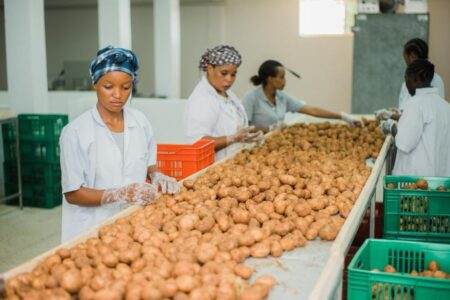
Nigeria exports raw cocoa and palm oil but imports chocolate, cooking oils, and processed foods. Local agro-processing is one of the biggest opportunities, with room for SMEs and large-scale investors.
2. Mechanization and Input Services
Leasing models for tractors, drones, and modern equipment can boost productivity without requiring farmers to buy outright. Input distribution (seeds, fertilizer, pesticides) remains underdeveloped, especially outside Lagos and Abuja.
3. Cold Chain and Logistics
Investments in cold storage, refrigerated trucks, and warehousing directly reduce post-harvest losses. Entrepreneurs providing “farm-to-market” logistics services capture value lost to waste.
4. Poultry and Aquaculture
Nigeria consumes millions of tons of poultry and fish annually, yet imports remain high. Commercial-scale poultry farms and fish hatcheries offer strong domestic returns.
5. Export Hubs and Compliance Services
Demand for sesame, ginger, and horticulture crops is strong globally. Companies that help farmers meet export standards (traceability, certification, packaging) can scale as compliance facilitators.
The Investor Lens: Turning Gaps into Moats
The Nigerian agricultural sector rewards those who:
- Invest in Infrastructure: Cold chain, processing, and logistics solve systemic bottlenecks and create defensible positions.
- Leverage Mobile Finance: Agritech platforms offering digital credit and insurance can unlock productivity for millions of smallholders.
- Integrate Value Chains: Vertical integration — from inputs to processing to market — reduces reliance on volatile supply chains.
- Target Staple Foods First: Rice, poultry, and cassava offer the largest domestic markets and the most immediate impact.
The most resilient agribusinesses combine production with either processing or distribution, ensuring control over multiple links in the value chain.
Conclusion: From Subsistence to Scale
Agriculture in Nigeria is both a national necessity and an untapped growth engine. The promise — fertile land, massive demand, and export potential — is clear. The pain points — post-harvest losses, low mechanization, poor infrastructure — are equally stark. But for entrepreneurs and investors, these bottlenecks are not deterrents; they are entry points.
From agro-processing plants to cold chain logistics, digital finance, and commercial poultry, the most promising agriculture business opportunities in Nigeria are those that turn inefficiencies into profits. With the right strategy, Nigeria’s $40 billion agricultural sector can evolve from subsistence-based to scalable, investor-grade growth.