
[ad_1
Public-private partnerships (PPPs) are becoming one of the most effective ways to drive Africa’s infrastructure growth and sustainability. Yet the question remains — how can PPPs be designed to stay financially viable, socially inclusive, and resilient over time?
That was the focus of the recent webinar “The Power of Public-Private Partnerships in Africa’s Sustainable Development”, hosted by the Sustainability and ESG Africa Conference and Expo.
Speakers included Gilbert Ang’ana (Accent Leadership Group), Peter Varndell (NEPAD Business Foundation), and Warrick Fuchsloch (S&P Global). Each shared insights into the promise — and the pitfalls — of PPPs across Africa.
Why Public-Private Partnerships Matter in Africa
Africa’s infrastructure financing gap is estimated at $130–170 billion annually, according to the African Development Bank (AfDB).
With limited public budgets, PPPs provide a way to mobilize private capital and expertise for essential infrastructure — from roads and railways to renewable energy.
Key Advantages of PPPs
-
Mobilize large-scale investment in energy, transport, and digital infrastructure.
-
Drive efficiency and innovation through private sector participation.
-
Distribute risk between governments and investors.
-
Align with Agenda 2063, which calls for sustainable, inclusive growth through infrastructure.
🔗 Related reading: Africa’s Continental Free Trade Area (AfCFTA) Explained
🔗 Explore more: Agenda 2063 and Africa’s Development Path
The Promise and the Pitfalls
While PPPs offer massive potential, they also face structural challenges that limit impact:
-
Regulatory uncertainty: Weak or inconsistent laws discourage investment.
-
Financing risks: High interest rates and unstable currencies complicate project viability.
-
Social equity issues: Without safeguards, PPPs can prioritize profits over people.
-
Capacity gaps: Many governments lack technical expertise for complex contract negotiations.
Speakers stressed that successful PPPs require clear policy frameworks, transparent contracts, and strong monitoring mechanisms to protect public interests.
Lessons from Africa’s PPP Experience
Some of Africa’s best examples of PPP success come from renewable energy and transport.
In South Africa, PPP-led clean energy projects have rapidly expanded access to renewable power.
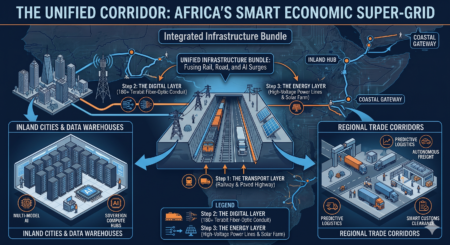
Under the Programme for Infrastructure Development in Africa (PIDA), transport and logistics partnerships are connecting regional trade corridors.
But not every PPP succeeds. Failed deals have underscored the importance of governance, accountability, and dispute-resolution systems to maintain investor confidence and public trust.
Opportunities for Investors and the Diaspora
For Africa’s diaspora investors and global partners, PPPs open the door to transformative investment in energy, transport, and digital infrastructure.
Innovative financing tools — such as diaspora bonds — can complement PPP models, enabling communities abroad to fund Africa’s growth while earning returns.
🔗 Learn more: Diaspora Bonds: Can They Fund Africa’s Future?
🔗 Related: Africa’s Investment Opportunities in 2025
As Africa closes its infrastructure gap and advances toward its climate goals, PPPs are set to become the bridge between public ambition and private capital.
Conclusion
Public-private partnerships are not a cure-all, but they are a cornerstone of Africa’s development strategy.
When designed well, PPPs can accelerate infrastructure delivery, strengthen sustainability, and support both AfCFTA and Agenda 2063.
The next step is governance: building smarter partnerships that serve investors and citizens alike.
Africa’s future depends not just on more PPPs — but on better, fairer, and more sustainable ones.