




"This operational profile serves as foundational field intelligence within our broader macroeconomic tracking network. To evaluate how these localized market variables, infrastructure pipelines, and regional trade dynamics integrate into a continent-wide roadmap for capital deployment, access our master thesis directly through our core document: The Architecture of Momentum Framework."
EXECUTIVE FRAMEWORK
For decades, African export strategies have been artificially anchored by external preferential trade agreements, most notably the African Growth and Opportunity Act (AGOA). However, sudden geopolitical shifts and policy suspensions—such as the withdrawal of AGOA eligibility for Ethiopia—demonstrate the severe structural vulnerability of relying on single-market trade preferences. The macroeconomic paradigm has permanently shifted; elite capital deployment now demands a focus on sovereign infrastructure and internal market consolidation.
The African Continental Free Trade Area (AfCFTA) provides the overarching legal architecture to unite 55 economies into a single $3.4 trillion market. Yet, institutional capital must recognize that tariff reduction is merely the easiest phase of trade integration. Currently, intra-African commerce accounts for roughly 15% to 16% of total regional trade, starkly contrasting with Asia’s 61% and Europe’s 67%. To achieve the projected goal of boosting intra-African trade to 35% by 2045, investors must target the foundational “plumbing” of continental commerce. True intra-African trade integration requires financing the physical logistics, digital customs rails, and settlement systems that convert localized production into resilient, pan-African commercial momentum.
MARKET VARIABLE MAPPING
Institutional execution requires bypassing surface-level development rhetoric to aggressively target the structural bottlenecks impeding cross-border velocities. The following data framework provides a definitive mapping of the operational friction points and the precise institutional momentum triggers required to clear them.
| Core Sector | Generic Baseline Data | Structural Friction Points | Institutional Momentum Triggers |
|---|---|---|---|
| Trade Finance & Settlement | Local banks provide generic trade credit. | Multiplicity of 40+ currencies fragments liquidity pools; high FX exposure; over-reliance on foreign correspondent banking. | Pan-African Payment and Settlement System (PAPSS) integration for instant local-currency settlement. |
| Customs Administration | Borders process daily commercial freight. | Severe administrative overhead; average border delays ranging from two to seven days; fragmented documentation. | Customs modernization via Single Window systems and ASYCUDA-World digital deployment. |
| Transport & Freight Logistics | 80%+ of regional commodities move via road networks. | Empty return journeys for fragmented trucking fleets; extreme logistics costs exceeding 40% of goods’ value. | Digital B2B freight brokerage matching platforms (e.g., Kobo360); multi-modal corridor infrastructure. |
| Agro-Industrial Processing | High agricultural production; focus on raw material exports. | “Value leaks” from exporting raw commodities rather than processed goods; minimal regional intermediate trade. | Investment in localized processing hubs adjacent to cross-border logistics rails to enable regional vertical integration. |
REGIONAL INTEGRATION & FRICTION
While the legal framework of the AfCFTA aims to eliminate tariffs on 90% of goods, the operational reality on the ground is dictated by non-tariff barriers (NTBs), which are up to five times more restrictive than tariffs. The bottlenecks choking African supply chains are rarely deficits in raw manufacturing or agricultural output; rather, they are physical and administrative blockades—borders that routinely take 48 hours to cross and customs systems that lack digital interoperability.
Capital allocators must evaluate markets based on execution certainty and transit velocities. For example, early digital customs pilots in Rwanda and Kenya have successfully cut clearance times by more than 60%. By targeting regional trade initiatives, institutional investors bypass regulatory friction and directly accelerate the speed of commerce.
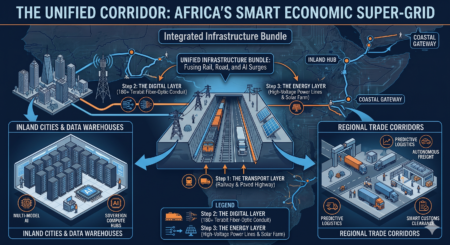
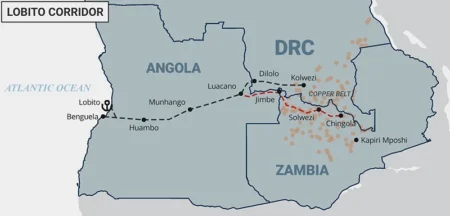
Furthermore, integrating fragmented transit networks allows investors to capitalise on the emergence of robust regional supply chain integration, utilizing massive infrastructure pipelines such as the Zambia-Lobito rail development lifeline. An integrated approach ensures that raw materials harvested in one state can be processed efficiently in another, building a manufacturing base that serves continental consumers rather than merely feeding external supply chains.
THE ROADMAP
Institutional capital deployment must pivot from managing deficits to accelerating momentum. The roadmap to unlocking risk-adjusted returns across the AfCFTA relies entirely on fixing the foundations of cross-border commerce.
This requires aggressive, targeted financing of cross-border logistics rails, digital single-window trade architectures, and sovereign payment platforms like PAPSS. When capital eliminates the specific friction points of transit overhead and foreign exchange vulnerability, it unlocks organic, high-yield market demand. Every localized investment in port modernization, border digitization, and transit infrastructure loops seamlessly back into the macro-regional network, scaling intra-African trade integration and cementing a permanent, structurally sovereign African economic engine.ical resources to dictate the terms of their own economic future.
🔗 Explore More On This Topic
Who Actually Benefits From AGOA? A Cold Audit of Export Concentration
The Real Economy vs. the Elite Economy: Who Really Benefits?