

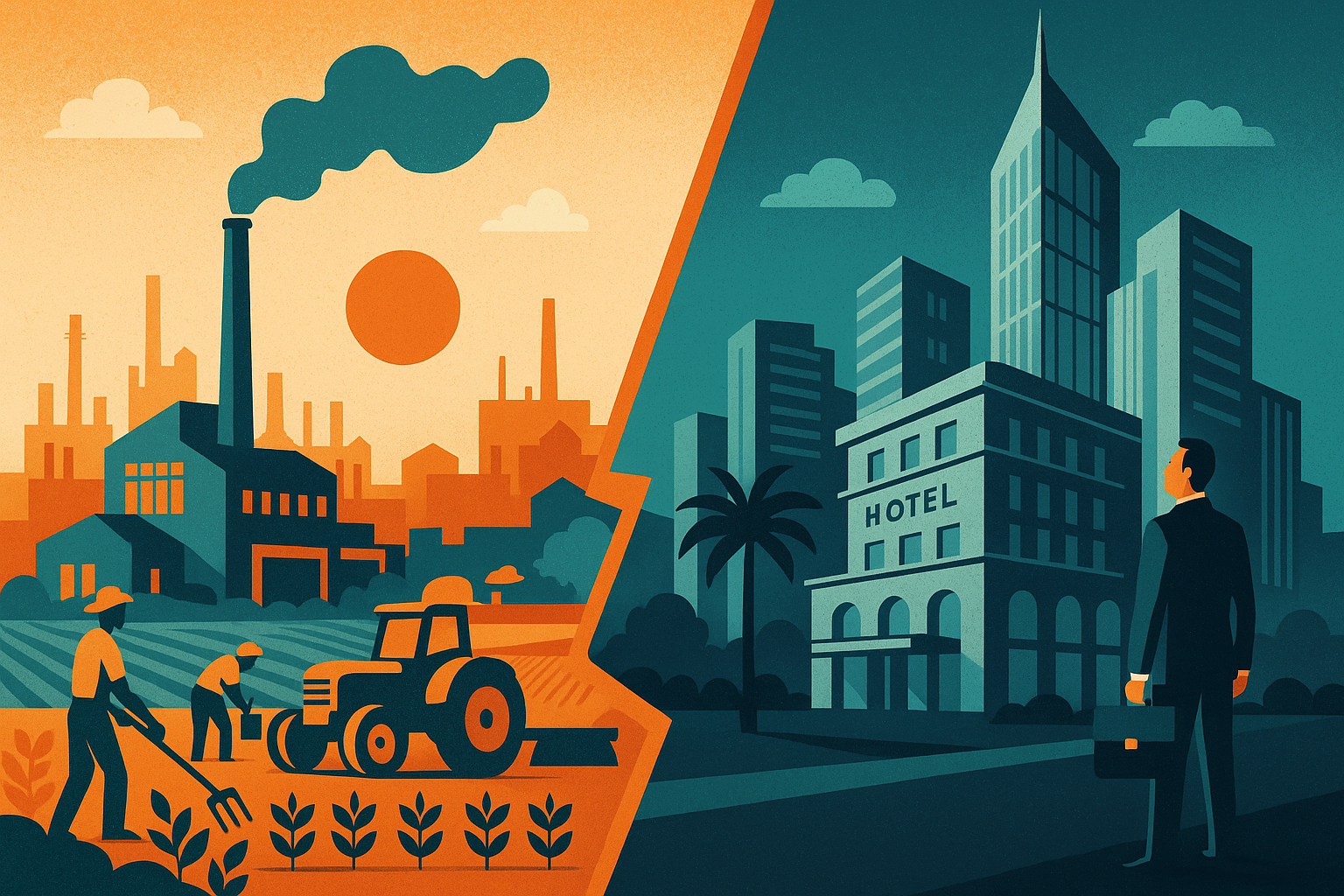
When we hear that GDP is rising, it’s easy to assume everyone is becoming wealthier. But in reality, there are two economies operating side by side — one that supports the majority of people, and another that primarily benefits the elite.
This article explores the real economy vs. the elite economy, revealing how extractive growth inflates GDP numbers without improving the lives of ordinary people — and how Africa can rebalance growth to ensure prosperity is shared by all.
💡 What Is the Real Economy?
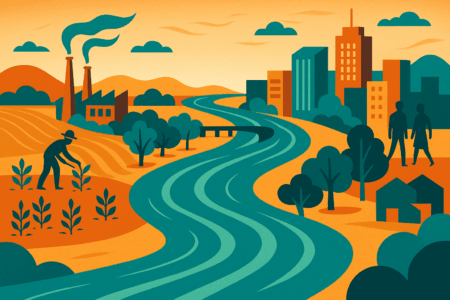
The real economy includes the essential sectors that sustain life, build infrastructure, and support families. It’s where people work, earn, and produce goods and services that directly improve living standards.
Key sectors of the real economy include:
- Agriculture: Growing food, raising livestock, and supplying raw materials.
- Manufacturing: Producing everyday goods that meet local and national needs.
- Healthcare: Providing essential medical care and public health services.
- Education: Developing skilled workers and innovative thinkers.
- Public Services: Building and maintaining utilities, transport, and sanitation systems.
The real economy is the foundation of human progress. Yet, despite its importance, those who sustain it often face low wages, long hours, and limited recognition.
How the Real Economy Drives GDP
- Employment: Creates millions of jobs across all income levels.
- Sustainability: Builds long-term resilience through tangible output.
- Income Distribution: Encourages more equitable wealth sharing.
Example: In countries like Kenya and Ghana, investments in agriculture and manufacturing have created millions of jobs while strengthening domestic value chains — boosting GDP through real productivity.
💼 What Is the Elite Economy?
The elite economy revolves around extractive activities — industries and financial systems that enrich a small minority while providing little benefit to the broader population.
Main components of the elite economy:
- Financial Markets: Profits from speculation, stock trading, and capital flows rather than productive output.
- Resource Extraction: Mining, oil, and commodities dominated by multinational or elite-owned firms.
- Luxury Sectors: High-end goods and services that serve wealthy consumers.
- Tax Avoidance: Corporations and elites using offshore accounts to hoard wealth and evade fair taxation.
How the Elite Economy Drives GDP
- Wealth Concentration: GDP rises through capital accumulation among elites.
- Resource Extraction: Foreign companies profit from Africa’s resources, often exporting raw materials and value abroad.
- Limited Local Benefit: Little reinvestment into public goods or workforce development.
Example: Nigeria’s oil sector adds billions to GDP, but due to foreign extraction and corruption, most citizens see minimal benefits. Similar patterns appear in mining-heavy economies like Zambia and the DRC.
🧠 The Key Differences: Real vs. Extractive GDP
| Aspect | Real Economy | Elite Economy |
|---|---|---|
| Focus | Producing essential goods and services | Speculation, extraction, and luxury sectors |
| Main Beneficiaries | Local workers and communities | Corporations and wealthy elites |
| Income Distribution | Broad and more equitable | Highly concentrated |
| Economic Impact | Long-term sustainable growth | Short-term profits and volatility |
| Examples | Agriculture, education, healthcare | Oil, mining, financial speculation |
💥 The Impact of Extractive GDP
1. Rising Economic Inequality
The elite economy inflates GDP while most people’s incomes stagnate. Wealth flows upward, widening the gap between workers and the wealthy.
Example: South Africa, one of Africa’s largest economies, has one of the world’s highest inequality rates despite steady GDP growth (World Bank).
2. Lack of Sustainable Development
Extractive industries deplete natural resources without investing in long-term infrastructure or skills. This leads to dependency on commodity exports — the classic “resource curse.”
Example: Angola’s oil boom increased GDP but failed to reduce poverty or diversify its economy (IMF).
3. Environmental Damage
Mining, oil drilling, and industrial farming degrade the environment, harming future productivity and community health.
Example: Niger Delta oil spills have devastated local livelihoods while enriching a handful of multinational firms (UNEP).
📈 A Path Forward: Rebalancing the Economy
1. Prioritize Essential Sectors
Investing in education, healthcare, agriculture, and renewable energy creates jobs and builds long-term growth capacity.
2. Ensure Fair Wealth Distribution
Policies like progressive taxation and living wages ensure the benefits of GDP growth are shared broadly, not captured by elites.
3. Control Resource Extraction
African nations should strengthen resource sovereignty, ensuring local ownership, reinvestment, and community benefit-sharing.
4. Diversify Economies
Moving beyond commodities into manufacturing, digital innovation, and green industries will make growth inclusive and resilient.
🧭 Final Insight: Who Really Benefits from GDP?
The real economy is the heartbeat of every nation — where teachers, farmers, nurses, and builders sustain daily life. Yet too often, the elite economy dominates policy and profit, inflating GDP while deepening inequality.
For Africa and its global diaspora, the challenge is clear:
Shift from extractive growth toward inclusive, sustainable prosperity — where GDP reflects human well-being, not just financial expansion.
By investing in people, productive industries, and fair systems, nations can build economies that truly serve everyone.
🔗 Explore More On This Topic
The Real Economy vs. the Elite Economy: Who Really Benefits?
What Really Grows the Economy?