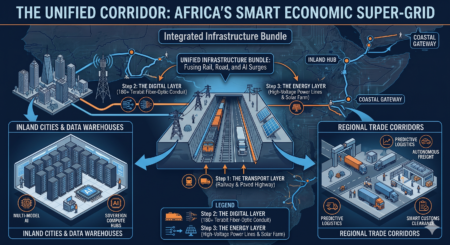




"This operational profile serves as foundational field intelligence within our broader macroeconomic tracking network. To evaluate how these localized market variables, infrastructure pipelines, and regional trade dynamics integrate into a continent-wide roadmap for capital deployment, access our master thesis directly through our core document: The Architecture of Momentum Framework."
This corridor is more than just a rail line — it is a logistics revolution that will cut mineral export times from up to 45 days (by road) to just seven days by rail. The project is expected to drastically reduce transportation costs, improve export efficiency, and boost Africa’s critical-minerals supply chain, which feeds the global energy transition.
“This is a defining moment for African infrastructure,” said AFC President Samaila Zubairu, emphasizing that the corridor will “unlock billions in mineral value while improving trade and logistics across southern Africa.”
According to Bloomberg, the AFC-led consortium will open bidding to regional and international contractors before the end of 2025, with groundbreaking expected in early 2026.
🏗️ Project Scope and Strategic Impact
The Zambia–Lobito rail corridor will connect three major economies — Angola, Zambia, and the Democratic Republic of Congo (DRC) — forming a seamless trade route for copper, cobalt, and other critical minerals.
- Length: 1,300 km
- Key Partners: AFC, U.S. International Development Finance Corporation (DFC), and African Development Bank (AfDB)
- Investment Value: Over US$1.6 billion for construction and rehabilitation
- Estimated Timeline: 2025–2030
The project will link Zambia’s Copperbelt Province and the DRC’s Katanga mining region to the Atlantic, bypassing older export routes through South Africa and Mozambique.
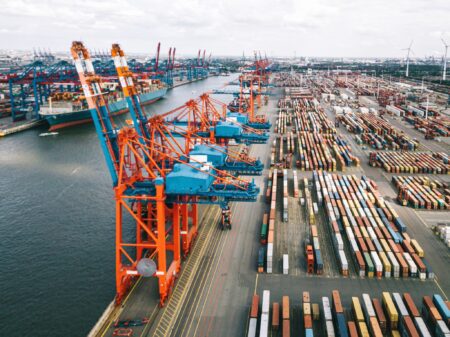
This route provides a shorter, safer, and more cost-effective alternative — reducing dependency on overland transport networks that face delays and congestion.
⚙️ Financing and Construction Framework
The AFC will lead financing and concession management for the Zambia–Lobito rail corridor through a public–private partnership (PPP) model.
Under this arrangement:
- AFC and partners will raise capital through blended finance, combining concessional loans with private equity.
- The Bridge-to-Bond mechanism, first used in the Climate Investor Two project (Climate Fund Managers), may be applied to attract institutional investors into the rail bond market.
- A long-term operations concession will allow private operators to manage rail logistics and maintenance while governments retain ownership of the infrastructure.
The AFC has already secured interest from multiple engineering and logistics firms, with Zambia’s Ministry of Transport confirming that feasibility and environmental assessments are complete.
🌍 Regional and Global Significance
Strengthening Africa’s Critical-Minerals Supply Chain
The Zambia–Lobito rail corridor is central to Africa’s emerging critical-minerals strategy, supporting global efforts to diversify supply away from Asia.
It will enable faster and more reliable exports of copper, cobalt, and manganese — minerals crucial to electric vehicles, solar energy, and battery storage industries.
Boosting Industrialization and Trade
The corridor supports the African Continental Free Trade Area (AfCFTA) goals of regional integration and value addition. By linking inland mining zones to coastal export hubs, it strengthens Africa’s industrial corridors — connecting factories, logistics centers, and service hubs across borders.
🌱 Environmental and Social Impact
The AFC emphasizes that the railway is designed with sustainability and inclusion in mind:
- Reducing carbon emissions by replacing long-distance trucking with rail transport.
- Creating 1,200+ local jobs during construction.
- Facilitating agribusiness and manufacturing expansion along the corridor.
- Supporting local communities with skills training and supply-chain participation.
💡 Opportunities for Investors and the Diaspora
Private-Sector Entry Points
With the AFC managing procurement, global investors can participate in:
- Engineering, Procurement, and Construction (EPC) contracts
- Rail-equipment leasing and freight management
- Green-bond financing for infrastructure and logistics
Diaspora Engagement
African diaspora investors are being encouraged to participate through infrastructure bonds, logistics co-ventures, and regional trade facilitation programs.
🔄 Similar Projects Across the Continent
The Zambia–Lobito rail corridor joins a new wave of Africa-wide transport megaprojects, including:
- Tanzania’s Standard Gauge Railway (SGR) linking Dar es Salaam to Mwanza and Rwanda.
- Kenya’s LAPSSET Corridor, connecting Lamu Port to Ethiopia and South Sudan.
- Nigeria’s Lekki Deep Sea Port and rail expansion under the Lagos–Ibadan line.
- South Africa’s Gauteng Mega City Transport Plan, integrating logistics with industrial parks.
Together, these projects reflect Africa’s push to modernize transport, attract investment, and strengthen intra-African trade.
🧭 A Step Toward Africa’s Infrastructure Future
The AFC-led Zambia–Lobito rail corridor stands as a symbol of what the continent can achieve through innovation, partnership, and purpose-driven investment.
By connecting Africa’s mineral wealth to the world through efficient and sustainable transport systems, the corridor embodies the Africa Growth Forum’s vision — empowering nations to build, trade, and thrive on their own terms.