


"This operational profile serves as foundational field intelligence within our broader macroeconomic tracking network. To evaluate how these localized market variables, infrastructure pipelines, and regional trade dynamics integrate into a continent-wide roadmap for capital deployment, access our master thesis directly through our core document: The Architecture of Momentum Framework."
When international investment funds and diaspora syndicates evaluate markets across Sub-Saharan Africa, they look for two primary features: physical safety and regulatory predictability. In a region often defined by rapid political swings, Senegal stands out as a highly stable exception. Boasting an unbroken history of peaceful democratic transitions and a currency pegged directly to the Euro (the CFA franc), the country provides a uniquely secure foundation for deploying capital.
The macroeconomic outlook is incredibly strong. Driven by a major wave of newly operational offshore energy projects, Senegal’s economic growth is projected to remain highly robust. To manage this expansion sustainably, the administration is focusing heavily on private sector participation and Public-Private Partnerships (PPPs) to fund its next wave of growth.
For investors looking to capture long-term yields, five distinct sectors are driving the nation’s commercial transformation.
1. Real Estate & Urban Infrastructure
The physical landscape of Senegal is undergoing a profound structural shift. As the historic capital of Dakar faces severe geographic limits on its coastal peninsula, the epicenter of real estate development has moved 30 kilometers inland to the master-planned smart city of Diamniadio.
Linked to Dakar via a high-speed Regional Express Train (TER) and a modern toll highway, Diamniadio has fast become a bustling hub for international conferences, government ministries, and universities. For real estate investors, this deliberate urban migration creates highly reliable demand across several asset classes:
- Mixed-Use Residential Units: High-density, modern housing complexes designed to accommodate thousands of middle-class professionals relocating to the new city.
- Grade-A Commercial Space: Corporate office setups and premium business parks tailored for multinational enterprises looking for a regional Francophone base.
- Industrial Warehousing: Modern logistics and fulfillment facilities strategically placed near the highway loops to handle regional shipping.
2. Renewable Energy & Grid Expansion
Unlike neighboring markets that depend heavily on loud, expensive, and polluting private diesel generators, Senegal has built one of the most balanced public utility grids on the continent. Renewable capacities account for approximately one-quarter of total installed capacity, driven by a robust mix of utility-scale solar parks and regional wind assets.
To build on this foundation, the government has set a target to reach 40% renewable energy in its electricity mix by 2030 under the international Just Energy Transition Partnership (JETP) framework. Senelec is aggressively scaling this network through key public-private initiatives:
- Solar & Wind Baselines: Facilities like the 50 MW Senergy plants in Thiès and the 158 MW Taïba N’Diaye wind farm supply clean electricity directly to the national pool.
- Battery Storage Systems (BESS): To eliminate power fluctuations when the sun goes down, Senegal is prioritizing grid-scale battery storage. A key anchor is AXIAN Energy’s Kolda project, which stands as the largest solar-and-storage project under construction in West Africa. Following its formal financial close in April 2026, the facility is pairing 60 MWp of solar capacity with a 72 mWh battery bank, with commercial operations scheduled to commence in late 2026.
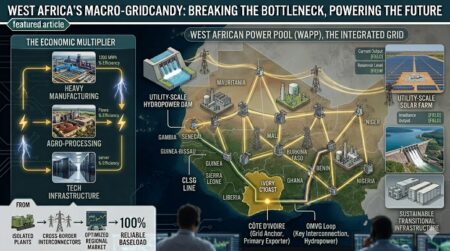
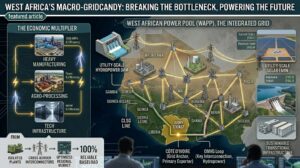
- Cross-Border Power Trading: Through the 1,677-kilometer OMVG energy loop, Senegal is physically hardwired to export its daytime solar surplus to neighboring nations like The Gambia and Guinea.
3. Commercial Agribusiness & Cold-Chain Logistics
Agriculture remains the backbone of Senegal’s domestic workforce, but the sector has historically suffered from massive “value leaks” due to post-harvest spoilage. Tons of fresh produce rot every year simply because farmers cannot access temperature-controlled storage or reliable transport networks.
To fix this bottleneck, the government is prioritizing agricultural modernization and making key inputs highly affordable. This approach opens up highly lucrative opportunities for midstream agricultural logistics:
- Special Agro-Industrial Processing Zones (SAPZs): Dedicated industrial parks where companies can process raw, domestic harvests into high-margin, packaged goods ready for export.
- Cold Storage Warehousing: Building refrigerated storage networks near farming clusters allows investors to capture predictable, contracted fees from farmers, traders, and major food retailers who need to preserve their inventory.
- The Trans-Gambia Trade Corridor: The completion of the Senegambia Bridge has collapsed cross-border transit times down to just five hours, allowing refrigerated trucks to move fresh food across regional markets with ease.
4. Information & Communications Technology (ICT)
Senegal is rapidly cementing its status as the premier tech and digital hub for Francophone West Africa. Backed by strict regional data protection laws, the country has implemented a clear National Cloud Strategy.
This regulatory framework mandates that critical corporate financial records, local startup databases, and public sector data must be securely hosted within national borders rather than on overseas servers in Europe or America. This domestic hosting requirement is driving a significant surge in infrastructure investment:
- Enterprise Data Centers: High-demand construction of secure, tier-three data storage facilities to host cloud architecture for regional corporations and banks.
- Terrestrial Fiber Backbones: Expanding high-speed fiber cables inland from the high-capacity subsea internet cables landing on the coast.
- Fintech & Digital Payments: Building localized B2B software solutions to support the massive volume of mobile money and digital transactions running across the country.
5. Modern Hospitality & Coastal Tourism
Tourism has long been a core pillar of Senegal’s economy, but the sector is expanding well beyond traditional vacation getaways. With business travel surging in tandem with the country’s oil, gas, and tech sectors, the demand for premium hospitality infrastructure has skyrocketed.
Key focus areas for hospitality capital include:
- Business & MICE Hotels: Developing high-end business accommodations and meeting spaces in Dakar and Diamniadio to capture the booming corporate conference and travel market.
- Coastal Resort Upgrades: Modernizing leisure infrastructure along the pristine beaches of Saly and the emerging Petite Côte corridor to draw international travelers.
- Eco-Tourism Hubs: Building sustainable, boutique lodges near rich cultural and environmental sites like the Sine-Saloum Delta or Saint-Louis.
The Takeaway
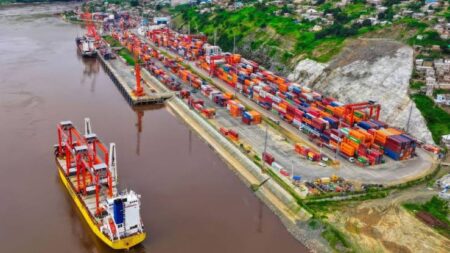
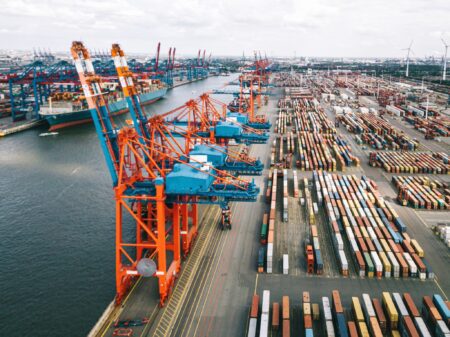
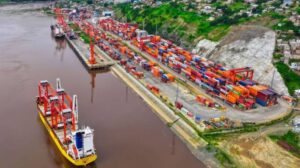
Senegal represents one of the most balanced and predictable corporate investment environments in Sub-Saharan Africa. By intentionally pairing its long political stability with modern deepwater ports, a green power grid, data sovereignty laws, and clear public-private partnership models, the country provides an exceptional launchpad for international and diaspora capital looking to build real, lasting value.
Related Reading
Beyond Isolated Grids: The Multi-Anchor Strategy Powering West Africa’s Industrial Leap
The Evolving ECOWAS Regional Engine
The Big Picture: The Central Artery of the West
Building the West African Digital Tech Corridor: Regional Digital Infrastructure