


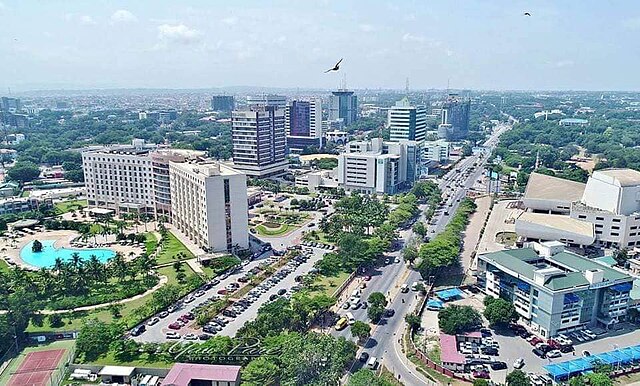
"This operational profile serves as foundational field intelligence within our broader macroeconomic tracking network. To evaluate how these localized market variables, infrastructure pipelines, and regional trade dynamics integrate into a continent-wide roadmap for capital deployment, access our master thesis directly through our core document: The Architecture of Momentum Framework."
For decades, global capital and traditional development frameworks have treated Africa as an aggregate of 54 isolated, national economies. This country-by-country analytical lens is structurally obsolete. Evaluating growth potential through rigid national borders severely masks the massive velocity of cross-border commerce already transpiring on the ground.
The defining strategy for elite capital deployment is regional integration. According to composite data from UNCTAD and the African Development Bank (AfDB), intra-African trade has historically stagnated around 13% to 15%. However, the structural paradigm is shifting via the gradual operationalization of the African Continental Free Trade Area (AfCFTA).
Concurrently, macro-regional initiatives like the COMESA-EAC-SADC Tripartite Free Trade Area (TFTA)—which encompasses a 29-nation footprint representing 53% of African Union membership, over 800 million consumers, and a historical $1.88 trillion market ecosystem—serve as foundational blueprints, though the TFTA’s legal framework has faced chronic ratification delays and is increasingly being practicalized under the broader, overarching architecture of the AfCFTA.
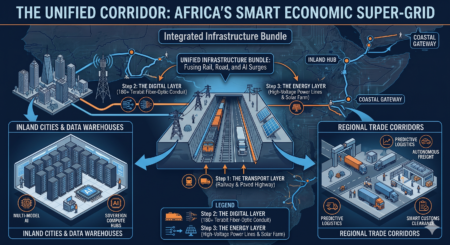
The Architecture of Momentum dictates that institutional investors must look past parallel, isolated national projects and instead target the physical, financial, and digital arteries fusing Africa’s Regional Economic Communities (RECs) into unified markets.
Physical Corridors Over National Borders
Capitalizing on momentum means recognizing that the relevant unit of analysis is no longer the individual nation, but the multi-country corridor. To construct resilient regional value chains, institutional funding must flow into integrated transport and logistics networks that bypass fragmented national constraints.
The Key Transnational Arteries
- The Lobito Corridor (SADC Hub): Spanning Angola, the Democratic Republic of Congo (DRC), and Zambia, this 1,300-kilometer rail lifeline provides the physical preconditions for resource-based industrialization. While receiving structured financing via the international Partnership for Global Infrastructure and Investment (PGI), the project is fundamentally anchored by regional institutions—principally led by the Africa Finance Corporation (AFC) as the lead developer alongside the AfDB—ensuring sovereign alignment across the Southern African Development Community (SADC).
- The Abidjan-Lagos Corridor (ECOWAS Pipeline): Spanning 1,028 kilometers across Côte d’Ivoire, Ghana, Togo, Benin, and Nigeria, this six-lane transnational coastal motorway is a primary pipeline asset rather than an operational route. Feasibility studies are completed, and the AfDB is acting as lead arranger to mobilize $6.8 billion in private sector capital out of the project’s total $15.6 billion valuation. Phased construction is targeted to commence across 2026/2027 subject to final financing syndication, establishing a massive industrial spine by 2030.
- The Trans-Gambia Corridor (ECOWAS): Following the full delivery of the 24-kilometer access road infrastructure networks, official AfDB Project Completion metrics demonstrate that transit and border clearance disruptions along this multi-national axis have collapsed from historic delays frequently exceeding 24 hours down to an predictable operating window of under five hours, radically accelerating sub-regional logistics velocity.
- The LAPSSET Corridor (IGAD / EAC): Linking the Kenyan coast to the hinterlands of East Africa, this multi-modal corridor opens new transnational trade pathways. However, institutional allocators must apply strict risk-weighting to its northern expansion into South Sudan, where ongoing political volatility and localized execution risks require significant security and sovereign de-risking mechanisms.
Sovereign Energy and Regional Power Pools
The momentum of regional industrialization is strictly dependent on cross-border energy architecture. Isolated national grids are highly vulnerable to localized shocks and load shedding. The transition to resilient, integrated regional markets is currently accelerating through the consolidation of transnational power pools.
| Regional Power Pool | Institutional Structure & Footprint | Institutional Focus |
| Southern African Power Pool (SAPP) | Integrates 12 member countries represented by their national utilities (including South Africa, Mozambique, Zimbabwe, Zambia, and Namibia). | Commercializing cross-border electricity trading and offloading surplus generation into regional industrial hubs. |
| West African Power Pool (WAPP) | Aligned across the recalibrated ECOWAS-12 zone (including coastal nodes like Ghana, Senegal, Nigeria, and Côte d’Ivoire). | Establishing unified regulatory markets to support cross-border grid synchronization and infrastructure de-risking. |
| Eastern Africa Power Pool (EAPP) | Interconnecting fast-growing East African utilities (including Kenya, Ethiopia, Uganda, Rwanda, and Tanzania). | Rapidly scaling power infrastructure to support expanding regional manufacturing bases and cross-border energy sales. |
Eradicating Transit Friction: Customs Integration
While tariff reduction provides the legal framework for free trade, true market momentum is dictated by clearing operational bottlenecks at regional borders. Non-tariff barriers (NTBs) and fragmented transit documentation remain major structural friction points across Africa’s RECs.
- Border Modernization: To clear landlocked transport delays, the East African Community (EAC) has pushed the execution of the EAC One-Stop Border Posts Act. Of the 15 primary border entries earmarked for systemic integration, 10 facilities have achieved full standalone operationalization (including high-volume conduits such as Malaba, Namanga, and Busia), mitigating multi-day customs backlogs into highly compressed compliance timelines.
- Digital Transit Systems: The expansion of the interconnected SIGMAT (Système Interconnecté de Gestion des Marchandises en Transit) programme is actively accelerating the digitization of transit and customs clearance procedures across West African customs networks.
- Cross-Border Tracking: Regional mechanisms, such as the Tripartite online NTB reporting system utilized across 27 COMESA, EAC, and SADC states, provide critical infrastructure for identifying and eliminating the specific administrative blockades that stifle regional supply chains.
Regional Human Capital and Mobility
A regional economic architecture cannot function without the frictionless movement of labor and human capital. Regional mobility allows skills to flow to where economic momentum is highest, converting a collection of national workforces into a dynamic continental talent pool.
Following the formal withdrawal of Burkina Faso, Mali, and Niger, the recalibrated ECOWAS bloc consists of 12 active member states. Within this updated integration framework, historic protocols guaranteeing citizens visa-free entry, residence, and commercial establishment remain core institutional goals.
Private equity allocators must note that implementation on the ground remains uneven due to localized security protocols. Consequently, the bloc continues to treat the proposed ECOVISA unified framework as a long-term integration target requiring gradual technological and regulatory alignment among remaining national identity systems.
In tandem, the EAC has operationalized the Common Higher Education Area, which facilitates academic mobility and the mutual recognition of qualifications across Partner States, creating a more cohesive regional labor market.
The Blueprint for Africa Regional Investment
The Architecture of Momentum is fundamentally a regional enterprise. Global allocators who continue to evaluate African markets through isolated national risk models will miss the continent’s most powerful structural shifts.
By deploying capital into the infrastructure, energy pools, and trade facilitation platforms that unify the Regional Economic Communities, investors transition from navigating national deficits to scaling continental momentum.
For an look at the real-world operational challenges and discussions occurring on the ground regarding West African economic integration, watch this coverage of the ECOWAS Expert Group Meeting. This broadcast highlights the local ministerial discourse surrounding infrastructure deficits, agricultural value additions, and the region’s broader investment potential.
Related Reading
AfCFTA and Regional Trade Integration: How Africa’s Free Trade Zone Works
Building Africa’s Digital Backbone: Infrastructure for the 21st Century
The Unified Corridor: Fusing Africa’s Industrial Infrastructure with the AI Surge
Bridging Africa’s $400 Billion Structural Gap: The Case for Integrated Smart Corridors
Africa’s Digital Revolution: Tech Startups and Venture Capital Investment
Key Takeaways
- Africa’s economies should be viewed as interlinked, as cross-border commerce is growing despite a historical focus on national borders.
- The African Continental Free Trade Area (AfCFTA) and regional initiatives like the TFTA aim to boost intra-African trade.
- Investors must prioritize multi-country corridors and integrated logistics networks to enhance regional value chains.
- Sovereign energy and regional power pools are crucial for stabilizing energy supply and supporting industrial progress throughout Africa.
- Improving customs integration and fostering human capital mobility are essential for eradicating transit friction and enhancing economic collaboration in Africa.
Stay Ahead of the Market Subscribe to our newsletter for the latest insights on African infrastructure and industrial policy.