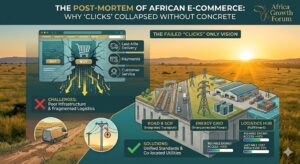

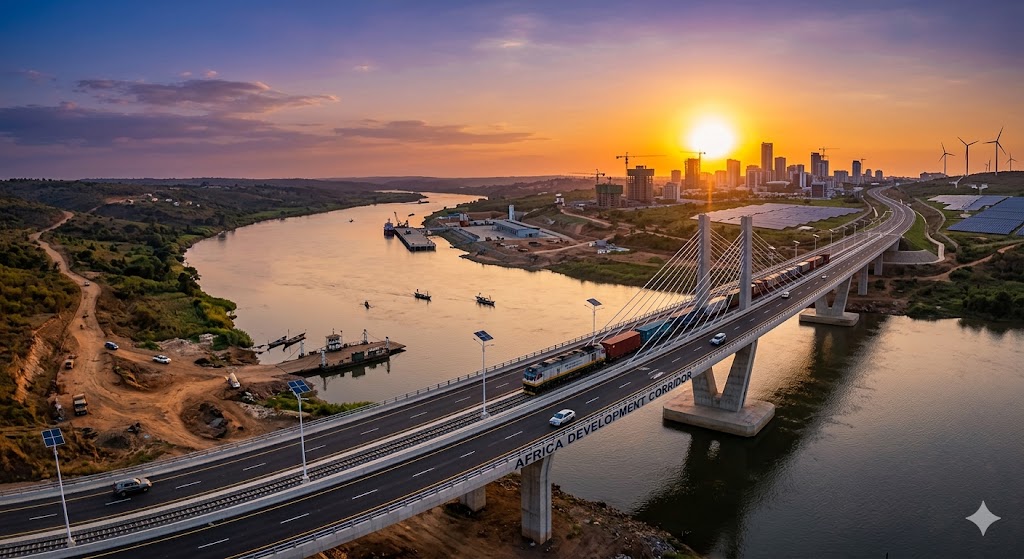
Africa’s infrastructure story has long been defined by ambition without execution. Roads that connect regions only halfway. Energy projects that stall at the financing stage. Digital networks that stop at national borders.
The report estimates that for every $1 billion invested, Africa could unlock up to $6 billion in GDP, catalyzing productivity, trade, and innovation. With more than 130 cross-border projects already identified across energy, transport, digital, and water systems, the foundation has been laid. What remains is coordination — aligning political will, funding, and delivery capacity.
👉 Related Reading: Africa’s Infrastructure Gap: The $100 Billion Question
🔑 Africa Has the Right Ingredients — But Needs Better Alignment
BCG’s analysis shows that Africa already possesses all the key building blocks for infrastructure success:
-
Political commitment: Regional blocs such as the African Union and SADC are prioritizing infrastructure through flagship frameworks like PIDA and Agenda 2063.
-
Financing mechanisms: Development finance institutions, sovereign wealth funds, and blended-finance models are expanding project pipelines across Africa’s energy transition and transport corridors.
-
Proven delivery models: The North–South Transport Corridor and Eastern Africa Power Pool show that regional cooperation delivers measurable gains.
However, poor coordination and fragmented management still delay results. According to BCG, Africa’s project delivery efficiency is 30–40 percent below global benchmarks, driven largely by execution bottlenecks.
👉 Explore: Africa’s Digital Infrastructure Boom
👉 Also read: Lobito Corridor: Redefining Africa’s Trade Routes
🚧 The Cost of Fragmentation
Infrastructure in Africa often suffers more from complexity than cost. A single energy corridor can involve multiple ministries, financiers, and laws. Each delay compounds inefficiency and discourages investors.
This “execution gap” — the space between planning and delivery — costs the continent billions annually. BCG projects that by improving coordination and governance, Africa could generate $500 billion in additional economic value and create 74 million new jobs by 2030.
⚡ Lessons from Regional Success Stories
BCG highlights several examples that prove what effective execution looks like:
-
North Africa’s Electrification: Egypt and Morocco have achieved over 90 percent power access by integrating renewables and leveraging public-private partnerships.
-
East Africa’s Digital Integration: Fintech corridors linking Kenya, Rwanda, and Uganda have reduced trade friction through shared digital infrastructure and mobile-money interoperability.
-
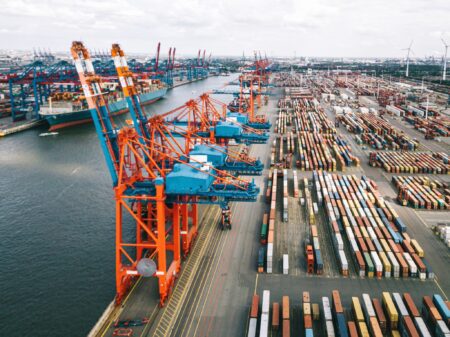
West Africa’s Port Modernization: Ghana and Côte d’Ivoire’s port reforms demonstrate how investment in logistics hubs can lower regional transport costs and expand trade capacity.
These regional success stories can guide continental expansion — showing that execution excellence is a discipline, not a dream.
👉 See: Top 10 Sectors to Invest in Africa 2025 – 2030
💰 The Role of Private Capital and Diaspora Investment
Public budgets alone cannot meet Africa’s infrastructure financing needs. The next phase depends on private capital and diaspora participation.
The African diaspora sends over $100 billion in annual remittances — more than the continent receives in official aid. Redirecting even a small portion of this capital through diaspora infrastructure bonds, PPP frameworks, or regional infrastructure funds could transform project financing.
👉 Read next: Diaspora Bonds and Africa’s Development Financing Future
Private investors bring efficiency and innovation; diaspora investors bring commitment and trust. Together, they can close the gap between policy ambition and on-the-ground delivery.
🧩 The Strategic Imperative: Execution as a Discipline
Africa doesn’t lack vision — it lacks alignment and accountability.
BCG recommends three actions to move from promise to performance:
-
Establish regional project offices with harmonized procurement and monitoring systems.
-
Prioritize transnational, high-impact projects that generate value across multiple sectors.
-
Mobilize blended capital — combining public funds, DFI risk guarantees, and private equity to de-risk large-scale infrastructure.
👉 Dive deeper: African Continental Free Trade Area: The Infrastructure Connection
🚀 Looking Ahead: Africa’s Infrastructure Decade
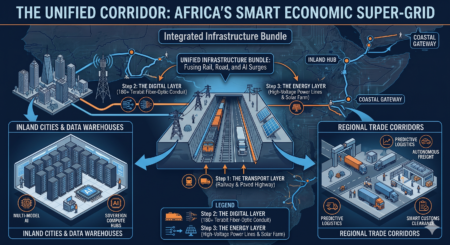
The 2020s could become Africa’s Infrastructure Decade — a period where logistics corridors, clean-energy grids, and digital networks bridge the continent’s economies.
With AfCFTA expanding regional trade and technology lowering coordination barriers, Africa is closer than ever to delivering on its development promise. Each $1 billion invested effectively could yield $6 billion in GDP — an unparalleled multiplier in global markets.
For diaspora investors, the opportunity is both financial and historical: to help build the physical foundations of Africa’s next century.
👉 Related insight: The African Diaspora: Driving Africa’s Global Transformation (2025 Edition)