
Nigeria is charting a transformative path. The government has unveiled an energy-transition strategy that targets $410 billion in investment by 2060, positioning the country as a leader in Africa’s renewable-energy ecosystem.
⚡ A Vision of Scale: Nigeria’s Energy Transition Plan
At the inaugural Nigerian Renewable Energy Innovation Forum 2025 in Abuja, Vice President Kashim Shettima announced that Nigeria aims to mobilise more than $410 billion through 2060 to build a power system of 277 gigawatts of installed capacity. He also confirmed a near-term investment need of over $23 billion to expand access and connect millions of Nigerians who remain underserved.
“We are blessed with the minerals that power clean technologies… Nigeria must not only participate in this revolution, but lead it.” — VP Shettima Vanguard News
🔍 The Core Pillars of Nigeria’s Energy Transition
1. Expanding Access
Nigeria still faces major energy-poverty challenges. The plan targets large‐scale grid extension, decentralised solutions and private-sector participation to bring electricity to underserved regions.
2. Decarbonisation & Renewables
Through the transition plan, Nigeria seeks to shift from fossil-fuel dependence and increase the share of renewables — solar, wind, hydro and battery storage — in its generation mix.
3. Industrialisation & Local Value Chains
Central to the strategy is the creation of local manufacturing for solar panels, battery recycling, smart-meter production and renewable-energy equipment under the “Nigeria First” framework. Shettima noted:
“From solar-panel assembly lines in Lagos to battery-recycling hubs along our industrial corridors…”
💼 Investment Opportunity & Implementation Timeline
| Timeframe | Focus | Investment Required |
|---|---|---|
| 2025-2030 | Scale access, kick-start manufacturing | ~$23 billion+ Zawya |
| 2030-2040 | Build renewables + industrial clusters | Tens of billions |
| 2040-2060 | Full system build-out: 277 GW capacity | Rest of ~$410 billion |
The magnitude of this opportunity places Nigeria among the most ambitious energy-transition markets in Africa — and potentially the world.
🌍 Strategic Implications for Africa
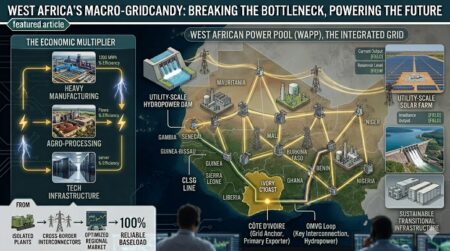
- Regional leadership: As Africa’s largest economy, Nigeria’s transition strategy creates spillovers for West Africa and the broader continent.
- Global value chains: By aligning manufacturing with minerals and export capacity, Nigeria can become a regional hub for clean-tech production.
- Investor confidence: The size of the investment task signals serious commitment; global and diaspora capital can engage with scale.
This story complements other investment initiatives such as the Africa Finance Corporation’s infrastructure-financing activities and the recently announced Climate Fund Managers facility directed at adaptation infrastructure.
✅ What Investors & Diaspora Should Consider
- Policy framework: Nigeria is enhancing incentives for local manufacturing, streamlining regulation and working with states to de-risk investment.
- Manufacturing link-ups: Investors can explore participation in solar-panel assembly, battery-recycling hubs and smart-meter production.
- Private-sector role: The plan emphasises the need for private capital, technology transfer and skills development.
- Regional platforms: Investment can leverage regional integration (ECOWAS), trade corridors and cross-border energy markets.